
Best Backpacking Backpacks of 2025


ByMultiple Authors
Updated:
Jul 30, 2025Updated:
Jul 30, 2025Table of contents

Osprey Atmos AG LT 65 ($290)

REI Co-op Trailmade 60 ($179)

ULA Equipment Circuit ($300)

REI Co-op Traverse 60 ($249)

Gregory Baltoro 75 ($360)

Hyperlite Mountain Gear Southwest 55 ($379)
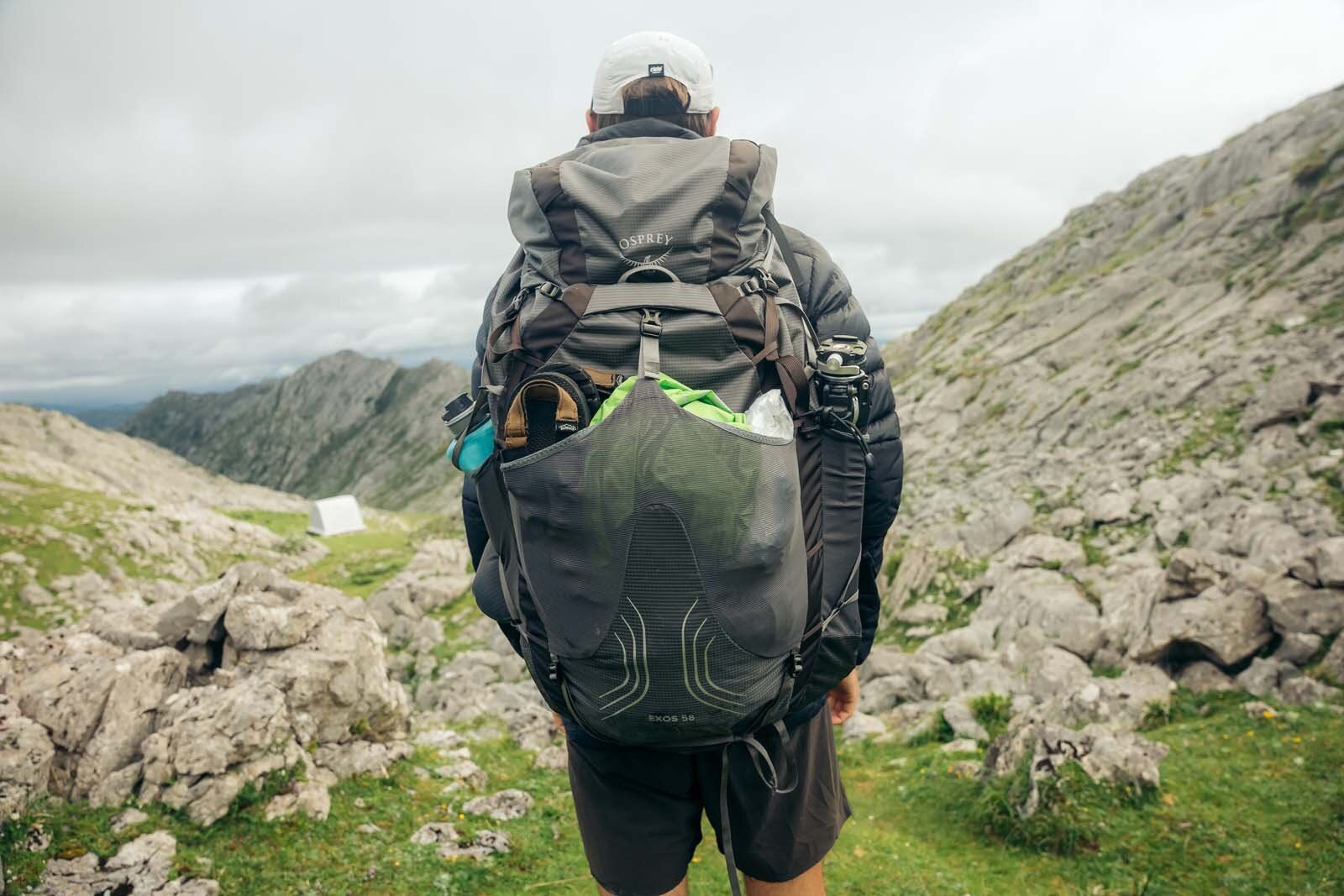
Osprey Exos 58 ($260)
With the Atmos AG LT, Osprey streamlined the standard Atmos AG pack without sacrificing the comfort and support the popular line is known for. The LT sports an excellent design with wide appeal, but we can’t help but wonder if it would benefit from thinner materials to cut even more weight


With the Atmos AG LT, Osprey streamlined the standard Atmos AG pack without sacrificing the comfort and support the popular line is known for. The LT sports an excellent design with wide appeal, but we can’t help but wonder if it would benefit from thinner materials to cut even more weight

Comfort

Organization

Weight

Durability

Water Resistance

Sustainability
Weight
4 lb. 1.1 oz.
Capacity
65L (50L)
Stated Load Limit
40 lb.
Material
210D & 500D nylon
Pros
Cons
Sometimes, less is more when it comes to backpack design. While that’s usually the mindset behind ultralight packs, it also applies to the Atmos AG LT (women’s Aura AG LT). This pack is a stripped-down version of Osprey’s popular Atmos AG, featuring the same well-designed trampoline-style backpanel: Mesh is stretched tightly against the pack’s perimeter frame from the shoulders to the hipbelt, cradling the back and offering a channel for air to flow unrestricted. One tester, who used the 50-liter version, commended the LT’s mesh for its bouncy, forgiving feel that provides plentiful airflow. Like the original, this pack can handle loads up to 40 pounds.
Where the Osprey Atmos AG LT differs from its namesake is mostly its pocket layout and torso length adjustment system. Whereas the Atmos AG has eight external pockets, as well as zippered access to a sleeping bag storage in the main compartment, the LT only has six pockets and lacks a bottom zipper. We actually prefer this simpler design: Six pockets—two on the hipbelt, two on the side, one on the top lid, and one shove-it pocket on the back—are plenty for organizing your gear without adding unnecessary bulk and compromising user-friendliness. The torso adjustment, a strap-and-ladder system, isn’t as smooth as the Atmos AG’s, but it’s also not a pain and compares favorably with the hook-and-loop design used in many Gregory packs.
If the LT has a downside, it’s that we think Osprey could have gone even further in the lightweight direction. This pack is made with 210-denier nylon, which is the same as the Atmos AG. The material has average thickness and durability, so there’s nothing to write home about. Constructing the LT with, say, 100-denier nylon would’ve taken it under the four-pound barrier and made it a unique pack in the Osprey lineup. As it stands, though, this is a pack that provides an uber-comfortable carry at a reasonable price. That’s a winning formula for most backpackers. For more, read our review of the women's Aura AG LT 50.

Specifically designed for beginner backpackers, the Trailmade 60 is easy to adjust, offers decent organization, and is comfortable enough for short trips. Its build quality and overly squishy foam raise a few red flags, but it’s hard to knock the value for occasional users.


Specifically designed for beginner backpackers, the Trailmade 60 is easy to adjust, offers decent organization, and is comfortable enough for short trips. Its build quality and overly squishy foam raise a few red flags, but it’s hard to knock the value for occasional users.
Comfort
Organization
Weight
Durability
Water Resistance
Sustainability
Weight
3 lb. 6 oz.
Capacity
60L
Stated Load Limit
35 lb.
Material
Nylon
Pros
Cons
REI’s Trailmade collection is designed for beginner hikers and backpackers, and no product better reflects that mission than the Trailmade 60 backpack. At $179, it’s a standout value—especially considering that most premium models run $300 or more—and REI has included all the essential features. It’s easy to fit and adjust thanks to a single torso length with clearly labeled, height-adjustable shoulder straps. The 60-liter capacity is ideal for overnight or weekend trips, and organization is surprisingly well executed with zippered hipbelt pockets, easy-to-access water bottle storage, and a large zippered pocket on the top lid. Add in thick padding on the hipbelt and shoulder straps and a reasonably sturdy metal frame, and you’ve got everything a first-timer needs to get out on the trail.
That said, if you’re planning full-week trips, backpacking regularly, or simply want a design that will last through years of use, we’d point you elsewhere. The REI Trailmade 60 is “good enough,” but it’s not a standout in any category aside from price. Our tester commented that the overly squishy padding led to sore shoulders and hips after long trail days, and the moderately thin, slightly cheap-feeling fabric didn’t inspire confidence around sharp rocks. (We’d especially like to see reinforcement at the pack’s base, which is a common wear point.) Ultralight hikers will also balk at the 3-plus-pound weight, although to its credit, the Trailmade undercuts many core backpacking packs that tip the scales at over 4 pounds. All told, this pack holds a lot of appeal for its target market—to reinforce that point, it even includes helpful loading and fit-adjustment instructions printed under the lid—but it’s not built with dedicated backpackers in mind. For more, read our review of the Trailmade 60.
The Circuit is one of the best ultralight and thru-hiking packs, period. It's available in a wide range of sizes and offers impressive load carrying for its weight. While it lacks the Dyneema construction found in many other ultralight packs, the Robic nylon is impressively hardwearing.


The Circuit is one of the best ultralight and thru-hiking packs, period. It's available in a wide range of sizes and offers impressive load carrying for its weight. While it lacks the Dyneema construction found in many other ultralight packs, the Robic nylon is impressively hardwearing.
Comfort
Organization
Weight
Durability
Water Resistance
Sustainability
Weight
2 lb. 6.5 oz.
Capacity
68L
Stated Load Limit
35 lb.
Material
400D Robic nylon
Pros
Cons
Think ultralight packs are only designed for a small subset of hikers? The Circuit is the rare minimalist model that’s made for the masses. Even though its weight puts it firmly in the realm of packs that shine during thru-hikes, its spacious 68-liter capacity and relatively beefy suspension—consisting of a carbon fiber and hard plastic frame and an aluminum stay—allow the Circuit to evenly distribute up to 35 pounds and ride comfortably on your back far better than frameless competitors. Our tester was frankly amazed at the Circuit’s support and comfort level, deeming it the best of any ultralight pack he’d ever carried. Whether you’re dead-set on making miles or just out for the weekend, this pack’s plush padding and thoughtful organization make it more appealing than many minimalist models, especially ones that lack true suspension.
Another major component of the Circuit’s appeal is its wide range of sizes. ULA offers this pack in unisex torso sizes small to XL and hipbelt sizes XS to XXL. You can mix and match torso and hipbelt measurements to best fit your body type and choose between two shoulder strap shapes. This pack does have a few minor drawbacks—the Circuit’s backpanel isn’t very breathable, it has a fairly high price for a pack that doesn’t feature Dyneema or a material with comparable weight-to-durability properties, and its dorsal pocket can be hard to access if you pack it tightly. But it’s still a great crossover pick for hikers who want a light, comfortable pack that can tote plenty of gear into the backcountry. For more, see our review of the ULA Circuit.

The Traverse 60 is a feature-rich, budget-friendly pack that’s well-suited to newer backpackers. It’s not the lightest, most supportive, or most breathable option out there, but it handles weekend loads at a fair price.


The Traverse 60 is a feature-rich, budget-friendly pack that’s well-suited to newer backpackers. It’s not the lightest, most supportive, or most breathable option out there, but it handles weekend loads at a fair price.
Comfort
Organization
Weight
Durability
Water Resistance
Sustainability
Weight
4 lb. 10 oz.
Capacity
60L
Stated Load Limit
45 lb.
Material
210D & 400D nylon
Pros
Cons
The REI Co-op Traverse 60 is a feature-rich, budget-friendly pack built with newer backpackers in mind. At 4 pounds 10 ounces, it’s on the heavier end of the spectrum, but it makes up for that with plush padding, intuitive storage, and an easy-to-use torso adjustment system. The pack carries well with loads under 35 pounds, and the suspension feels stable enough for weekend or short multi-day trips. We especially appreciated its thoughtful organizational features—like a J-shaped front zipper that allows easy access to the main compartment, a sleeping bag compartment, and a convertible top lid that doubles as a daypack. For just $249, that’s a lot of utility and convenience packed into one backpacking pack.
That said, the Traverse doesn’t quite keep up with pricier or more performance-driven alternatives. Its backpanel lacks breathability in warm conditions, and while the 210D and 400D nylon build is decent, it doesn’t feel especially rugged. We also noted that the pack felt overloaded above 40 pounds, which limits its utility to shorter or less gear-intensive trips. Still, the included rain cover is a standout feature at this price point, and the fit system is unusually customizable for a non-premium pack. For those prioritizing comfort, organization, and ease of use on a budget, the Traverse 60 remains a solid choice. For more, read our review of the Traverse 60.

With its load-eating suspension, supportive padding, and durable materials, the Baltoro (women’s Deva) has become synonymous with “heavy duty” over the years. However, it’s too overbuilt and expensive for most “normal” backpacking trips.


With its load-eating suspension, supportive padding, and durable materials, the Baltoro (women’s Deva) has become synonymous with “heavy duty” over the years. However, it’s too overbuilt and expensive for most “normal” backpacking trips.
Comfort
Organization
Weight
Durability
Water Resistance
Sustainability
Weight
5 lb.
Capacity
75L (65L, 85L, 100L)
Stated Load Limit
55 lb.
Material
210D, 420D, & 630D nylon
Pros
Cons
Gregory’s Baltoro line launched in 2006, an eon ago in outdoor gear. Almost two decades later, though, this pack remains one of the best options on the market for carrying a hefty amount of weight deep into the backcountry. Everything about the Baltoro is beefy: The bones of its suspension, which consist of a steel frame and a fiberglass stay, combine with firm, supportive (and comfortable) padding for a well-distributed carry. Our tester, who used the 85-liter Pro version of the Baltoro on a self-supported trip to climb the remote Mt. Waddington in British Columbia, hauled a whopping 100 pounds and deemed the pack up to the test. (Gregory rates the 75-liter version as able to hold 55 lb.)
Equally as impressive is the Baltoro’s durability. Take it from our tester, who credited the mix of 210- and 420-denier nylon (the bottom is rhino-tough 630D) for helping the pack make it through the Waddington mission with nary a scratch: “Fourteen days of exposure to slide alder, vine maple, sharpened pickets, ice tools, steel crampons, trekking poles, pikas, pack rats, and other abrasive objects with not a single hole or tear,” he wrote. That, along with the Baltoro’s category-leading organization—it has nine external compartments, including three on the top lid alone—make it one of our favorite packs for expedition-length hikes. (The one caveat to this is its lack of a rain cover, which is frankly inexcusable given its feature set.)
If it’s not clear already, we think that this pack has a fairly niche use case. If you’re a weekend warrior or simply don’t carry that much weight, the Baltoro is too heavy and expensive for your needs. But if any of the hiking described above seems up your alley, the Baltoro should be near the top of your list, and although it breaks the $350 barrier, it’s still a decent value given its size and build quality. For more, read our review of the Gregory Baltoro 85 Pro.

Load capacity, durability, and waterproofing make the Southwest a thru-hiker favorite. Drawbacks include a lack of adjustability and below-average padding, but in most other aspects, this is a top-tier ultralight backpack.


Load capacity, durability, and waterproofing make the Southwest a thru-hiker favorite. Drawbacks include a lack of adjustability and below-average padding, but in most other aspects, this is a top-tier ultralight backpack.
Comfort
Organization
Weight
Durability
Water Resistance
Sustainability
Weight
1 lb. 15.7 oz.
Capacity
55L (40, 70L)
Stated Load Limit
40 lb.
Material
50D DCF
Pros
Cons
The Southwest’s eye-catching all-white (or black) colorway is a familiar sight on long trails, and for good reason. This pack features many of the characteristics favored by ultralighters and thru-hikers: a minimalist profile, waterproofing, and exceptional carrying capacity and durability given its low weight. Even though it weighs less than two pounds (the white version, with its slightly less thick 50D Dyneema-based fabric, is three ounces lighter than the 150D black version), the full-suspension Southwest can tote a whole lot of gear thanks to two removable aluminum stays and stiff foam backpanel. One tester carried 26 pounds of food and gear—including an ice axe and crampons—in this pack on a four-day trek into Washington’s Enchantments, and another reported that the Southwest remained comfortable with up to 35 pounds, an eye-popping figure for a pack this minimalist.
With a main compartment made from Dyneema Composite Fabric (DCF), the Southwest is built to withstand the rigors of thru-hiking. We tested the 50-denier white version, which should last many years for most users, and the 150-denier black version is even more resilient for hikers who like to bash through unfriendly terrain. DCF is also completely waterproof, making it great for long trips during which the weather could change at any moment. The roll-top access, typical of many ultralight packs, helps increase weatherproofing as well. Unfortunately, you can’t adjust the torso length on any of the Southwest’s four size options, and the padding is on the less-comfy side; hopefully, you’ve packed well enough that it shouldn't matter that much.
Organization-wise, the Southwest furthers its everything-you-need, nothing-you-don’t ethos. Our tester heaped praise on the massive zippered hipbelt pockets, which held small items, her phone, and a full day’s complement of snacks. Large side pockets offer easy water bottle storage and access, and a stretch back pocket is a good spot to store wet clothing or a tent. The solid pocket material differentiates the Southwest from Hyperlite’s Windrider and Junction models, which have identical materials and designs except for their pockets. The Windrider’s back and side pockets are fully mesh, while the Junction has solid side pockets and a mesh back pocket. For more, read our review of the Hyperlite Southwest 55.
Splitting the difference between minimalist UL models and fully featured haulers, the Exos (women's Eja) is one of the best options for those curious about lightening their load. However, it’s not as durable or lightweight as many true-blue ultralight packs.


Splitting the difference between minimalist UL models and fully featured haulers, the Exos (women's Eja) is one of the best options for those curious about lightening their load. However, it’s not as durable or lightweight as many true-blue ultralight packs.
Comfort
Organization
Weight
Durability
Water Resistance
Sustainability
Weight
2 lb. 13.4 oz.
Capacity
58L (38, 48L)
Stated Load Limit
35 lb.
Material
100D & 400D nylon
Pros
Cons
The Osprey Exos (women’s Eja) is a pack-of-all-trades that will appeal to ultralighters and weekend warriors alike, and it’s one of our favorite models in this category. While it’s not a traditional ultralight pack—at 2 pounds 13.4 ounces, the Exos weighs more than thru-hiker favorites such as the Hyperlite Southwest 55 (1 lb. 15.7 oz.)—it’s not overbuilt and offers a dialed blend of carrying capacity, comfort, and features. In particular, the pack’s layout stood out to our tester: Its two large top lid pockets make organizing small items like a headlamp, first-aid kit, and snacks easy, and the generously sized stretch mesh pocket on the back swallows wet gear or clothing that you want close at hand. This is a great pack for hikers interested in slimming down their kit and dipping their toes into the ultralight waters.
The Exos’s suspension, consisting of the metal perimeter frame and amply padded shoulder straps and hipbelt, helped our tester shoulder loads up to 35 pounds. And—speaking of airflow—its trampoline backpanel promotes a nice breeze across a wearer’s back while still comfortably hugging the torso, a feature that true ultralight models usually can’t match. This pack does lag a little behind competitors in terms of durability—its majority 100-denier nylon fabric is much less resilient than Dyneema, and if you’re not careful while carrying it off-trail or setting it down on rocks, the material is prone to small nicks and tears (our tester noticed some abrasions). Even so, the Exos is still a wonderful, reasonably priced backpacking pack. For more, see our review of the Osprey Exos 58.
REI's Flash 55 is aimed at backpackers looking to cut both weight and cost. It's by no means ultralight but is significantly more streamlined than many serious haulers while retaining a functional feature set. The thin nylon won’t last as long as thicker or Dyneema builds.


REI's Flash 55 is aimed at backpackers looking to cut both weight and cost. It's by no means ultralight but is significantly more streamlined than many serious haulers while retaining a functional feature set. The thin nylon won’t last as long as thicker or Dyneema builds.
Comfort
Organization
Weight
Durability
Water Resistance
Sustainability
Weight
2 lb. 13 oz.
Capacity
55L (18, 22L)
Stated Load Limit
30 lb.
Material
Ripstop nylon
Pros
Cons
The REI Co-op Flash 55’s most obvious selling point is its price: At just $199, it achieves comfort and performance on par with packs that’ll run you $50 to $100 more. At sub-3 pounds, its design falls smack dab between ultralight packs and more standard heavy haulers, making it a wonderful option for the ultralight-curious—backpackers who want to streamline their kit without giving up the features and comfort of a traditional backpack. Unlike most ultralight packs, the Flash features copious pockets and storage options (including a top lid), an adjustable torso length, and a ventilated mesh-and-foam backpanel.
The REI Co-op Flash 55's primary downsides are fit and durability. Although the pack is offered in four sizes, the Flash is unlikely to accommodate those with particularly tall or short statures (our 5’6” female tester almost maxed out the largest women’s size). The pack’s thin nylon is also not built to handle months-long thru-hikes—our Flash sustained some punctures to the side drop pockets after just a week of use. And if you’re a real stickler on features, you’ll notice that the Flash only has one point of access to the main compartment, and the one-pocket lid is decidedly barebones. But for recreational backpackers looking for a comfortable and relatively featured yet streamlined pack, it’s an excellent value and will cost you $60 less than a competitor like the Osprey Exos 58. For more, read our review of the REI Flash 55.

Osprey's “classic” backpacking pack, the well-rounded Atmos (women’s Aura) prioritizes comfort and user-friendliness, highlighted by a trampoline-style mesh backpanel and copious pockets. The weight and steep price are hard to ignore, though.


Osprey's “classic” backpacking pack, the well-rounded Atmos (women’s Aura) prioritizes comfort and user-friendliness, highlighted by a trampoline-style mesh backpanel and copious pockets. The weight and steep price are hard to ignore, though.
Comfort
Organization
Weight
Durability
Water Resistance
Sustainability
Weight
4 lb. 9.8 oz.
Capacity
65L (50L)
Stated Load Limit
40 lb.
Material
210D & 500D nylon
Pros
Cons
“Full-featured” is a term that gets tossed around a lot in the gear world, but the Atmos (and women’s Aura) truly deserves the honorific. Designers stuffed a ton of tech into this pack, highlighted by a taut, trampoline-style mesh backpanel that serves as the focal point of the Atmos’s suspension. This “anti-gravity” feature—which is where the pack gets its name—recieved consistently strong marks from our team: The generous airflow it grants between your torso and the main compartment kept one tester’s back (relatively) sweat-free on a summer excursion into Olympic National Park. Additionally, the mesh’s connection to a metal perimeter frame and seamless integration into the hipbelt results in a stable, hot-spot-eliminating carry, which enabled us to tote up to 40 pounds in breezy comfort.
A pack’s features won’t matter much unless it fits you. The Atmos provides a versatile fit thanks to a fully adjustable torso length and hipbelt. Both systems are simple to finagle, especially the pull/release straps for the torso, and allowed us to dial in the microadjustments needed to head out with confidence. Once on the trail, the Atmos’s eight exterior pockets kept all of our gear in place and within reach—this pack boasts two side openings to the main compartment (great for snagging items tucked deep inside), two top lid pockets, a sleeping bag divider and access zipper, and a hydration reservoir sleeve. Frankly, it’s a trail snack hoarder’s dream.
Naturally, given its feature-rich design, the Atmos is not a light pack. This is not a model for minimalists—heck, even some normie backpackers might want something a bit more streamlined— but it’s not aimed at those hikers. (The similar Atmos AG LT 65, which is also featured in this guide, is 8 oz. lighter and costs $50 less.) This is a pack for folks who want the most comfortable and user-friendly pack possible for carrying medium-to-large loads into the backcountry. (For trips that require carrying 40 pounds or more, we’d recommend a burlier—and heavier—model.) Predictably, with all those features comes a sky-high price tag: The Atmos is the most expensive non-ultralight backpack on this list. While that’s a bummer, it’s about the only major nitpick we have with this gem of a pack. For more, see our review of the Osprey Atmos AG 65.

The Gregory Paragon 60 could be the Goldilocks backpacking pack you’ve been looking for: comfy but not too padded, capable but not overbuilt, and just the right weight. It suffers in durability and omits a rain cover, but for a mix of function and comfort at a relatively low weight, it’s a total crowd-pleaser.


The Gregory Paragon 60 could be the Goldilocks backpacking pack you’ve been looking for: comfy but not too padded, capable but not overbuilt, and just the right weight. It suffers in durability and omits a rain cover, but for a mix of function and comfort at a relatively low weight, it’s a total crowd-pleaser.
Comfort
Organization
Weight
Durability
Water Resistance
Sustainability
Weight
3 lb. 8.3 oz.
Capacity
60L (50L, 70L)
Stated Load Limit
50 lb.
Material
100D & 210D nylon
Pros
Cons
The Gregory Paragon 60 (women’s Maven 58) is a well-rounded pack that delivers real load-hauling support without tipping into bulky territory. At just 3 pounds 8.3 ounces, it holds its own against burlier comfort-oriented packs like the Osprey Atmos AG, while offering a more agile feel on the trail. The suspension system—anchored by a metal frame, internal stay, pivoting hipbelt, and suspended mesh backpanel—offers a dynamic and stable carry, even with 40+ pounds onboard. While backpacking long days in Maui’s Haleakalā National Park, our tester praised its soft, body-conforming padding and the balance of structure and flexibility, making the Paragon an especially comfortable choice for multi-day trips.
Organization is another strong suit. The Paragon features seven external pockets (including a full-length side zip and dedicated sleeping bag compartment), which offer easy access without feeling overbuilt. Fit is customizable and intuitive, with torso and hipbelt adjustment systems that are easy to tweak even mid-trip. Durability and weather protection are the main tradeoffs here. The pack body is made with lighter 100- and 210-denier nylon (along with a 300D base), which are thicknesses more commonly found in the ultralight space. Additionally, the pack doesn’t come with a rain cover—an item we look for when the price is north of $250. But for weekend to weeklong trips where you want a manageable weight alongside comfort, load-carrying capacity, and organization, the Paragon 60 hits a sweet spot in the midweight category. For more, read our review of the Gregory Paragon 60.

This ultralight pack is right up there with the category’s elite in terms of carrying capacity and organization, and it features better padding than most. The Mariposa isn’t super durable, though, and we had a sample issue with its hipbelt during our CDT thru-hike.


This ultralight pack is right up there with the category’s elite in terms of carrying capacity and organization, and it features better padding than most. The Mariposa isn’t super durable, though, and we had a sample issue with its hipbelt during our CDT thru-hike.
Comfort
Organization
Weight
Durability
Water Resistance
Sustainability
Weight
2 lb. 2.2 oz.
Capacity
60L
Stated Load Limit
35 lb.
Material
100D & 210D Robic nylon
Pros
Cons
The Mariposa isn’t our highest-rated ultralight pack, but it has many positives. Its weight (2 lb. 2.2 oz.) is bang-on for an ultralight model with an internal frame, and it complements that suspension with thick shoulder strap and hipbelt padding that is near the top of the category in terms of plushness. With a foam backpanel that you can remove to use as a sit pad, this pack is one of the more comfort-oriented models in the ultralight space. During a thru-hike of the Continental Divide Trail, we maxed this pack out at 35 pounds while carrying an ice axe, crampons, food, and gear and decided its comfort level hovers at around 30 pounds (which is still pretty impressive).
Unfortunately, we experienced some issues with the Mariposa sample we tested. The aluminum frame punched through the pocket at the base of the hipbelt, resulting in a 100-mile-plus walk with the pack resting directly on our shoulders. (Not fun.) Thankfully, Gossamer Gear’s wonderful service department shipped a replacement to the next resupply town. While the issue never reared its head again, it did give us pause when thinking about the Mariposa’s durability.
This pack’s 100- and 210-denier Robic nylon is a step down from the ultra-high-molecular-weight polyethylene fabrics sported by other ultralight models, and the Mariposa’s longevity and waterproofing don’t rate as highly as a result. However, we’re big fans of the pack’s organizational design, with an asymmetrical side pocket layout—one large pocket on the left side and two medium-sized ones on the right—that made externally stashing our hardgoods (tent, stove, etc.) a simple task. The Mariposa’s medium-expensive price reflects its status as an ultralight pack that doesn’t excel in any one area, but it’s a good choice for hikers who won’t rough up their pack too much and don’t want to pare down their kit to just the essentials. For more, read our review of the Gossamer Gear Mariposa 60.

The Aether (and women’s Ariel) is Osprey’s long-standing, flagship workhorse pack designed to provide a stable, comfortable carry for long hikes and large loads. But its heavy weight and less-than-stellar backpanel breathability may dissuade some buyers.


The Aether (and women’s Ariel) is Osprey’s long-standing, flagship workhorse pack designed to provide a stable, comfortable carry for long hikes and large loads. But its heavy weight and less-than-stellar backpanel breathability may dissuade some buyers.
Comfort
Organization
Weight
Durability
Water Resistance
Sustainability
Weight
4 lb. 14.7 oz.
Capacity
65L (55L)
Stated Load Limit
60 lb.
Material
210D & 420D nylon
Pros
Cons
Plenty of hikers want to carry the comforts of home into the backcountry. If you frequently find that you're stuffing a 400-page novel, loads of snacks, a chair, and plenty of layers into your pack (no judgment here), the Aether is for you (it’s also great for families). The standout feature is its take-no-prisoners suspension, which consists of a metal perimeter frame and dense, thick padding on the hipbelt, shoulder straps, and lumbar section. This setup offers a ton of stability and support, and our tester praised the Aether’s balanced feel and minimal movement when she carried 30 pounds through rocky, off-camber terrain on a trip into Washington’s Enchantments. The Aether has a burlier carry than its cousin, the Osprey Atmos 65 AG, and designers rate it up to 60 pounds (20 lb. more than the Atmos).
The Aether is built to withstand rough trail conditions. Its main compartment is made mostly from 420-denier nylon, a thicker material than the 210-denier nylon commonly found in competitors. We found the construction durable and abrasion-resistant. Features-wise, the Aether has many we like: Plenty of pockets, including two in the top lid, hipbelt compartments, and a front shove-it pocket crisscrossed by two burly buckled straps that can store even more gear or cinch down a load. A dorsal U-shaped zipper provides access to the main compartment. The Aether’s torso length adjustment sliders are easy to operate, and there are helpful size markers to help users achieve the right fit. You can also adjust the hipbelt circumference. (The Aether and Ariel are available in plus-size versions, too.)
There are drawbacks to the Aether’s design, though. The same suspension and materials that make this pack tailor-made for long treks into the alpine add a lot of weight. For trips that don’t require a ton of gear, this pack is probably overkill. Its padding, while supportive, is below average on the plushness scale. And, while the Aether’s backpanel features a good amount of spacer mesh and air channel cutouts in its foam, it offers less airflow than packs with true trampoline-style backpanels, such as Osprey's Atmos. At $320, it’s not cheap, but there are definitely more expensive models out there (including the two comparison packs below). Overall, if a strong, stable carry is what you’re after, it’s hard to do better than the Aether. For more, read our review of the women's Ariel 65.
This pack’s two main calling cards are its extremely durable construction and appealing price. The Rook (women’s Renn) also has a respectable weight, but its below-average padding and carry comfort limit its use to overnights rather than longer outings.


This pack’s two main calling cards are its extremely durable construction and appealing price. The Rook (women’s Renn) also has a respectable weight, but its below-average padding and carry comfort limit its use to overnights rather than longer outings.
Comfort
Organization
Weight
Durability
Water Resistance
Sustainability
Weight
3 lb. 11.2 oz.
Capacity
65L (50L)
Stated Load Limit
Unavailable
Material
600D polyester
Pros
Cons
When the price tag on a pack stands out, it’s usually for the wrong reason. Not so with the Rook, which delightfully costs less than $200, a coup for a large model made by a major brand. You get what you pay for in some ways, but the Rook doesn’t skimp on durability. It’s primarily made with 600-denier polyester fabric, which can more than handle the rigors of backpacking. All of the zippers, straps, and buckles feel similarly sturdy. Durability of this nature is usually the realm of expensive Dyneema packs or models that are much heavier, but the Rook weighs less than four pounds. (In a similar vein, the Rook’s trampoline-style backpanel and integrated rain cover are also features found chiefly in more expensive packs.)
Here’s where the other shoe drops. The Rook’s carrying comfort is below average, and we found that its sweet spot is toting loads of 25 to 30 pounds, unimpressive for a model of this size (and far lower than its listed max of 40 lb.). One of our testers also felt the perimeter frame pressing into his back while he hiked; taken with the fact that the Rook’s padding isn’t stellar, either, and this is not the pack for remote, weeklong treks. The lack of a shove-it pocket on the pack’s front also makes organizing for a gear-heavy trip a bit tougher. That said, we appreciate the Rook’s simple layout, which is plenty adequate for overnights in the backcountry.
The Rook only comes in one size, which makes it more difficult to dial in a close fit and diminishes its versatility for a large swath of hikers. However, its backpanel has four inches of adjustability via an easy-to-operate notch system. If you fall within the Rook’s size range (it also comes in an extended-fit version), you could do a lot worse for a pack that costs a fraction of the competition. For more, read our review of the Osprey Rook 50.

Trampoline-style backpanels are all the rage, and the Zulu’s (women's Jade) hugs the body for a stable carry. It pairs that with exceptional durability and a decent price point, but we were unimpressed with its comfort.


Trampoline-style backpanels are all the rage, and the Zulu’s (women's Jade) hugs the body for a stable carry. It pairs that with exceptional durability and a decent price point, but we were unimpressed with its comfort.
Comfort
Organization
Weight
Durability
Water Resistance
Sustainability
Weight
4 lb. 3.4 oz.
Capacity
65L (30, 45, 55L)
Stated Load Limit
50 lb.
Material
400D nylon & polyester
Pros
Cons
The Zulu (women’s Jade) sits just below Gregory’s vaunted Baltoro line in terms of features and carrying capacity. This pack has a mid-range weight and streamlined design—no extraneous pockets here—yet is still well-positioned for multiday backcountry adventures. Its steel perimeter frame and fiberglass stay are built to handle loads up to 50 pounds, and the frame connects directly to the tensioned, torso-wrapping backpanel mesh to create a suspension that staved off pack-sway during treks across New Zealand. Its firm padding, however, was a letdown, and our tester reported consistent discomfort around the hips and shoulder bones.
Interestingly, Gregory designed the Zulu with 400-denier polyester instead of the more commonly used nylon. While polyester is less strong than nylon overall, fabric this thick can still withstand scrapes with rocks and branches, and our tester lauded the Zulu for emerging in fine shape from bushwhacking, glissading on glaciers, and the various other rigors that come with trekking in New Zealand. Organization-wise, the Zulu lands in a nice spot between minimalist and storage-conscious: Its top lid has a main zippered pocket as well as one underneath, and the pack features side pockets, a shove-it pocket, hipbelt compartments, a sleeping bag divider, and an internal reservoir sleeve. The lack of an included rain cover, however, is disappointing, especially for any pack that costs over $250 and isn’t an ultralight model.
Overall, the Zulu offers decent value and performance for hikers who want to carry medium-heavy weight, prize durability, and don’t want all the bells and whistles that come with more feature-laden models. For more, read our review of the Gregory Jade 63.

This 1-pound, 7-ounce pack isn’t just light: Its suspension allowed us to carry up to 30 pounds comfortably, and its trampoline-style backpanel promotes airflow. Drawbacks include a somewhat unrefined look, lack of pockets, and—yikes!—that price.


This 1-pound, 7-ounce pack isn’t just light: Its suspension allowed us to carry up to 30 pounds comfortably, and its trampoline-style backpanel promotes airflow. Drawbacks include a somewhat unrefined look, lack of pockets, and—yikes!—that price.
Comfort
Organization
Weight
Durability
Water Resistance
Sustainability
Weight
1 lb. 7 oz.
Capacity
60L (40, 50, 70L)
Stated Load Limit
40 lb.
Material
Ultra 100X & Ecopack EPX 200
Pros
Cons
If achieving the lowest possible base weight is your ultimate goal, this is the pack for you. At 1 pound, 7 ounces, the Arc Haul UltraEPX is almost a full pound lighter than some of the most-acclaimed minimalist models on the market, an attractive selling point for hikers who have a field-tested strategy for pulling off trips while carrying just the bare essentials. That doesn’t mean the Arc Haul is a formless, no-suspension noodle, though: Its internal suspension, consisting of two carbon fiber stays, adequately distributes medium-size loads. On a three-day trip in Olympic National Park, our tester stuffed it with 35 pounds of gear, including a bear canister (although she thought the pack performed best below the 30-pound threshold). The Arc Haul UltraEPX’s trampoline backpanel is also a rarity in the ultralight pack world.
Of course, something has to give with this much ounce-counting—with the Arc Haul, it’s carrying comfort and organization. Although we recommend that you carefully consider how you pack any ultralight model, that seems especially important with this pack. Our tester experienced some discomfort in the Olympics due to an imbalanced load (her experience improved after she rejiggered her gear). Additionally, the lack of hipbelt compartments is annoying, and although it has decently sized side pockets and a mesh front pocket, we expect more from a pack at this price. (Zpacks sells add-on pockets and other accouterments, but you have to pay extra.) It trends towards the homemade end of the spectrum in fit and finish, so it’s not for everyone. Still, the Arc Haul UltraEPX is a standout model in the ultralight niche it occupies. For more, see our review of the Zpacks Arc Haul UltraEPX.

Taking almost a pound off of REI's lightweight Flash backpack, the Flash Air is an attempt to bring ultralight to the masses. While it hits some high notes—its padding is comfortable and it boasts plenty of organization—its subpar load limit makes it more apt for hardcore minimalists than the ultralight-curious.


Taking almost a pound off of REI's lightweight Flash backpack, the Flash Air is an attempt to bring ultralight to the masses. While it hits some high notes—its padding is comfortable and it boasts plenty of organization—its subpar load limit makes it more apt for hardcore minimalists than the ultralight-curious.
Comfort
Organization
Weight
Durability
Water Resistance
Sustainability
Weight
1 lb. 14 oz.
Capacity
50L
Stated Load Limit
25 lb.
Material
UHMWPE nylon
Pros
Cons
REI made its initial foray into minimalist backpacking a few years ago with the Flash 55 (above), but the Flash Air 50 is the brand’s first model with the specs to call itself an ultralight pack. While it falls short of other UL competitors performance-wise, designers nailed some aspects: The Flash Air weighs less than two pounds, making it one of the lightest packs to feature a full suspension (it has an internal spring steel frame), and its padding is perhaps the thickest and most comfortable we’ve tested in a minimalist backpack. Our tester also had high praise for the pack’s many compartments, which include hipbelt pockets, two side pockets (in addition to water bottle pockets), and a back stretch-mesh compartment.
Where the Flash Air falters, mostly, is carrying capacity. REI states its max weight is 25 pounds, which is lower than we’d expect for an internal frame model (even one that weighs so little). Granted, our tester reported that she comfortably carried 27 pounds of food and gear into Washington’s Alpine Lakes Wilderness, but we wouldn’t push it much further than that. The Flash Air’s load limit is truly the realm of those who know how to minimize their kit; any larger, and it could get uncomfortable.
Finally, this pack’s material leaves a bit to be desired in terms of durability, especially given its price. The Flash Air is made from thin ultra-high-molecular-weight polyethylene (UHMWPE), which also forms the base of Dyneema Composite Fabric (DCF). But its fabric isn’t as tear- and abrasion-resistant as DCF, and it’s not waterproof. While UHMWPE is more durable for its weight than nylon, we’d expect a pack that can guarantee more longevity at this price. Our tester also dinged the Flash Air’s buckles and toggles, which she deemed flimsy; they might keep the pack’s weight down, but we’d rather this featherweight model be a bit more robust. For more, see our review of the REI Flash Air 50.

The Radix might appeal to hikers who want to lower their base weight a bit but still retain plenty of support and features. It carries heavy loads well, but its uninspiring, middle-ground weight and below-average value are drawbacks.


The Radix might appeal to hikers who want to lower their base weight a bit but still retain plenty of support and features. It carries heavy loads well, but its uninspiring, middle-ground weight and below-average value are drawbacks.
Comfort
Organization
Weight
Durability
Water Resistance
Sustainability
Weight
3 lb. 12.8 oz.
Capacity
57L (31L, 47L)
Stated Load Limit
45 lb.
Material
Ultra-PE Birdseye & 100D Robic nylon
Pros
Cons
Mystery Ranch is largely known for designing heavy, durable backpacks that feature unique zipper access. The Radix is a step in a new direction (well, besides a cool zipper function). Designers slimmed down this model with thinner materials and an eye towards going fast on the trail. One of the pack’s highlights is how well it carries multiday loads: Our tester carried 40 pounds in the Radix on Utah’s 50-mile Dark Canyon Wilderness loop and reported that she had no sore points whatsoever. A removable aluminum frame gives the Radix its structure, and it pairs that with decent padding in the shoulder straps and hipbelt.
Another strong point of the Radix is its organization. The centerpiece of this pack’s design is a long, water-resistant zipper that runs completely up and down the main compartment on the pack’s right dorsal side. Our tester enjoyed how it granted her quick, rummage-free access to layers and other items she stuffed deep within the pack. A top lid with a divider inside and an otherwise full complement of pockets round out the Radix’s layout, which is generous for a pack that isn’t a heavyweight model. (Although, we wish the side pockets made grabbing a water bottle easier.)
Where the Radix suffers is in its durability and value. Its main compartment is made from 100-denier nylon, a thin material that you’ll have to treat carefully if you want to extend the life of this pack. Many other models are made with more durable materials, and this pack is neither particularly comfortable nor lightweight. Will you hate this pack? Probably not, especially if you’re a backpacking generalist. But there are more dialed options that provide better performance at similar prices. For more, see our review of the Mystery Ranch Radix 57.

The Crown3 is a ’tweener backpack that incorporates highlights from both ultralight packs and fully featured models. Its padding isn’t very plush and the materials could be more durable, but the customizable build makes it a functional, do-it-all option.


The Crown3 is a ’tweener backpack that incorporates highlights from both ultralight packs and fully featured models. Its padding isn’t very plush and the materials could be more durable, but the customizable build makes it a functional, do-it-all option.
Comfort
Organization
Weight
Durability
Water Resistance
Sustainability
Weight
2 lb. 9.3 oz.
Capacity
60L (40L)
Stated Load Limit
35 lb.
Material
100D & 210D Robic nylon
Pros
Cons
This well-rounded pack’s appeal lies at the nexus of its weight, carrying capacity, organization, and price. Many packs that come in below 2.5 pounds are more expensive and have fewer pockets, and others that can carry larger loads are much heavier (and cost more). The Crown3’s suspension consists of a hard-yet-flexible plastic framesheet that you can bolster with an optional aluminum stay ($17, 2.6 oz.). One tester carried around 30 pounds using just the framesheet on a trip to climb Guadalupe Peak in Texas, and another—with the stay in place—schlepped loads nearing 40 pounds on multiday trips into Wyoming’s Wind River Range and Utah’s Bears Ears National Monument. While both testers reported a slight pinch at the shoulders as they approached the pack’s limits, overall, the Crown3 offers a superb, stable carry for its weight.
Another standout feature of this pack is its organization. The Crown3 features a full top lid—a rarity on ultralight packs—that contains a main compartment and two smaller mesh dividers. The pack also has enormous side pockets, generous hipbelt pockets, and a stretch-mesh back pocket, as well as buckled compression straps on the back and sides. Those features make the Crown3 well-suited to stashing your gear in dozens of possible combinations, and the compression straps cinch everything down nicely for use as a day pack, a configuration we took advantage of while we scrambled up to ancient ruins in Bears Ears. Elastic cords that you can thread through the shoulder straps to hold a water bottle or bear spray or through the bottom to secure a sleeping pad complete the Crown3’s customizable appeal.
Perhaps to keep the price down, Granite Gear designed the Crown3 with relatively thin nylon, a step or two below the Dyneema composites and comparable materials used in other ultralight packs. Although our packs haven’t faltered yet durability-wise, you probably won’t get the longevity offered by packs with tougher fabrics. And, while few ultralight models are lauded for their luxurious cushioning, the Crown3’s padding falls short of that found in heavier, more comfortable backpacks. This is a great pack for hikers who usually avoid bringing everything and the kitchen sink but still don’t want to pare their kit down to a true ultralight weight.
This is a well-made pack without any glaring weaknesses and available for a good price. It doesn’t stand out in any one category—comfort is good but not great, it’s heavy, and the tall, slim build isn’t for everyone—but it’ll get the job done for the majority of weekend warriors.


This is a well-made pack without any glaring weaknesses and available for a good price. It doesn’t stand out in any one category—comfort is good but not great, it’s heavy, and the tall, slim build isn’t for everyone—but it’ll get the job done for the majority of weekend warriors.
Comfort
Organization
Weight
Durability
Water Resistance
Sustainability
Weight
5 lb. 2.6 oz.
Capacity
75L (55, 60, 70, 80L)
Stated Load Limit
44 lb.
Material
235D & 500D polyamide
Pros
Cons
Deuter has a reputation for making quality packs that don’t break the bank, and the Aircontact Core is no exception. This heavyweight pack is designed for ferrying large loads but costs much less than the category-defining Gregory Baltoro and Osprey Atmos AG. It didn’t blow us away in any one aspect, but the Aircontact Core served us well on the base camp approach to climb Mt. Baker (10,778 ft.), in Washington. On that trip, we carried 35 pounds and found that the suspension distributed the weight well, and the bevy of helpful straps and attachment points on the pack’s exterior made it well-suited for hauling mountaineering boots, helmets, and ropes. The Aircontact Core’s tall, slim profile also helps with weight distribution by centering the load on your spine, but it also makes finding gear in the main compartment more difficult.
We discovered the Aircontact Core’s limitations on the way down from Baker. Its padding and materials don’t feel as high-quality as those of premium competitors, and its foam just isn’t plush. When laden with 40+ pounds of gear on the descent from base camp, we felt we were pushing up against the Aircontact’s comfort limit. Additionally, the pack only comes in one size, making it far more difficult to get that “just right” feel (although its seven inches of torso adjustability is above-average, and the slide-and-lock adjustment mechanism is neat).
Despite the drawbacks, this is still a well-made pack that comes in at a reasonable price. Its majority 235-denier polyamide (basically, nylon) material is a tick above average in terms of durability, and we like the Aircontact Core’s clean—dare we say European—look. You won’t regret taking this pack to base camp, even though others may get the job done better.
With the Atmos AG LT, Osprey streamlined the standard Atmos AG pack without sacrificing the comfort and support the popular line is known for. The LT sports an excellent design with wide appeal, but we can’t help but wonder if it would benefit from thinner materials to cut even more weight

Comfort

Organization

Weight

Durability

Water Resistance

Sustainability
Load capacity, durability, and waterproofing make the Southwest a thru-hiker favorite. Drawbacks include a lack of adjustability and below-average padding, but in most other aspects, this is a top-tier ultralight backpack.
Comfort
Organization
Weight
Durability
Water Resistance
Sustainability
The Circuit is one of the best ultralight and thru-hiking packs, period. It's available in a wide range of sizes and offers impressive load carrying for its weight. While it lacks the Dyneema construction found in many other ultralight packs, the Robic nylon is impressively hardwearing.
Comfort
Organization
Weight
Durability
Water Resistance
Sustainability
Our overall rating takes the product’s full picture into account: price, build quality, performance (based on intended use), durability, sustainability, and more. On the high end of the rating scale are standout backpacking packs that have something special to offer, whether they’re the crème de la crème or budget designs with a savvy feature set. If you ask us, most readers should be looking to purchase a pack with an above-average overall rating—there’s simply little reason not to. That said, backpacking packs with lower overall ratings are still notable enough to have made our list; for various reasons, these might be compelling to users with specific design preferences or those who get out only a few times a year.
Comfort is a multifaceted category and perhaps the most important section in any backpack review. It encompasses everything from a pack’s suspension—the weight distribution of the frame (or lack thereof), shoulder straps, and hipbelt—to the amount and quality of padding and the airflow and next-to-skin feel of the backpanel. Taken together, these qualities affect how well the pack manages weight when you load it up and how comfy it is wherever it contacts your body.
Of course, every backpacker wants to hike in comfort, but what qualifies as comfort can be rather subjective. Some hikers love plush padding and rigid suspensions, while others are more comfortable with streamlined padding or less rigidity. Maybe a pack with a 5 out of 5 comfort rating is your cup of tea, or maybe you pack carefully and can be at ease in a pack with a 3 out of 5 rating. Take a look below to see where you fall. And if you have more questions, we’ve written in-depth reviews for a number of the packs here, where we spend a whole section thoroughly detailing comfort.
High-end comfort thanks to plushly padded shoulder straps and hipbelts, and the added rigidity of metal stays or frames. Some have padded backpanels, while others use suspended mesh to cradle the back. Expect load limits of around 35 pounds or higher.
Most packs in this range have the rigidity to deftly carry loads of around 30 pounds or higher, but many lack the body-hugging comfort of top-ranked packs. Expect more pared-down padding, including simple foam backpanels and streamlined hipbelts and shoulder straps.
The bottom end of the comfort range is rare, as even most entry-level backpacking packs are decently comfortable. If your experience of comfort is low, it’s likely your pack doesn’t fit, isn’t adjusted correctly, or is overloaded.

Our organization rating considers how well a backpack’s various pockets and compartments help hikers organize their gear. Packs that score highly in this category have dialed layouts that provide storage for everything you’re taking on your trip—from big-ticket items such as tents and sleeping bags to water reservoirs, your rain jacket, snacks, and smaller items. They also provide simple and intuitive access to everything, including multiple access points to the main compartment and dedicated sleeping bag compartments. Models that fall towards the lower end of the scale might be designed with ultralight hiking in mind (less pockets, less weight) and eschew smaller compartments for a few large ones.
It’s worth noting that a higher storage score doesn’t necessarily mean a more convenient or user-friendly pack. We’ve tested plenty of packs that overcomplicate their design with too many zippers and compartments, leading to unnecessary ounces and causing us to lose track of our gear. Sometimes, a simple-yet-thoughtful layout—many light or ultralight-adjacent models are designed this way—is best.
A cornucopia of storage. Multiple access points to the main compartment, including side zips and sleeping bag compartments. Expect hipbelt pockets, a featured top lid, water bottle stashes, a front shove-it pocket, and more. These packs are great for those who love organizational options and tend to have a more-is-more approach.
Ultralight-minded packs that generally feature hipbelt pockets, side stash pockets, a front shove-it pocket, and a single access point to the main compartment. On the high end of this range, expect to see packs with top lids—an important feature for many.
Very few storage options, often lacking hipbelt pockets, side stashes, and any internal pockets or hydration-reservoir sleeves.
Your backpack choice can add significant weight to your kit or lighten it considerably before you even set foot on the trail. When considering a pack’s score in this category, remember that light doesn’t necessarily make right. Packs that rate highly go a long way towards lowering your base weight, but they come with caveats: Ultralight and other minimally-designed models often make concessions to comfort, carrying capacity, and organization. On the other hand, packs that don’t score well in weight may carry extremely well and have tons of helpful features, all of which contribute to their bulk. Generally, if you’re planning on undertaking a thru-hike or want to go ultralight, aim for models that rate a 4 and above. Folks who tend to carry a lot of gear might prefer heavier packs due to their generally more robust suspensions. Keep in mind that the lower a pack scores, the heavier your base weight becomes.
Packs check in under 2.5 pounds. Without exception, these are dedicated ultralight packs with wildly pared-down feature sets and specialty fabrics like Dyneema and Robic nylon.
These packs check in between 2.5 and 4 pounds and are great options for the “ultralight-curious.” They generally feature thin fabrics and minimalist padding but still retain the comfort and convenience many backpackers want.
These packs weigh 4 pounds and above. Look for no-holds-barred feature sets and comfort, along with thick materials.
The durability rating addresses a simple question: Will a pack stand the test of time? After all, the best piece of gear is one that you can reliably use again and again. Models that score high for durability feature materials that can survive being put through the wringer—scraped against rocks, grabbed by branches, sat upon during breaks—and emerge on the other side completely intact. If you plan on trekking for months on end or just want a pack that you can carry for many years, this is where to focus your search. On the other hand, if you only get out a few times a year, you can get away with a lower durability score—just because a pack scores a 3 out of 5 doesn’t mean it will disintegrate after its first use. You might just find yourself applying gear repair tape and seam grip more often.
Long-lasting durability thanks to thick nylon (200D or above) or ultra-strong Dyneema-based materials, and buckles and zippers that don’t skimp on size.
Thinner nylon pack bodies that are prone to abrasions. These packs will look destroyed after a months-long thru hike, but gear repair tape and seam grip can keep them alive.
The bottom end of the durability range is rare, as even the most ultralight or entry-level backpacking packs are decently durable.
You’ll want to think about upping your pack’s water resistance game if you’re headed out on long hikes during which the weather may change day-to-day or week-to-week. Not even a pack cover can match the added assurance you get from a fully waterproof fabric. That said, not everyone needs a waterproof pack: Some backpackers only head out during fair weather, and others are willing to employ waterproof stuff sacks or pack liners to protect their gear. What’s more, many packs come with a pack cover (or you can purchase one separately), which gets the job done despite not being the most streamlined option.
Fully waterproof thanks to a waterproof Dyneema composite or polyurethane-coated fabric, or it includes a pack cover.
Mostly water-resistant fabrics. On the low end of this range are thicker nylon fabrics with an effective durable water-repellent (DWR) finish. However, if you’re headed out in the rain, you’ll want to use waterproof stuff sacks or a pack liner, or purchase a pack cover separately.
Thin nylon with a DWR finish provides protection against light moisture but will be overwhelmed in sustained rain. It’s also worth noting that perfluorinated chemical-free DWRs do not function well when dirty, so you’ll want to make sure your pack is free of dirt and oils if you’re relying on the DWR finish.
Our sustainability rating for backpacking packs takes into account eight different criteria. On the product level, we’re looking for recycled or Bluesign-approved materials and PFAS/PFC-free durable water-repellent finishes. On the brand level, our criteria include whether the company offers repair services, has a dedicated resale or recycling program, uses recycled or reduced packaging, monitors greenhouse gas emissions (often measured by the Higg Index), and publishes an annual impact report. We also consider the degree to which our criteria are met; for example, 10% recycled materials is not the same as 100% recycled materials. Note that not every sustainability effort by a brand or product fits neatly into our categories. In these circumstances, we may increase or decrease a rating based on these factors. You can find details on these factors in the sustainability drop-down under each product above.
These backpacking backpacks are among the most sustainable on the market and earn our Better Trail Certified distinction. They often meet most of our sustainability criteria for this category.
These backpacking backpacks are a good, middle-of-the-pack option for sustainability. They often meet half or more of our criteria for this category.
These backpacking backpacks are the least sustainable and have significant room for improvement. They usually only meet about a quarter or less of our criteria.


Nylon
The most common type of pack fabric you’ll encounter is nylon. Nylon is relatively durable for its weight—more so than, say, polyester or cotton—resists light precipitation, and is inexpensive. Not all nylon is created equal, though, with the most notable difference between two given fabrics being thickness, and thus durability.
Nylon comes in a few different subsets, mostly designed to further increase durability: Robic nylon (featured in a pack like the ULA Circuit) is made from high-tenacity yarn that’s more resilient than the “normal” version. Both normal and Robic nylon can also be designed with a ripstop pattern, in which a box-shaped crossweave imparts even more tear strength (sometimes referred to as tenacity) to the material and prevents it from further degradation following a tear.
Dyneema
Over the last 20 years or so, this uber-light, ultra-strong, and ultra-expensive material has become a mainstay of backpack design, especially in the ultralight and thru-hiking sphere. Made from ultra-high-molecular-weight polyethylene (UHMWPE), Dyeema is lighter, more waterproof, and more durable than nylon; it’s claimed to be 15 times stronger than steel.
Dyneema is usually paired with backers and laminates of varying thickness to form Dyneema Composite Fabric, or DCF. A backpack made from DCF—such as the Hyperlite Southwest 55—will be mostly waterproof (though not submersible unless specifically designed for that purpose), lighter than a pack made from nylon, and it will also cost a hefty chunk of change. Most hikers will probably opt for a nylon pack, but people who are counting ounces and are rough on their gear—thru-hikers and the like—will find it an attractive material.

Other Ultralight Materials
Aside from the two materials above, pack manufactures utilize other, less common fabrics. While there are always exceptions, most of these materials are usually employed in ultralight packs designed for thru-hikers and manufactured by cottage industry pack brands. They include Spectra, another fabric made with UHMWPE fibers, and X-Pac, a waterproof polyester laminate inspired by sail cloth design. The newest material to gain traction is Ultra, which, like Dyneema, got its start in the marine industry. Ultra is claimed to be even more durable than Dyneema, comes in sustainable options, and is waterproof. It’s still relatively new (we tested it in the Zpacks Arc Haul UltraEPX), but early signs point to solid longevity. Finally, individual brands also put their own spins on nylon, Dyneema, and the like, but being familiar with the materials above will give you plenty of insight into the general pack fabric landscape.

Fabric thickness—and thus, durability—is indicated by a material’s denier. A 420-denier fabric is thicker, tougher, and more durable than a 100-denier fabric. (It’s also heavier but possibly less expensive.) Different backpack fabrics differ in their thickness-to-weight ratio: A 210-denier nylon fabric will be heavier than a 210-denier DCF. It’s also worth noting the differences in the durability of various fabrics: For example, a 210-denier Robic nylon will be more durable than a 210-denier nylon.
Pack manufacturers sometimes use materials with two different deniers to provide extra durability where it’s needed, usually on the boot (bottom) of the pack, which sees the highest amount of wear and tear (pictured on the REI Co-op Flash 55 below). For example, a pack might be designed with 210-denier fabric in the majority of the pack body but have 420-denier fabric on the bottom.

Besides material, this is where backpacking packs exhibit the most diversity. We can separate packs into two broad categories regarding support: those with a frame, and those without. Most packs, including all the packs on our list above, contain an internal frame, which, along with the shoulder straps and hipbelt, comprises a pack’s suspension system. (These days, external frame packs are basically nonexistent or a novelty.) A pack’s frame keeps it rigid and stable, and (ideally) helps distribute the load to your hips while holding it close to your spine.
Frames are made from a variety of materials, from hard plastic to plastic and carbon composites to aluminum, and they range from wires that wrap the perimeter of the pack to solid frame sheets that sit behind the backpanel (some packs even have both). Many models that feature frames also contain a stay (a rod made of metal or carbon fiber), which provides additional support and prevents the pack from barreling (bulging outwards or inwards under a heavy load). For example, the Hyperlite NorthRim pictured below features two aluminum stays and a quarter-inch foam backpanel.

As you might have guessed, there are also plenty of packs these days that eschew a frame in the name of saving weight. These models are often the chosen tools of the ultralight community. A pack that lacks a true frame (some might have a stiffened foam backpanel) requires careful load management and packing; these models work best when carrying 25 pounds or less. Carrying too much weight in a frameless pack will most likely cause discomfort, as will filling it in a lopsided manner. We don't include any frameless packs on our list above, but with the right minimalist strategy, they can be just as comfortable as their more supportive counterparts.

A backpack’s shoulder straps and hipbelt are the two elements that have the most contact with your body, so it’s essential that you like their feel before purchasing a pack. (For the proper way to size a pack, see the Sizing section below.) Along with the frame—or lack thereof—the shoulder straps and hipbelt compose a pack’s suspension system, and they should help spread weight evenly across your shoulders, lower body, and back.
If the shoulder straps are connected by material that runs across the back of your neck, this is referred to as the pack’s “yoke.” (There are also plenty of models that have free-floating shoulder straps.) Shoulder straps can feature plenty of padding or almost none at all, and some even have pockets to help keep track of small items. Hipbelts can range from thin strips of webbing designed to reduce pack sway while you hike, to robust, padded wings that cradle your hips and connect to a frame like those of the Osprey Aether 65. The latter design is essential for correctly distributing weight if you’re carrying a heavy load in a large pack.


Because packs cover a large portion of your back, various strategies exist to promote airflow and mitigate sweat. One is incorporating shallow channels in the backpanel foam, resulting in portions of the backpanel that sit slightly off your back (seen on packs like the REI Flash 55). Another method—probably the most effective—is using a “trampoline” design, in which mesh is stretched taut across the backpanel, lifting it completely away from your body and providing a gap for air to move through. We see this featured in packs like the Osprey Exos 58 and Zpacks Arc Haul UltraEPX. (Depending on the pack’s design, some trampoline backpanels may also affect stability, perhaps leading to dreaded “pack sway.”) And then, of course, there are packs that don’t alter the backpanel in any way, which are the least ventilated options—the Hyperlite Southwest 55 just continues its Dyneema construction along the back. Do keep in mind that no backpanel, no matter how well-engineered, will completely prevent you from sweating.
Main Compartment
A backpack’s main compartment is its largest storage element and the central design component that the rest of its features connect to. The compartment is a big, typically unsegmented space meant to swallow your bulkiest pieces of gear—a sleeping bag, clothing stuff sack, bear canister, etc. Some main compartments have further organizing features such as a sleeve for a hydration reservoir or a divider to separate your sleeping bag from the rest of your equipment.
Pack manufacturers utilize a few different designs to access the main compartment. Top-loading backpacks have an opening at the top of the compartment that is usually closed via a drawstring, U-shaped zipper, or roll-top (as in the case of the REI Co-op Flash Air 50). Designers also sometimes grant access to the main packbag via side zippers, which can range from small openings to clamshell-type zippers that encircle almost the entire compartment (like on Gregory’s luxury-oriented Baltoro).
Lid Pocket(s)
The top lid, which rests on top of the backpack’s main compartment, is a handy space to stash items you might want to access quickly, like sunscreen or a map—but not necessarily while on the go, such as the snacks you might fit in your hipbelt pockets. Toplids usually have one or two front-facing zippered compartments, and they sometimes have an additional zippered storage pocket on the underside, as in the case of the Osprey Exos 58 pictured below. The most organized toplids are further subdivided within their constituent pockets, which is handy for keeping track of small items; many have a key ring as well.
Minimalist or ultralight packs like the Gossamer Gear Mariposa 60 usually only have one top lid pocket, or none at all. These packs also frequently grant users the ability to remove the top lid to save weight. Finally, toplids can either be fixed, which doesn’t leave room for cinching the top lid to rest closer or farther from the main compartment, or adjustable, which allows you to stuff the main compartment above its top rim while still keeping everything in place, or perhaps even stack a rope or a bear canister on top if that’s how you roll.
Hipbelt Pockets
Full-featured backpacks will likely have one zippered pocket on each side of the hipbelt, while ultralight or technical-focused models (climbing or winter travel-oriented) might have one or none at all (such as the stripped-down Zpacks Arc Haul UltraEPX). The best hipbelt pockets are roomy enough to hold a modern smartphone or a couple of energy bars or other snacks so you can refuel without stopping. If they’re too small, that’s a design miss, and we call that out in our product descriptions above.

Other Pockets
Most backpacking packs, whether they’re robust load-haulers or ultralight designs, have a large pocket located on the front side of the main pack compartment (sometimes referred to as a “shove-it” pocket). These pockets are often made from stretchy, airy mesh to accommodate a tent or wet layers that you want to keep separate from your other gear. It's also our favorite place to put our layers for easy access throughout the day, including a rain jacket or down jacket.
Two side pockets are also more or less standard these days, and most can accommodate a one-liter water bottle, camp shoes, trekking poles, and other miscellaneous gear. These side pockets are commonly made of mesh as well, and some—especially on ultralight packs—are made so that you can easily reach into them while walking to access a water bottle.
Lastly, some ultralight packs (like REI Co-op's Flash 55 and Flash Air 50) now feature pockets on their shoulder straps, a nod to running vest designs. These pockets allow you to access snacks, your phone, chapstick, or other small items without breaking stride.

Water Reservoir Compatibility
Many backpacking packs have a sleeve for holding a water reservoir in their main compartment (ultralight models, as usual, are the most common exceptions). These sleeves prevent reservoirs from jostling around or getting squished amongst your gear. Typically, a reservoir sleeve will be accompanied by a port at the top of the main compartment, through which you can thread your drinking hose over either shoulder.
Choosing a backpack that’s the correct size is essential for on-trail comfort. To do so, start by measuring your torso. First, bow your head and find the noticeable bump that protrudes from the back of your neck; this is your C7 vertebra and where your measurement starts. Next, place your hands on the top of your hip bones, otherwise known as your iliac crest. Trace a line from your iliac crest towards your spine; where the two meet is the bottom point of your measurement. Now, stand up straight and ask a friend to measure the distance between your C7 and your iliac crest/spine junction. That’s your torso length.
You’ll also want to find your hip circumference. To do so, run a measuring tape around your hips at your iliac crest. Once you have this number, along with your torso length, you can pick a backpack that lines up with both measurements. Pack manufacturers usually offer their models in multiple sizes and list the torso and hip dimensions for each size. Some, especially ultralight brands (ULA Equipment is a great example), even provide the option to mix and match torso lengths and hipbelt circumferences so you can really dial in a custom fit.

After purchasing your pack, you should fine-tune the fit to your exact size. Many models—ultralight packs, naturally, being a frequent exception—have systems for adjusting the torso length, hipbelt width, or both. These systems include hook-and-loop panels, pulley adjusters, and other designs. Ideally, when weighted, your pack’s hipbelt will rest comfortably on your iliac crest and the shoulder straps will lay directly on your shoulders. You’ll use the pack’s adjusters and load lifters to nail the perfect, comfortable fit.
When choosing your optimal backpacking pack capacity, consider the type of trip you’ll most frequently be using it for. If you typically head out on hikes ranging from overnights to long weekends, a pack in the 40- to 60-liter range will probably fit the bill. In addition, the type of hiker you are—comfort-based? minimalist?—and the nature of the trip itself plays a factor in how much pack space you require. Somebody who only carries the bare essentials can probably tackle an overnight carrying a 35-liter pack, while a maximalist who’s toting a spacious tent, a heavy sleeping bag, and group snacks might require a 60-plus-liter model.
For trips from three to five days or so, packs ranging from 45 to 65 liters offer plenty of room for shelter, a sleep system, food, clothing, and some creature comforts if desired. (Once again, this range more or less accounts for maximalist and minimalist packing mindsets.) If you’re undertaking outings longer than five days or planning gear-intensive missions such as a climbing trip, you’ll probably be best served with a load-eating monster that’s 70 liters or larger (like the Gregory Baltoro 75).
Weight-wise, you don’t want to overload your pack, which will make it uncomfortable no matter how good its suspension and padding are. Keep track of how much your total gear and food weighs, and pay attention to the manufacturer’s load rating for your specific pack model. While you can certainly test the limits of your pack’s capacity—we’ve all done it at one point or another—the better option is choosing the right pack for the mission and packing smartly.

If you’re just getting into backpacking, choosing a pack that fits correctly and comfortably carries gear for a long weekend (three days or so) is the way to go. You don’t need the largest-capacity, most durable, or lightest pack, and you don’t need the one with the most bells and whistles. You should look for a model that you’ll be happy to tote for a few days and which can hold what you need. And unless you really want to, you simply don't need to pay top dollar. Examples of our favorite packs for those new to backpacking include the REI Trailmade 60 (for more, read our Trailmade 60 review), REI Co-op Traverse 60, Osprey Rook 65, and Osprey Atmos AG LT 65.
First off, what exactly makes a backpacking pack "sustainable"? Simply put, a sustainable backpacking pack is designed and built to minimize its impact on people and the planet. Key indicators include the use of recycled and Bluesign-approved materials, PFAS-free durable water-repellent (DWR) finishes, and brand-wide efforts such as reduced or recyclable packaging, repair services, and carbon footprint tracking.
In the realm of sustainable backpacking packs, REI Co-op, Gregory, Osprey, and Deuter stand out. REI Co-op’s Traverse 60 and Trailmade 60 lead the way, earning an impressive 4.8 out of 5 in our sustainability metrics. Close behind are Gregory’s Zulu and Baltoro packs and Osprey’s Atmos series. Deuter’s AirContact Core rounds out the list. REI’s Traverse and Trailmade fall just short of a perfect score due to the Co-op’s lack of repair services.
For more, visit our Sustainability Hub to see our sustainability reports for all these packs, including the REI Traverse Sustainability Report.
There are a number of design improvements that might cause one pack model to cost more than a cheaper competitor. First, there’s materials and construction: More durable, longer-lasting fabrics and top-of-the-line build quality—including everything from the padding to the stitching—increase the sticker price. So does the ability of a suspension system to evenly distribute weight; a pack with a well-built suspension will most likely cost more than one that doesn’t carry heavy loads as well. Features that improve a pack’s overall feel, such as a trampoline backpanel or a robust size adjustment system, will also increase the cost compared to more plain models. And finally, price generally increases with size, and a 65-liter pack will cost more than a 50-liter version of the same model.
For example, consider the Osprey Atmos AG 65 ($340) and the Osprey Rook 65 ($190). Both packs accommodate 65 liters of gear and are built with durable materials: The Atmos uses 210 and 500-denier nylon, while the Rook features 210- and 600-denier polyester. But the Atmos comes in two sizes compared to the Rook's one-size-fits-all, offers more comfortable carry and ventilation via a suspended mesh backpanel and higher-quality padding, and has significantly more storage options (the Rook doesn't even feature a front shove-it pocket). As a result, the Atmos can be weighed down with a 40-pound load, whereas the Rook will feel maxed out at 30.
On the opposite end of the spectrum, ultralight packs made from DCF and similar fabrics are among the most expensive on the market (like the $379 Hyperlite Southwest 55). Although they’re not made to carry a ton of weight, the price of the materials themselves and the specialized nature of these backpacks raise their price ceilings.
If you plan on hiking long distances at speed or undertaking a thru-hike, then the low weight of an ultralight pack is an unquestionable boon as the miles pile up. Carrying a pack with no suspension or a fairly minimal one will also force you to pack smartly, which might appeal to hikers who want to dial in their kit, whether for a weekend outing or a Triple Crown trail endeavor.
As for cons, overpacking an ultralight model can be a costly mistake. Ultralight models generally have less padding than their heavier counterparts, so if comfort is your top priority when backpacking, you might want to opt for something heavier and more padded. Finally, as discussed above, backpacks in this weight class usually cost a pretty penny, so aren’t recommended for beginners or the budget-minded. For these reasons, some of our favorite packs—and especially great for the ultralight-curious—are those that fall just outside the ultralight category, such as the Osprey Exos 58, Gregory Focal 58, and REI Co-op Flash 55.

Unless a pack is designed specifically as a drybag (to be used for, perhaps, canyoneering or rafting), it’s not “truly” waterproof, i.e., you can’t fully submerge it and expect its contents to stay dry. Otherwise, packs offer varying degrees of water resistance. Regular nylon can hold up in a drizzle for a while before soaking through, and some nylon fabrics are coated with polyurethane (PU) to further increase the precip they can withstand. However, durable water-repellant finishes and PU coatings do eventually tire or wear off, so you won't want to rely on them in more than light and intermittant rain.
DCF, Ultra, Spectra, and X-Pac (the four most commonly used ultralight materials) are completely waterproof, which is one of the reasons they’re so attractive to hikers toting their packs for long distances and through varying weather conditions. These are featured in packs like the Hyperlite Southwest 55 and Zpacks Arc Haul UltraEPX.
Some nylon packs include waterproof pack covers, including the Osprey Aether 65. If you purchase a pack without one, there are plenty of aftermarket waterproof covers, pack liners, and stuff sacks you can use to keep your gear dry.

Gear Guide
Best Backpacking Sleeping Pads of 2025
Gear Guide
Best Backpacking Tents of 2025
Adventure
Mt. Waddington, Human-Powered
Sustainability
REI Co-op: Sustainability Spotlight


