Shop sustainably. See our

Better Trail Certified gear.
MENU
Deuter Speed Lite 21 hiking daypack rear view

Deuter Speed Lite 21 Daypack Review

Jenny Abegg author bio
ByJenny Abegg
Mar 28, 2025
When you buy through our links, we may receive a commission.
Our Take:
4/5
The Deuter Speed Lite 21 ($80) is a simple, lightweight hiking daypack that’s right at home as a summit pack, casual tote for half-day outings, or a stuffable option to pull from your duffel or backpacking pack while traveling. Its foam mesh backpanel is more structured and breathable than most in its weight class, offering above-average comfort and ventilation for such a minimalist design. That said, you won’t want to overload the Speed Lite—it maxes out around 10 pounds. If you keep it in its wheelhouse, it’s a compelling choice. But for most hikers looking for a true do-it-all daypack, we recommend something with a bit more support.
Comfort & Support

Comfort & Support

2.5/5
Organization

Organization

2.5/5
Weight

Weight

5/5
Durability

Durability

3/5
Water Resistance

Water Resistance

3/5
Sustainability

Sustainability

4.5/5

Weight

1 lb. 0.6 oz.

Capacity

21L (13, 17, 25, 30L)

Hipbelt

Webbing

Suspension

Frameless

Pros

No-frills design results in low weight and intuitive use.
Easily packable in a larger backpack or suitcase.
Affordable.

Cons

No laptop/hydration reservoir sleeve.
Not ideal for heavy loads or high-mileage adventures.

Note: The Deuter Speed Lite 21 was updated for Spring 2025. The most notable improvement is the redesigned front shove-it pocket, which now features an open top (i.e. it’s no longer sewn into the top of the pack), making it much easier to access. Deuter also upgraded the materials: the new version uses 140-denier polyamide throughout, replacing the previous mix of more fragile 100D and 140D polyamide.

The Deuter Speed Lite 21 isn’t built to haul big loads, but if you keep it in its wheelhouse—packing around 12 pounds or less—it’s totally serviceable. This is a frameless pack with a perforated foam and mesh backpanel, breathable shoulder straps, and a basic webbing hipbelt. And while I’ve yet to meet a webbing hipbelt that truly supports a load, they do help snug the pack to your body and reduce bounce, which counts for something.


The Speed Lite 21 doesn’t earn high marks for plush comfort, but I still really liked it for what it is. Compared to a similar-capacity daypack like the REI Co-op Flash 22, the Speed Lite has a bit more structure (less of a floppy feel) and can carry slightly more weight as a result. I took it day hiking with 2 liters of water, an extra layer, and snacks, and it handled the load just fine. The real test came during a mid-trip climb of Colchuck Peak in Washington’s Enchantments, when I used it to carry a liter of water, a synthetic jacket, sun hoody, headlamp, snacks, sunscreen, and crampons (wrapped in the jacket to avoid jabbing my back). I had no complaints with a load that size—and on the bright side, I was able to stuff the Speed Lite 21 into a corner of my backpacking pack afterward. For light day loads or summit pushes when a streamlined pack matters just as much as a supportive one, it gets the job done.

Deuter Speed Lite 21 hiking daypack back panel and shoulder straps
Deuter Speed Lite 21 hiking daypack hip straps

The Deuter Speed Lite 21 has a fairly bare-bones layout for a daypack, though it’s enough for minimalists and light loads to stay relatively organized. It features a main compartment with a hydration reservoir sleeve and Velcro hang tab, a small zippered accessory pocket with a key clip (big enough to fit a phone), two side water bottle pockets, and a stretchy shove-it pocket at the front. On the version I tested, access to the shove-it pocket was partially blocked by a continuous piece of fabric that connected it to the top of the pack—a frustrating design choice. Thankfully, Deuter addressed this in the most recent update, replacing it with a traditional open-top design.


I tend to favor simpler packs—fewer pockets mean fewer places to misplace gear—and usually pare down my load more than most of my hiking partners. So for me, the Speed Lite 21 was perfectly serviceable for short hikes and summit pushes. On our day trip up Colchuck Peak, I had no trouble finding room for a liter of water, a synthetic jacket, sun hoody, headlamp, snacks, sunscreen, and crampons (wrapped in a jacket to avoid jabbing my back). That said, the pack doesn’t include an ice axe loop, which meant I had to carry my tool the whole way—a minor annoyance, but understandable given the pack’s size (an axe would tower over it anyway).

Deuter Speed Lite 21 hiking daypack bladder compartment

While the Speed Lite 21 proved a great companion for summer missions, its capacity would be quickly maxed out in colder conditions that require bulky layers—a winter-weight down jacket would take up most of the available space. And compared to close competitors like the Osprey Daylite Plus (which has a dedicated hydration/laptop sleeve), it offers noticeably fewer storage options. If you like every item to have its own place, or want more versatility for travel or longer days out, you’ll likely want a more featured pack.

Deuter Speed Lite 21 hiking daypack side pocket

The Deuter Speed Lite 21 weighs just 15.2 ounces, which immediately gives away its streamlined intentions. It’s in good company with other ultralight options like the REI Co-op Flash 22 (14 oz.) and Black Diamond Distance 22 (14.5 oz.). If I were buying a pack solely for day hikes during longer backpacking trips, I’d likely opt for the Flash 22—it’s slightly more packable and easier to stuff into a larger pack (see our REI Co-op Flash 22 review).
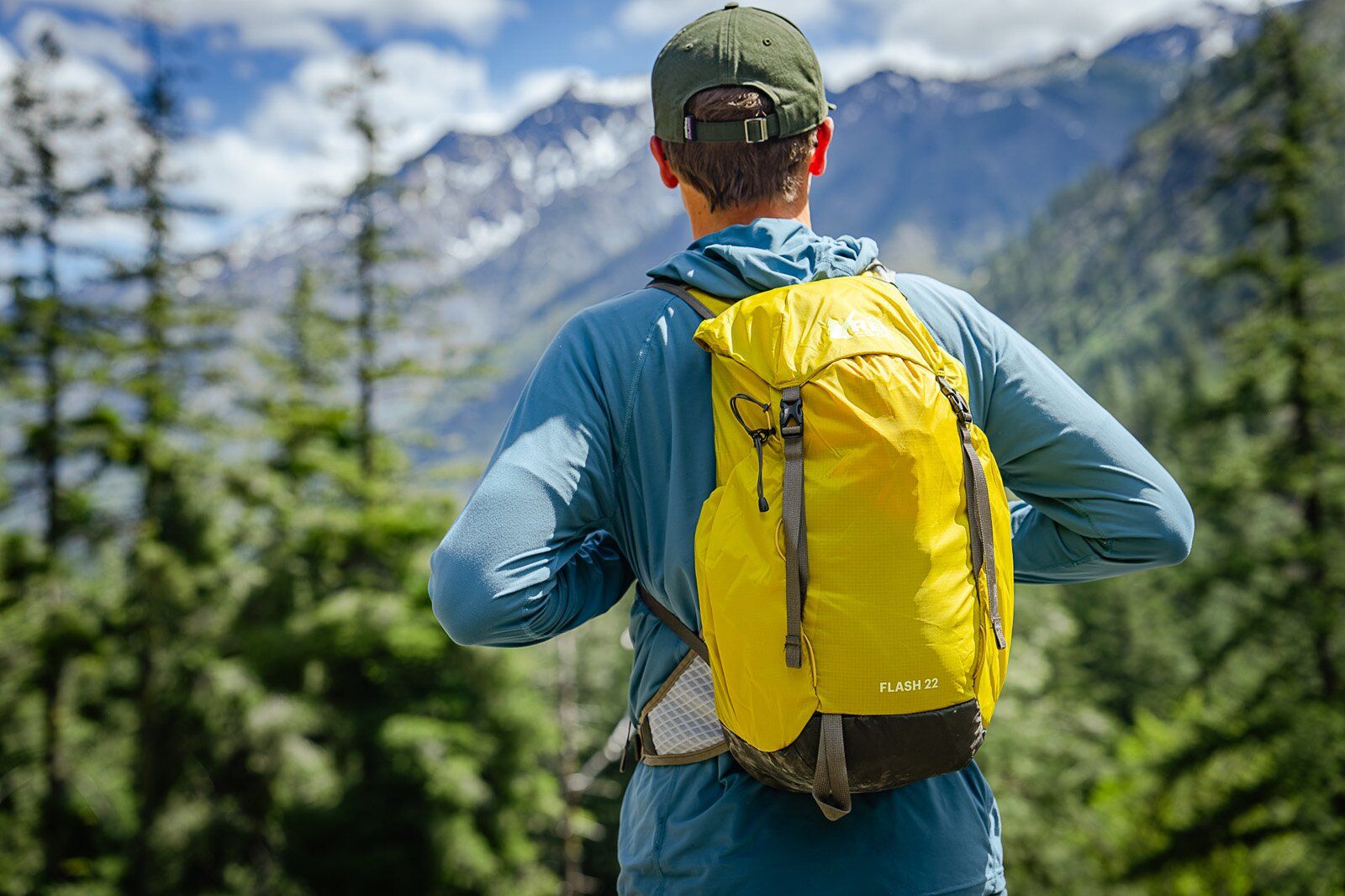

That said, most traditional hiking daypacks are significantly heavier than the Speed Lite 21, often tipping the scales north of 2 or even 3 pounds thanks to metal perimeter frames, thick padding, and burlier fabrics. Going up in weight will get you better support, organization, and durability—but for minimalist days or summit pushes, the Speed Lite 21 keeps things light without totally sacrificing function.

Jumping across stream wearing Deuter Speed Lite 21 backpack

Built with 140-denier polyamide, the Speed Lite 21 is more durable than ultralight competitors like the REI Co-op Flash 22 (70D), but it’s no match for burlier daypacks that use thicker fabrics. Many standard hiking daypacks feature 210-denier nylon in the body and 210D or even 420D at the base for added abrasion resistance. Still, for a summit or lightweight knockaround pack, I was impressed with the Speed Lite’s durability—it held up just fine to the rigors of toting crampons and felt surprisingly hardwearing for its weight. For what it’s built to do, I expect it to have a solid lifespan.

Deuter Speed Lite 21 hiking daypack product name on front panel

The Deuter Speed Lite 21 gets average marks for water resistance. It’s made with 140-denier polyamide treated with a durable water-repellent (DWR) finish, which does a decent job shedding light moisture like drizzles or splashes. That said, the pack doesn’t come with a rain cover and isn’t built to withstand sustained wet weather. If you’re heading out in questionable conditions, we’d recommend lining it with a trash bag or using waterproof stuff sacks to keep valuables dry. For short outings in fair weather, it’ll do just fine—but it’s not the pack we’d grab for an all-day adventure in the rain.

Hiker resting with Deuter Speed Lite 21 hiking daypack

Select icon to view details:

Icon
Icon
Icon
Icon
Icon
Icon
Icon
Icon
Icon
Icon

Longevity

Choosing durable outdoor gear is perhaps the most effective way to reduce environmental impact—the longer it lasts, the less it needs to be produced. Our proprietary longevity rating evaluates overall build quality based on factors such as materials, fabric denier, component durability (including zippers and toggles), real-world performance as reported by our field testers, and our experiences with the brand.

The Deuter Speed Lite 21 comes in a unisex, one-size-fits-all design. I’m 5’6” with a torso just shy of 19 inches, and it fit me well—but I’d only recommend it for folks who land in the mid-range of body sizes. There’s no torso length adjustment, so if you’re particularly tall or short, you’ll likely want to look elsewhere.
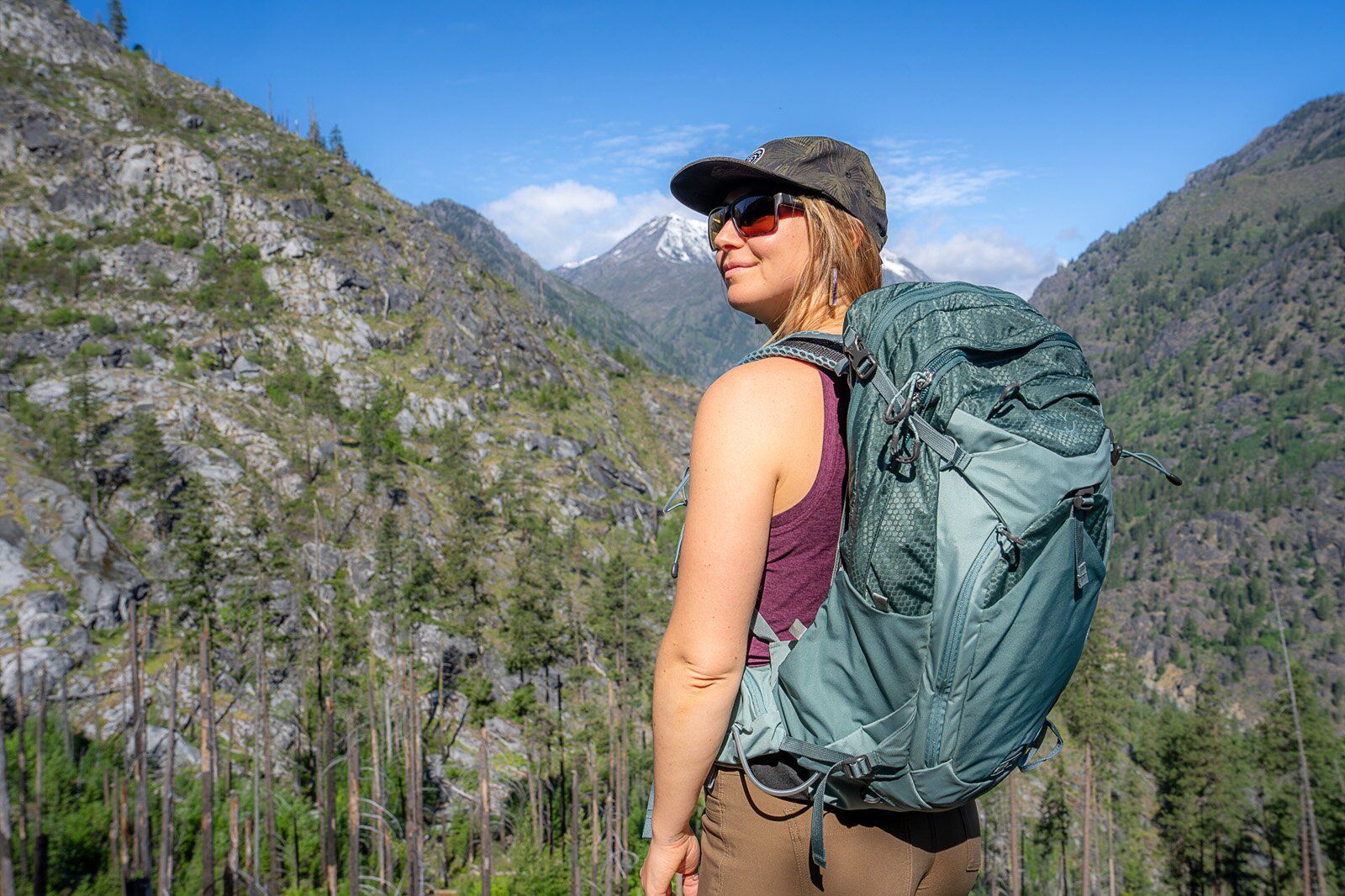

Fit tweaks are minimal but functional. The sternum strap offers about 5 inches of range and slides along a strip of webbing, though it doesn’t glide as smoothly as Osprey’s Daylite Plus system. Instead, it uses a camming buckle to lock it into place. The hipbelt is a simple 20-millimeter webbing strap that fit my 28-inch waist with room to spare—and it’s removable if you’d rather ditch it. For a minimalist pack, the Speed Lite offered enough adjustability to stay comfortable and secure.

Adjusting sternum strap of Deuter Speed Lite 21 hiking daypack

Osprey Daylite Plus ($75): A Better All-Rounder
The Daylite Plus costs $5 less than the Speed Lite, but we think it’s the better all-around pack. With more than a dozen colorways and a padded hydration sleeve that doubles as a laptop compartment, it’s built for seamless trail-to-town use. Its semi-rigid foam backpanel also provides more structure than the Speed Lite’s suspension, making it more supportive for long days on the trail—even if you won’t be hauling big loads. That said, the Daylite Plus doesn’t pack down as well, making it slightly less useful for backpacking or travel. For more, read our review of the Osprey Daylite Plus.

REI Co-op Flash 22 ($60): Even Cheaper, Even Flimsier
The Flash 22’s price is hard to beat, but its performance leaves something to be desired. Made from thin, flexible materials, it lacks structure, so careful packing is key to avoid a lopsided, uncomfortable carry. That said, the organization is surprisingly well thought out for such a budget-friendly daypack, with a dedicated reservoir sleeve, ice axe loop, water bottle pockets, pole attachment points, and interior drop pockets. Still, the Speed Lite comes out ahead in looks, structure, and carrying comfort. If you just need the bare minimum in a pack, the Flash 22 saves you some cash. But for most hikers, the Speed Lite’s extra support and durability are worth the slight price jump. For more, read our REI Co-op Flash 22 review.

Deuter Speed Lite 21 ($80)
Deuter Speed Lite 21 hiking daypack rear view
4/5

One of the most affordable packs here, the Speed Lite is a simple model that can get the job done for carrying light loads on short to moderate hikes, but not much more. With a small compressed size, it’s a great pairing for those looking for a travel or summit pack.

Weight
1 lb. 0.6 oz.
Capacity
21L (13, 17, 25, 30L)
Hipbelt
Webbing
Suspension
Frameless
Icon

Comfort & Support

2.5/5
Icon

Organization

2.5/5
Icon

Weight

5/5
Icon

Durability

3/5
Icon

Water Resistance

3/5
Icon

Sustainability

4.5/5
Osprey Daylite Plus ($75)
Close-up rear view of hiker wearing the Osprey Daylite Plus hiking daypack
4.1/5

The Daylite Plus checks all the boxes you’d want in a simple, affordable, and durable daypack. While it doesn’t support weight very well and has a pared-down feature set, it’s an attractive and versatile option for everything from casual hiking to travel.

Weight
1 lb. 4.6 oz.
Capacity
20L
Hipbelt
Webbing
Suspension
Frameless
Icon

Comfort & Support

3/5
Icon

Organization

3.5/5
Icon

Weight

4/5
Icon

Durability

4/5
Icon

Water Resistance

3/5
Icon

Sustainability

4.1/5
REI Co-op Flash 22 ($60)
Rear view of hiker wearing the REI Co-op Flash 22 hiking daypack
4/5

This pack is truly minimalist, both in its design and its impact on your finances. It functions well as a summit pack on backpacking trips, a travel daypack, or a simple tote for quick summer hikes. However, comfort and support fall by the wayside.

Weight
14 oz.
Capacity
22L (18L)
Hipbelt
Webbing
Suspension
Frameless
Icon

Comfort & Support

2/5
Icon

Organization

2.5/5
Icon

Weight

5/5
Icon

Durability

2/5
Icon

Water Resistance

2.5/5
Icon

Sustainability

4/5

Is the Speed Lite 21 for You?

Walking up snow wearing Deuter Speed Lite 21 daypack

If you’re looking for a daypack that’s streamlined enough to disappear into the corner of your backpacking pack or duffel—but still offers a modicum of comfort and support for actual trail use—the Deuter Speed Lite 21 is worth considering. We like it best for casual half-day hikes, quick summit scrambles, or as a travel pack for sightseeing. That said, unless you’re specifically trying to keep weight and packed size to a minimum, most hikers will be better served by a more supportive and better-organized design like the Osprey Tempest 22 (or men’s Talon) or Gregory Maya 20 (or men’s Miko).

dial your trail kit

Read More Daypack Reviews