Comfort & Support
Organization
Weight
Durability
Water Resistance
Sustainability
Weight
1 lb. 4.6 oz.
Capacity
20L
Hipbelt
Webbing
Suspension
Frameless
Pros
Cons
Osprey Daylite Plus
The Osprey Daylite Plus is a frameless pack, but it still offers more support than many daypacks in its class thanks to a relatively rigid foam backpanel. The ribbed foam sheet provides structure, keeps the pack from sagging, and adds some breathability through built-in cutouts. The shoulder straps are lightly padded with thin foam and airy mesh, and the 20-millimeter webbing hipbelt is simple but functional. It won’t take much weight off your hips, but it does help stabilize the load against your body.
Compared to another frameless daypack like the Deuter Speed Lite 21, the Daylite Plus feels noticeably more supportive—largely due to that stiffer backpanel. I’d recommend it for loads up to about 15 pounds, which is more than enough for a typical day hike. Beyond that, you’ll want to look for something with a framesheet or perimeter frame for better load transfer.
I gifted the Daylite Plus to my mom for our hiking trip in El Chaltén, Patagonia. She wore it daily for four weeks, packing it with her hardshell, a synthetic puffy, 1-liter Nalgene, and plenty of snacks. “As far as weight,” she told me, “I kept it pretty light, but I always bring my ten essentials on a day hike—and they all fit in very well.” She also said, “I appreciated having just two straps—one for the waist and one for the chest—with adjustment straps for tightening, and a built-in skookum handle for carrying. The Airscape backpanel was very comfortable.”
For such a simple pack, the Osprey Daylite Plus offers a surprisingly smart and versatile storage layout. You get a large main compartment, along with a dedicated zippered zleeve for a hydration reservoir or laptop carry—an excellent crossover feature for both backcountry and travel use. Up top, there’s a generously sized zippered pocket that runs about halfway down the pack and features a key clip plus two internal sleeves for added organization. There’s also a zippered accessory pocket on the front, two stretchy side pockets that can accommodate a 1-liter Nalgene, and a front shove-it pocket that’s perfect for stuffing a layer on the go. Compared to more stripped-down designs like the Deuter Speed Lite 21, the Daylite Plus feels far more adaptable and travel-friendly.
I used the Daylite Plus on a warm-weather day hike in Washington’s Central Cascades, where it held a pair of extra shoes (I was swapping them out for photos), 2 liters of water in a hydration reservoir, sunscreen, a down puffy, snacks, and a base layer. It was easy to access what I needed on the fly—my base layer lived in the front shove-it pocket, sunscreen rode up top, and snacks stayed organized in the half-sized front compartment. My mom, who used the pack daily during a month-long hiking trip in Argentina, also appreciated its layout: “I liked the simplicity of the design: one main section, an open pocket for quick access to a hat or layer, a small zip pocket on the outside, and two open side pockets with that stretchy material.” That said, the 20-liter capacity can feel limiting for winter outings or bulkier loads—so if you tend to pack extras or cold-weather gear, you may want to size up.
At 1 lb. 4.6 oz., the Osprey Daylite Plus lands on the lighter end of the daypack spectrum—about average for a frameless pack and noticeably lighter than many framed options. It wouldn’t be my first pick as a summit pack for a backpacking trip (designs like the REI Co-op Flash 22 or Black Diamond Distance 15 are more packable and purpose-built for that), but it’s still functional for stuffing into a duffel or road-trip bag for travel. As my mom put it after our trip to Argentina: “It slid down into my bigger pack against the back when I wasn’t using it,” making it a solid travel companion even when space is tight.
The Osprey Daylite Plus stands out for its durability, especially compared to other frameless daypacks in its class. With a 300-denier polyester body and a beefy 600-denier base, it’s built to withstand regular wear and tear far better than lighter designs like the 70-denier REI Co-op Flash 22 (read our review of the Flash 22). Whether you're scraping it through slot canyons, pushing through the occasional bushwhack, or just commuting around town, this pack is tough enough for daily use. After a full month of hard travel and hiking in Patagonia, my mom’s Daylite Plus came back looking nearly new—a solid testament to its long-haul potential.
The Osprey Daylite Plus isn’t built for sustained rain, but it offers a bit of protection thanks to its durable water-repellent (DWR) coating. The 300-denier polyester fabric adds a touch more water resistance than ultralight options like the REI Co-op Flash 22 (which uses 70D nylon), and it’ll handle a light drizzle or quick splash just fine. That said, there’s no included rain cover, and we wouldn’t recommend relying on it in wet conditions for extended periods. If you're heading out in questionable weather, line the pack with a small trash bag or stash your essentials in waterproof stuff sacks for extra peace of mind.
Select icon to view details:
Longevity
Choosing durable outdoor gear is perhaps the most effective way to reduce environmental impact—the longer it lasts, the less it needs to be produced. Our proprietary longevity rating evaluates overall build quality based on factors such as materials, fabric denier, component durability (including zippers and toggles), real-world performance as reported by our field testers, and our experiences with the brand.
PFAS-Free DWR
This product’s DWR (Durable Water Repellent) finish is made without per- and polyfluoroalkyl substances (PFAS). These synthetic compounds are known as "forever chemicals” because they take an extremely long time to degrade, if at all. PFAS can eventually end up in everything from soil to drinking water and have been linked to a range of health issues.
Recycled Materials
This product is made partly or entirely from recycled materials, the most common being nylon, polyester, wool, and down. Some products include a single recycled component or partially recycled fabric, while others are 100% recycled (generally excluding accessories like zippers, Velcro, toggles, etc). Look for these details in our product sustainability report linked below.
Bluesign Approved
Bluesign Technologies, based in Switzerland, is a third-party textile certification system that ensures materials are manufactured to strict environmental and worker safety standards. A Bluesign-approval denotes that some of the product’s materials have gone through a rigorous vetting process. A Bluesign Product goes the next mile: These contain more than 90% Bluesign-approved fabrics and more than 20% Bluesign-approved accessories.
Responsible Manufacturing
This criterion evaluates this brand's commitment to fair wages, safe working conditions, and reducing its environmental impact throughout the production process. Responsible manufacturing is most commonly demonstrated through certifications and membership in programs such as Fair Trade Certified, Fair Wear Foundation, Worldwide Responsible Accreditation of Production, and the Fair Labor Association. We also recognize brands that prioritize local production, such as those that manufacture primarily in the United States or Europe, to reduce carbon emissions, maintain better oversight of working conditions, and comply with strict social and environmental regulations.
Recycled and/or Reduced Packaging
This brand uses recycled packaging and/or is making efforts to reduce packaging altogether. For example, it may use a certain percentage of recycled cardboard or make efforts to use less plastic across its packaging operation. In some cases, brands also use Forest Stewardship Council-certified paper products, which helps to ensure sustainable sourcing of forest materials.
Repair Services
This brand offers repair services, which can extend this product's lifespan and reduce overall consumption. Some brands offer comprehensive repair programs that can fix a wide range of issues, while others have more limited capabilities. If a brand's warranty policy only covers replacement, rather than repair, these programs usually do not meet this criterion.
Resale and/or Recycling Services
This brand has a resale and/or recycling program, which helps keep gear in circulation for longer and out of landfills. The most common form is a trade-in program, where consumers can exchange items for store credit, which is then resold. Some brands accept products back for recycling at the end of their life, thereby reducing waste. Occasionally, some do both.
Carbon Footprint Tracking
This criterion evaluates whether this brand measures its greenhouse gas emissions, along with its commitment to reduction and transparency in reporting. Typically, we require brands to follow established frameworks such as the Higg Index, Greenhouse Gas Protocol, or The Change Climate Project. Generally, companies use the widely recognized scope categorization system for measuring brand emissions.
Annual Impact Report
This brand produces and publishes an annual impact report for public consumption, tracking its environmental footprint and sustainability efforts. These reports vary in form but generally cover topics such as material sourcing, greenhouse gas and emissions tracking, waste and water usage, supply chain analysis, and packaging efforts. An impact report is an important step toward transparency and accountability on the sustainability front.
The Osprey Daylite Plus comes in a unisex, one-size-fits-all design, which will work best for folks who fall in the mid-range of body sizes. I’m 5’6” with a torso just shy of 19 inches, and my mom is 5’3”—and the pack fit us both well. There’s no torso length adjustment, so taller or shorter users may want to look elsewhere, but for average-sized frames, the fit is comfortable and secure. The sternum strap slides easily on a piece of ribbed webbing with about 6 inches of range, and the webbing hipbelt fit my 30-inch waist with plenty of room to spare. The hipbelt is also removable, which adds versatility for travel or lighter days.
Deuter Speed Lite 21 ($80): Another Budget Option
The Speed Lite 21 and Osprey Daylite Plus share a lot of similarities: both are pared-down daypacks with webbing hipbelts, thin foam back panels, and simple organizational layouts. They also both have intentionally misspelled names (no judgment, we promise). The Speed Lite offers fewer storage options than the Daylite, which some hikers may appreciate for its simplicity, but we missed having a laptop/hydration sleeve and a small accessories pocket. Despite its plastic perimeter hoop, the Speed Lite has even less structure than the Daylite Plus, making it the more streamlined option for travel. However, for hikers wanting a lightweight, versatile pack with decent carrying ability, the Daylite Plus is the better choice. For more, read our review of the Deuter Speed Lite 21.
REI Co-op Flash 22 ($60): More Packable and Even Cheaper
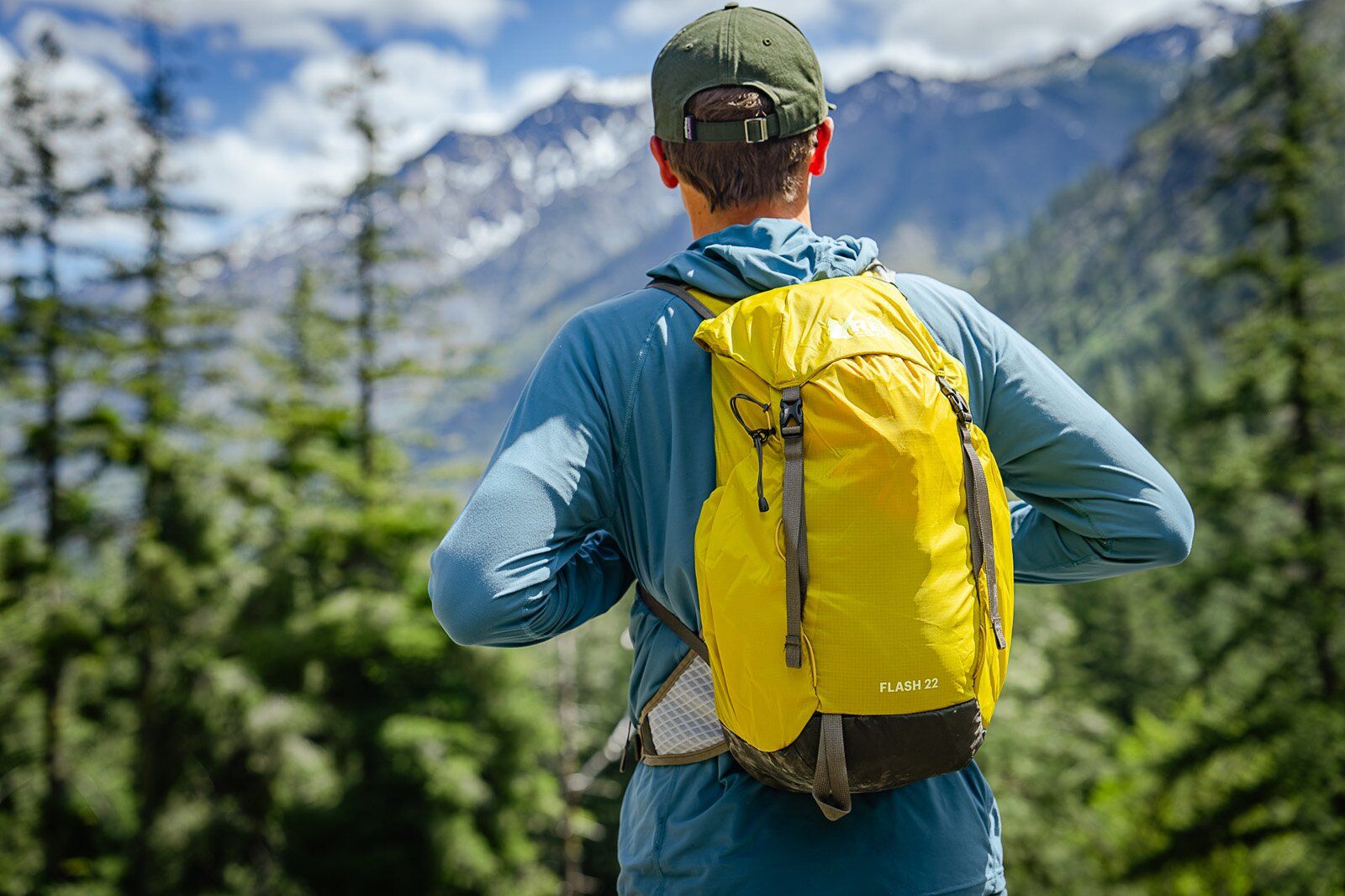
If you need a daypack to stuff into a larger bag for backpacking or travel, the REI Co-op Flash 22 is the ticket. At just $60, it covers the basics of a lightweight rucksack while adding a few nice extras like trekking pole attachments and a removable sit pad. However, it’s so streamlined that comfort takes a hit with loads over 10 pounds—a plus when packing it away, but a real downside for actual use. If you need a stashable pack, we’d opt for the Flash 22, but for a more durable, versatile, and comfortable choice, the Daylite Plus is the way to go. To learn more, read our Flash 22 review.
The Daylite Plus checks all the boxes you’d want in a simple, affordable, and durable daypack. While it doesn’t support weight very well and has a pared-down feature set, it’s an attractive and versatile option for everything from casual hiking to travel.
Comfort & Support
Organization
Weight
Durability
Water Resistance
Sustainability
One of the most affordable packs here, the Speed Lite is a simple model that can get the job done for carrying light loads on short to moderate hikes, but not much more. With a small compressed size, it’s a great pairing for those looking for a travel or summit pack.
Comfort & Support
Organization
Weight
Durability
Water Resistance
Sustainability
This pack is truly minimalist, both in its design and its impact on your finances. It functions well as a summit pack on backpacking trips, a travel daypack, or a simple tote for quick summer hikes. However, comfort and support fall by the wayside.
Comfort & Support
Organization
Weight
Durability
Water Resistance
Sustainability
The Osprey Daylite Plus is a great pick for hikers, travelers, and commuters who want one pack that can do a bit of everything. It’s especially well-suited for folks who don’t need a fully technical, framed daypack (just keep your load under about 15 pounds) but still want comfort, adjustability, and organization for everyday use and light adventures. The hydration/laptop sleeve makes it equally at home on the trail or in transit, and the structured foam backpanel and thicker-than-average fabric give it a durable, supportive feel that stands up to daily wear. If you're after a reliable all-rounder with just enough features—but not too many—the Daylite Plus hits the mark.
hit the trail
Gear Guide
Best Hiking Daypacks of 2025Gear Guide
Best Hiking Pants of 2025Gear Guide
Best Hiking Shoes of 2025Gear Guide
Best Hiking Boots of 2025Gear Guide
Best Trekking Poles of 2025Gear Guide
Best Rain Jackets of 2025Gear Guide
Best Down Jackets of 2025Education
Down vs. Synthetic Jackets