Shop sustainably. See our

Better Trail Certified gear.
MENU
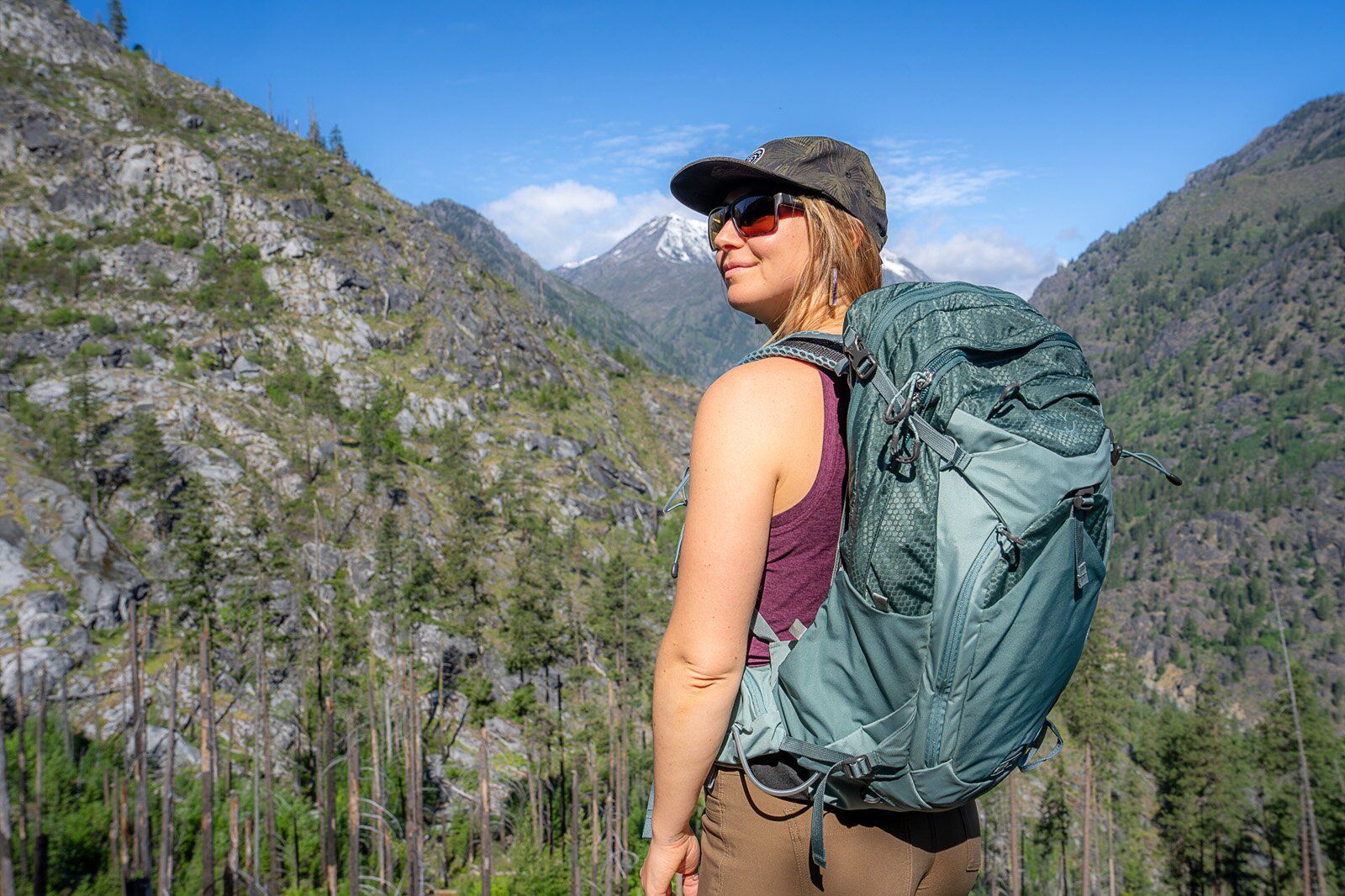
Rear view of hiker wearing the Osprey Mira 22 hiking daypack

Osprey Mira 22 Daypack Review

Vivika Stamolis (gear tester)
Nick Mott
ByMultiple Authors
Mar 28, 2025
When you buy through our links, we may receive a commission.
Our Take:
4.4/5
Don’t let the Osprey Mira 22’s modest capacity fool you—this pack means business. With a full metal frame and a tensioned mesh backpanel, the Mira ($200) can comfortably support loads up to 30 pounds. It also comes fully loaded with features, including an integrated hydration reservoir and a built-in rain cover, making it ready to go all day in whatever Mother Nature throws your way. At just over three pounds, it’s certainly on the heavy side, and many daytrippers will find it too overbuilt for their liking. But for those who prioritize comfort and stability—and need a hydration bladder—the Mira delivers a supportive, confidence-inspiring ride.
Comfort & Support

Comfort & Support

5/5
Organization

Organization

5/5
Weight

Weight

1.5/5
Durability

Durability

4/5
Water Resistance

Water Resistance

4.5/5
Sustainability

Sustainability

3.8/5

Weight

3 lb. 3.8 oz.

Capacity

22L (32L)

Hipbelt

Padded

Suspension

Perimeter frame

Pros

The included hydration reservoir makes for a one-in-done purchase.
Adjustable torso length is a rare bonus for a daypack.
Incredible load-carrying capacity for a 24-liter pack.

Cons

Heavy and bulky—not great for travel.
The structured backpanel feels overbuilt for a daypack.
Expensive if you don’t need a hydration bladder.

Among daypacks of similar capacity, the Osprey Mira 22 stands out for its exceptional comfort and support. Right away, I noticed how structured and stiff it felt—more like a full-on backpacking pack than a typical daypack. The 4-millimeter perimeter frame gives the pack its shape, prevents sagging, and distributes weight evenly across my back. Compared to frameless designs like the REI Co-op Flash series or the Hyperlite Elevate, the Mira feels significantly more rigid, stable, and supportive—an advantage that really pays off on longer hikes with heavier loads. I also appreciated how easy it was to dial in the fit. Even though the Mira only comes in one size, its adjustable torso length (14 to 18 in.) gave me plenty of room to tailor the pack to my longer torso.


Another of the Mira’s standout features is its mesh backpanel, which cradles the back while creating a channel for air to flow between my body and the pack. I tend to run hot, so I really appreciated how much less sweaty my back felt—even on warm days. The hipbelt and shoulder straps are well-cushioned, too, and I never experienced any pressure points or hotspots, no matter how long I was out. I’ve loaded the Mira with up to 20 pounds—layers, food, extra water—and once everything was properly adjusted, it consistently felt lighter than expected. Osprey lists the Mira’s load limit at 30 pounds, which is seriously impressive for a daypack. Whether I’m out for a quick hike or an all-day push, the Mira carries the weight comfortably and confidently.

Osprey Mira 22 hiking daypack back panel and shoulder straps
Side view of Osprey Mira 22 hiking daypack
Adjusting hip straps of the Osprey Mira 22 hiking daypack

One of the first things I noticed about the Mira 22 is how much more spacious it feels than its 22-liter capacity suggests. My Osprey Tempest 22—the same capacity on paper—barely fits a puffy when I’m carrying a hydration bladder. The Mira, on the other hand, comes stock with a 2.5-liter reservoir and still feels downright roomy. On cooler days, I’ve comfortably packed multiple layers, a beanie, gloves, and trail snacks alongside the full bladder. On warmer outings, I’ll swap in a sun hoody, quick-dry towel, hat, and sunscreen. Even then, there’s still space to stash a 1-liter Nalgene in one of the outer pockets.


The Mira is loaded with zippers and pockets. A side zipper gives access to a separate compartment for small items, while an interior mesh pocket with a key clip is perfect for sunglasses (and yes, that clip has saved me from a car key disaster more than once). The hydration bladder has its own dedicated sleeve—which could double as a laptop compartment—and there’s enough room in that space to stuff an extra layer like a rain jacket, too. Up top, a small zippered pocket is great for stashing things like sunscreen or my film camera for quick access. The two zippered hipbelt pockets are roomy—each fits my iPhone 13 Pro (although just barely) and easily holds chapstick, gummies, or electrolyte chews.


On the face of the Mira is a large shove-it pocket, ideal for storing a rain jacket or damp layers. I use this pocket all the time and wouldn’t want a pack without it. The two side stretch pockets just barely fit 1-liter Nalgenes and can also accommodate a small sit pad. For more technical use, the Mira includes trekking pole attachments and dedicated loops with bungee tie-offs for ice tools. All in all, this pack offers far more storage than you’d expect from a 22-liter design, making it an excellent choice for hikers who like to have a place for everything.

Osprey Mira 22 hiking daypack front stash zipper pocket
Stashing chapstick in hip pocket of Osprey Mira 22 hiking daypack
Osprey Mira 22 hiking daypack front panel stretch pocket

There’s no getting around it: at over three pounds, the Mira is heavy for a daypack. Many models weigh significantly less—and in some cases, even full-on backpacking packs with more capacity come in at the same weight or lower (like the 2-lb. 11.5-oz. Osprey Eja 58). In truth, the Mira feels overbuilt, especially when you consider that similar levels of support and comfort can be found in lighter designs. For instance, the Osprey Sirrus 24 offers a comparable metal perimeter frame and suspended mesh backpanel at 2 pounds 11.7 ounces. Or you could step down to the Osprey Tempest 22, which uses a framesheet instead of a metal frame and weighs just 2 pounds 4.3 ounces—while still boasting a 30-pound load limit. And if you’re willing to trade some support for a big weight savings, options like the frameless REI Co-op Flash 22 or running-vest-style Black Diamond Distance 22 cut things down even further (for more, read our review of the BD Distance 22).


That said, the Mira clearly isn’t built for ounce-counters. It’s for hikers who want durability, plush cushioning, and serious support—something that will go the distance for hundreds of miles and hold up over multiple seasons. And to its credit, the Mira’s beefy build pays off in comfort: even when loaded close to its 30-pound max, it feels lighter than you’d expect.

Osprey Mira 22 hiking daypack side view

Despite logging long days and wearing this pack on scrambles where I scraped against rough rock, I’ve been impressed by the Mira’s durability. The 210-denier body fabric is tough—nothing I’ve thrown at it has managed to tear or puncture it—and the 420-denier base fabric feels like it could last forever without developing holes. While the magnetic buckle on the chest strap gave me some initial pause, it’s proven strong and reliable. Even the zippers have continued to run smoothly with no signs of jamming or wear. All told, I’ve had zero durability concerns, and I expect this pack to last for years to come.

Front panel close-up of Osprey Mira 22 hiking daypack

The Osprey Mira 22 is built to handle wet weather. Most notably, it comes with a built-in rain cover, neatly stashed in a zippered pocket at the bottom of the pack. The cover stretches over the entire bag and secures with elastic to stay in place while you hike. The pack itself is made with bluesign-approved nylon and treated with a PFAS-free durable water-repellent (DWR) coating for added moisture protection. To be fair, I’ve only tested the Mira in light rain and damp conditions, so I haven’t put it through a true downpour yet. But with the included rain cover and treated fabric, I expect it to hold up well and keep contents dry in all but the most torrential storms.

Raincover stored in zipper pocket of Osprey Mira 22 hiking daypack

Select icon to view details:

Icon
Icon
Icon
Icon
Icon
Icon
Icon
Icon
Icon
Icon

Longevity

Choosing durable outdoor gear is perhaps the most effective way to reduce environmental impact—the longer it lasts, the less it needs to be produced. Our proprietary longevity rating evaluates overall build quality based on factors such as materials, fabric denier, component durability (including zippers and toggles), real-world performance as reported by our field testers, and our experiences with the brand.

The Osprey Mira 22 is a one-size-fits-all pack with 4 inches of torso adjustability, thanks to an easy-to-use ladder system on the backpanel. It fits torso lengths from 14 to 18 inches and waists from 25 to 50 inches. Since the default torso length on most packs tends to run short for me, I really appreciated how easy it was to dial in the fit. The men’s version of the pack—the Osprey Manta 24—offers similar adjustability, with a torso range of 17 to 22 inches.

Adjusting straps on the Osprey Mira 22 hiking daypack
Close-up of back panel of Osprey Mira 22 hiking daypack
Osprey Mira 22 hiking daypack sternum strap

Osprey Sirrus 24 ($180): Nearly Identical, But No Reservoir
The Sirrus and Mira are both well-featured, supportive daypacks from Osprey, designed with comfort and organization in mind. Each has a rigid metal frame, suspended mesh backpanel, adjustable torso length, rain cover, and an array of thoughtfully placed pockets. The Mira costs $20 more but includes a 2.5-liter hydration reservoir (a $42 value), making it the better deal if you need one. In terms of layout, the Sirrus has larger hipbelt pockets, while the Mira’s front shove-it pocket is more functional and its side water bottle pockets are easier to access (top and side entry vs. top only on the Sirrus). At 22 liters, we think the Mira edges out the Sirrus in overall organization; but the Sirrus shines in its larger 34-, 36-, and 44-liter versions, which add a dedicated sleeping bag compartment and are suitable for overnight use. Whichever you choose, both packs are excellent for day hikes and deliver impressive comfort and utility.

Gregory Jade 24 LT ($150): Streamlined Support
If you like the Mira’s robust suspension but find it a bit overbuilt, the Gregory Jade 24 LT is a more streamlined alternative. It features many of the same components—a metal perimeter frame, suspended mesh backpanel, and well-padded hipbelt and shoulder straps—but in a pared-down package. As a result, it weighs a full pound less at just 2 pounds 3.2 ounces, which feels more reasonable for a daypack. The tradeoff is a lower load limit of 20 pounds (10 lb. less than the Mira), though you’d be hard-pressed to exceed that with only 24 liters of space, and the Jade also lacks an included rain cover or hydration reservoir. But for $50 less, the tradeoffs could be well worth it for those looking for a nice balance of minimalism and features. For more, read our review of the men's Zulu 24 LT.

Osprey Mira 22 ($200)
Rear view of hiker wearing the Osprey Mira 22 hiking daypack
4.4/5

The Mira feels bigger than its specs suggest, thanks to loads of pockets and a full suspension. The included hydration reservoir is also a boon for hikers who are building their kit from scratch. If you already have a reservoir, there are more affordable and lighter-weight options.

Weight
3 lb. 3.8 oz.
Capacity
22L (32L)
Hipbelt
Padded
Suspension
Perimeter frame
Icon

Comfort & Support

5/5
Icon

Organization

5/5
Icon

Weight

1.5/5
Icon

Durability

4/5
Icon

Water Resistance

4.5/5
Icon

Sustainability

3.8/5
Osprey Sirrus 34 ($200)
Osprey Stratos 34 hiking daypack front view
4.4/5

The Sirrus is a pack for hikers with big days and long gear lists. This feature-heavy model doesn’t skimp on organization and support, but it’s probably too overbuilt for most daytrippers.

Weight
3 lb. 0.6 oz.
Capacity
34L (24, 36, 44L)
Hipbelt
Padded
Suspension
Perimeter frame
Icon

Comfort & Support

5/5
Icon

Organization

5/5
Icon

Weight

1/5
Icon

Durability

4/5
Icon

Water Resistance

4/5
Icon

Sustainability

4.1/5
Gregory Jade 24 LT ($170)
Stopped on the trail wearing Gregory Zulu 24 LT hiking daypack
4.7/5

The Jade 24 LT is basically a backpacking pack in miniature, and we mean that as a compliment. This is a comfortable, sturdy daypack with excellent design elements, especially its breathable trampoline-style backpanel. We wish it came in more sizes, though, and was a bit lighter.

Weight
2 lb. 3.2 oz.
Capacity
24L (20, 28L)
Hipbelt
Padded
Suspension
Perimeter frame
Icon

Comfort & Support

5/5
Icon

Organization

4/5
Icon

Weight

3/5
Icon

Durability

4/5
Icon

Water Resistance

3/5
Icon

Sustainability

3.7/5

Is the Mira 22 for You?

Hiker resting on boulder wearing the Osprey Mira 22 hiking daypack

The Osprey Mira 22 is a great match for day hikers with a maximalist mindset. With suspension more akin to a backpacking pack, it’s a solid pick for those who anticipate carrying heavier loads and want top-tier comfort and support. It comes fully outfitted with a 2.5-liter hydration reservoir (complete with magnetic hose attachment), an integrated rain cover, and ample pocket storage. All told, it scores high in comfort and support, organization, durability, and water resistance—an impressive combination that’s rare to find in a 22-liter pack.


That said, the Mira might be overkill for some. You’d need incredibly dense gear to test its 30-pound load limit, and it’s correspondingly heavy—so if shaving ounces or moving fast is a priority, this isn’t the daypack for you. We’re also not fans of acquiring gear you don’t need—if you already have a hydration reservoir you like, you might be better off with a more streamlined pack like the Osprey Sirrus 24 or Gregory Jade 24 LT. And because of its bulk and stiffness, the Mira doesn’t pack down well into a backpacking pack or suitcase, so it’s not the best travel companion. Still, for day hikes where comfort and support matter most, the Mira is a tough one to beat.

hit the trail

Read More Daypack Reviews