
Best Camping Stoves of 2025


ByMultiple Authors
Updated:
Jul 15, 2025Table of contents
Coleman Cascade 3-in-1 ($275)
Coleman Cascade Classic ($130)
Camp Chef Everest 2X ($190)
Jetboil Genesis Basecamp System ($450)
Eureka SPRK Grill ($150)
BioLite CampStove 2+ ($250)
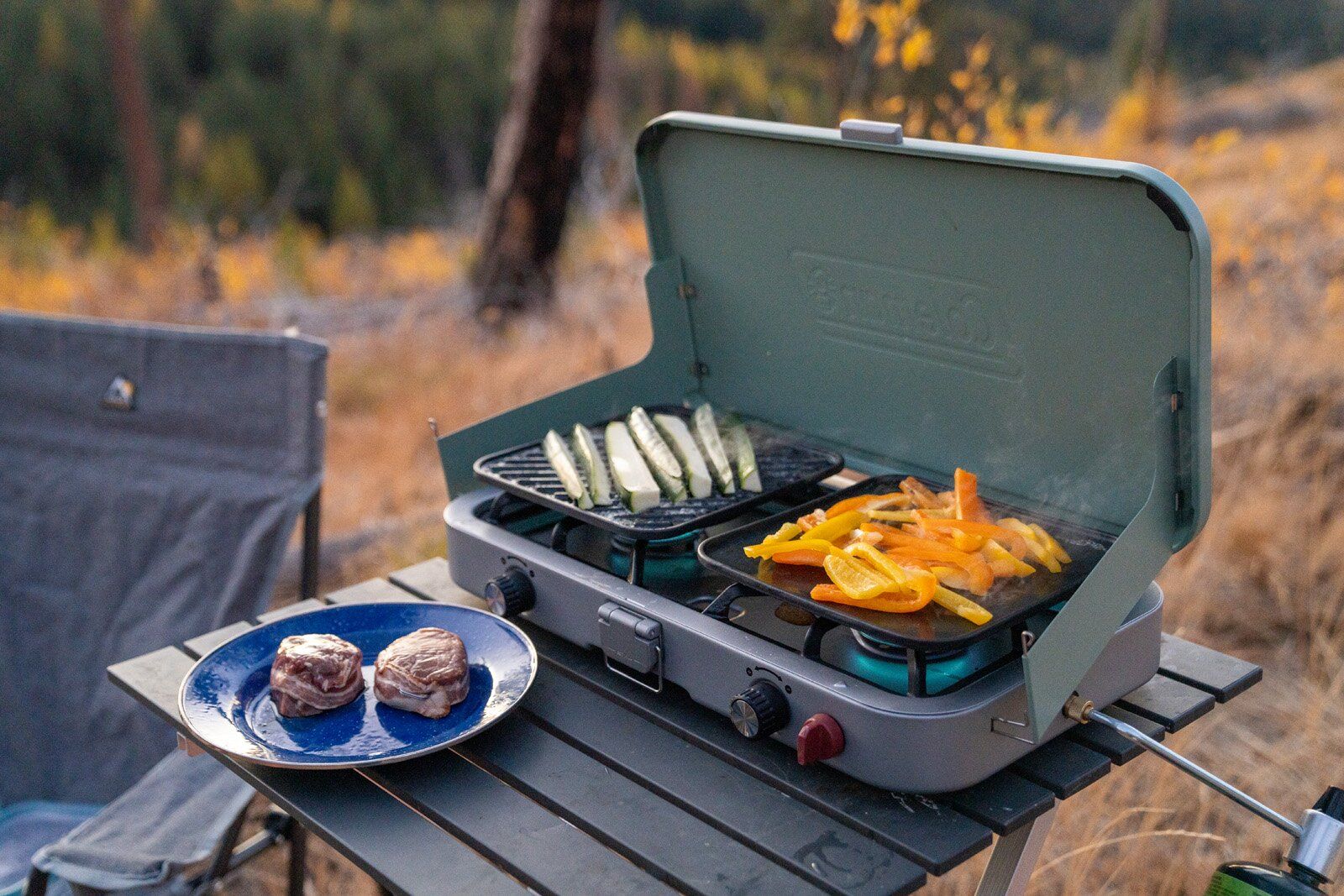
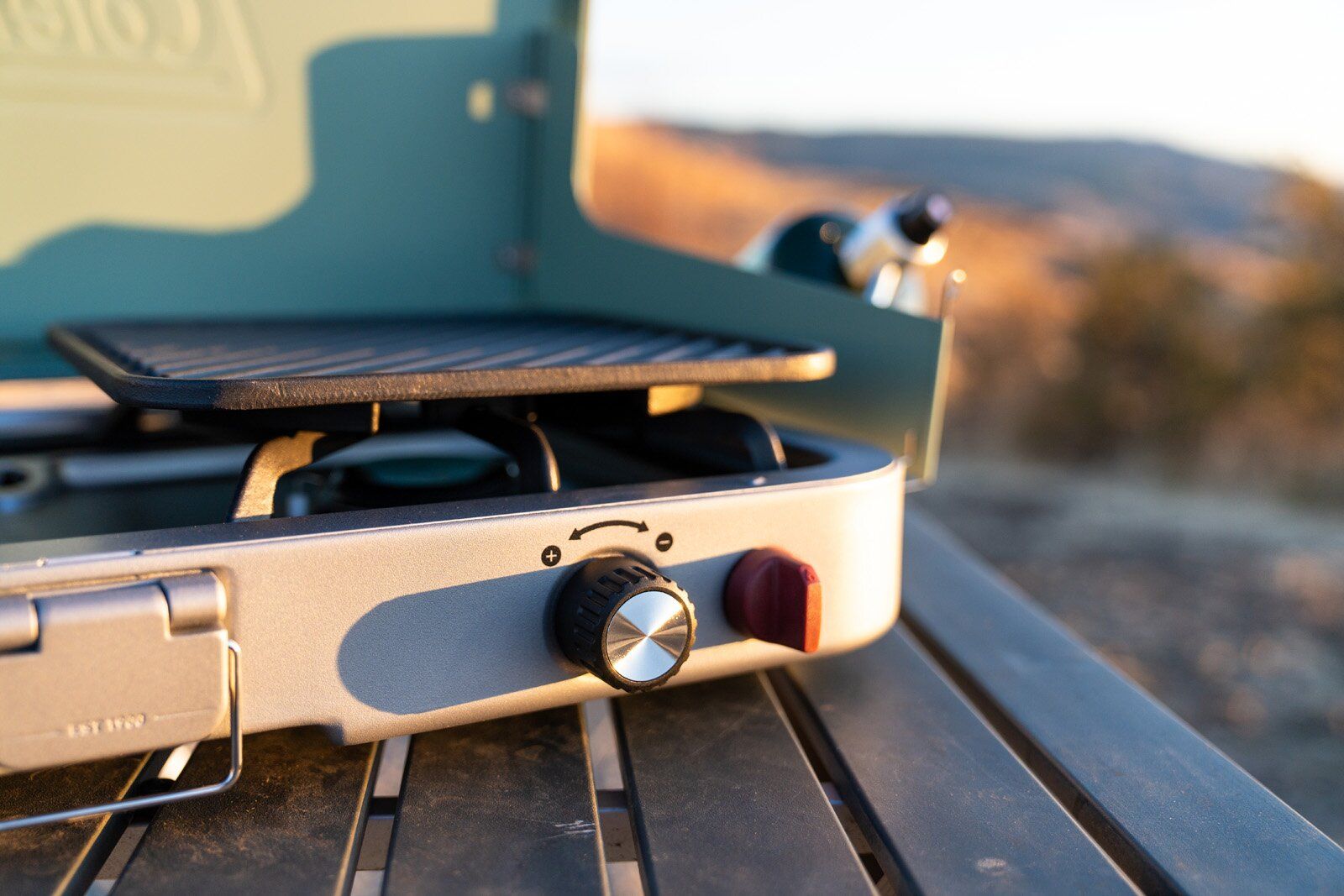
The Coleman Cascade 3-in-1 is a classic rectangular two-burner stove equipped with a cast-iron griddle and grill. The included accessories can expand your camp cooking repertoire, letting you prepare meals from steak and kebabs to French toast and breakfast hash. If you don’t need those add-ons, though, there are better stoves for less money.
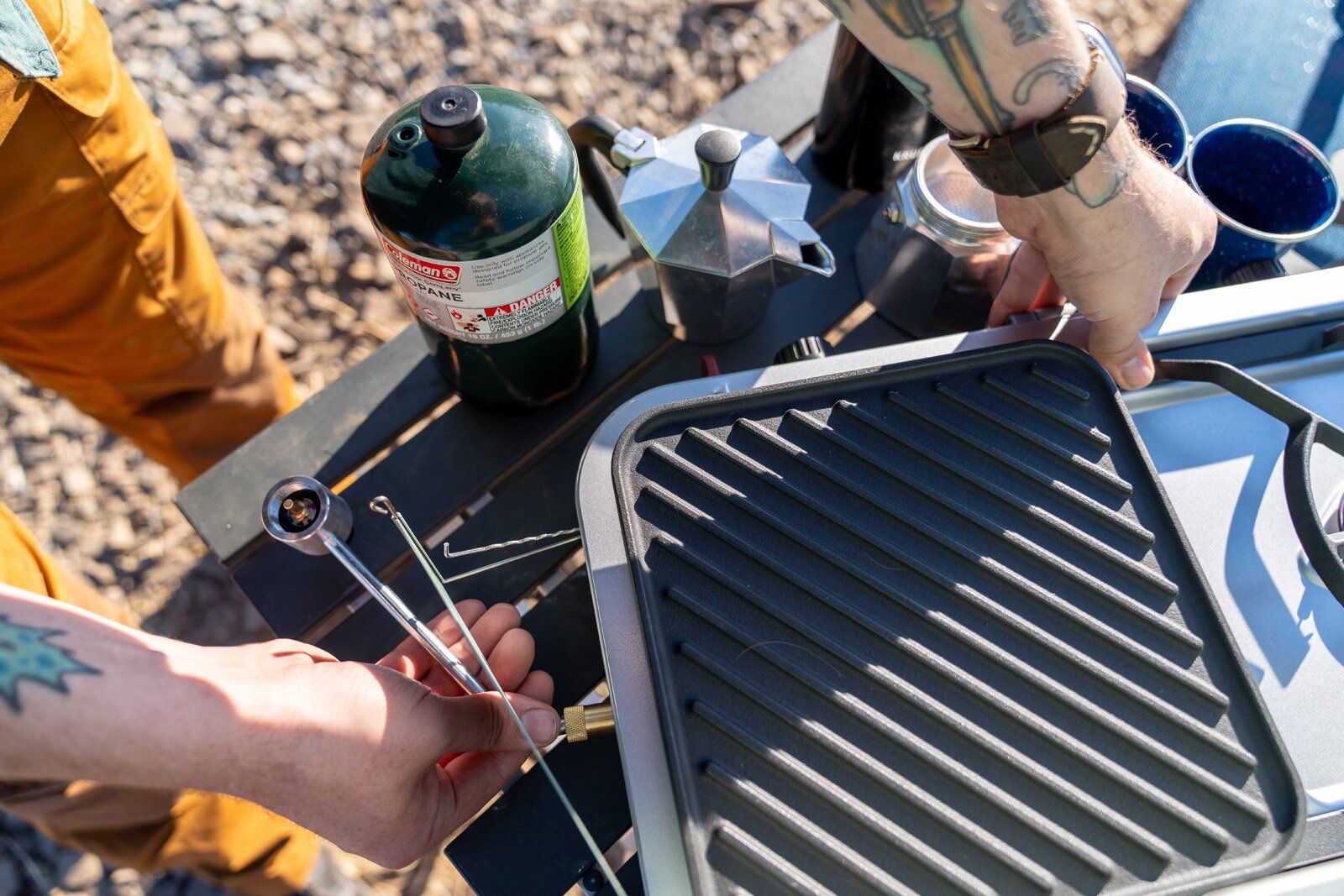
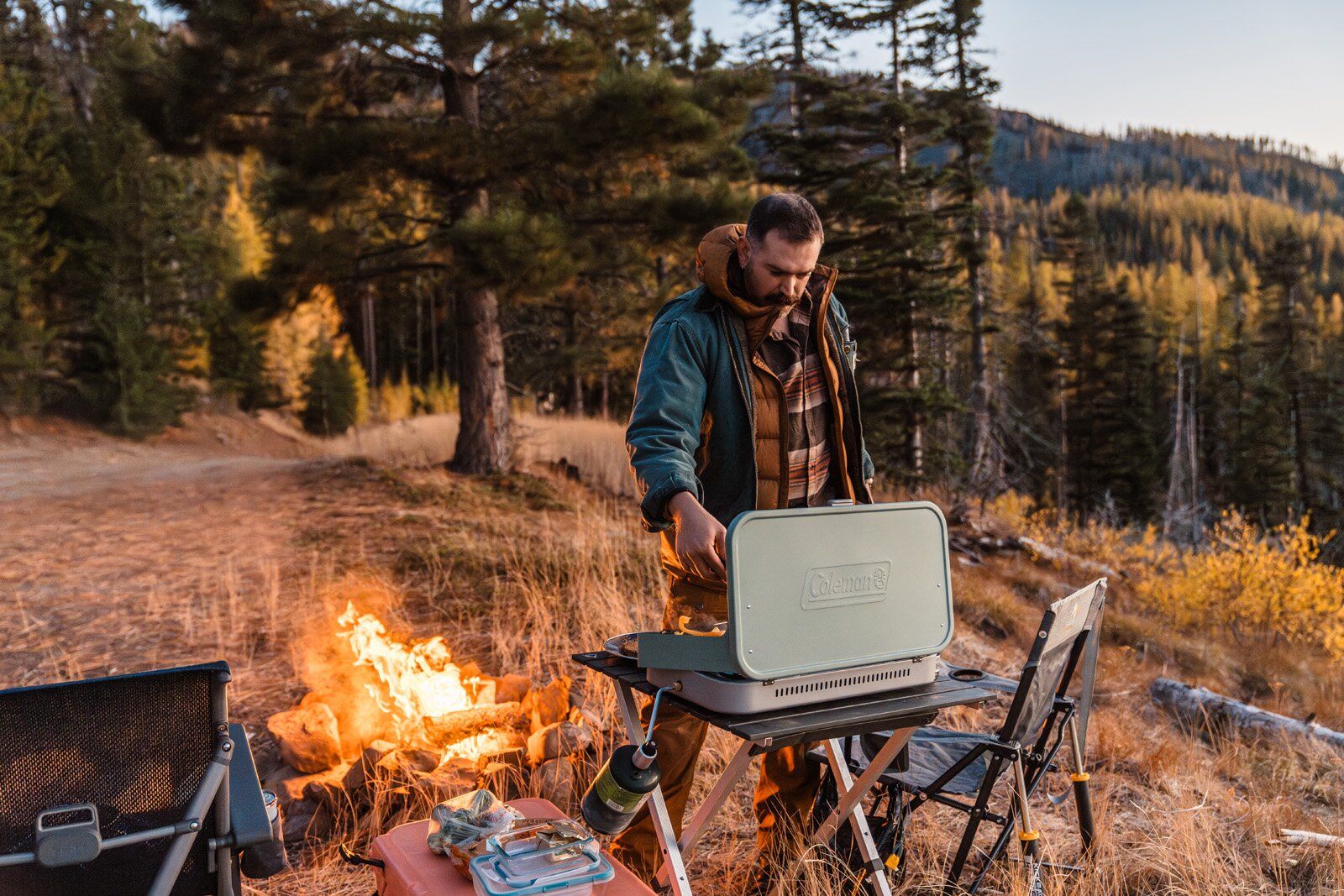
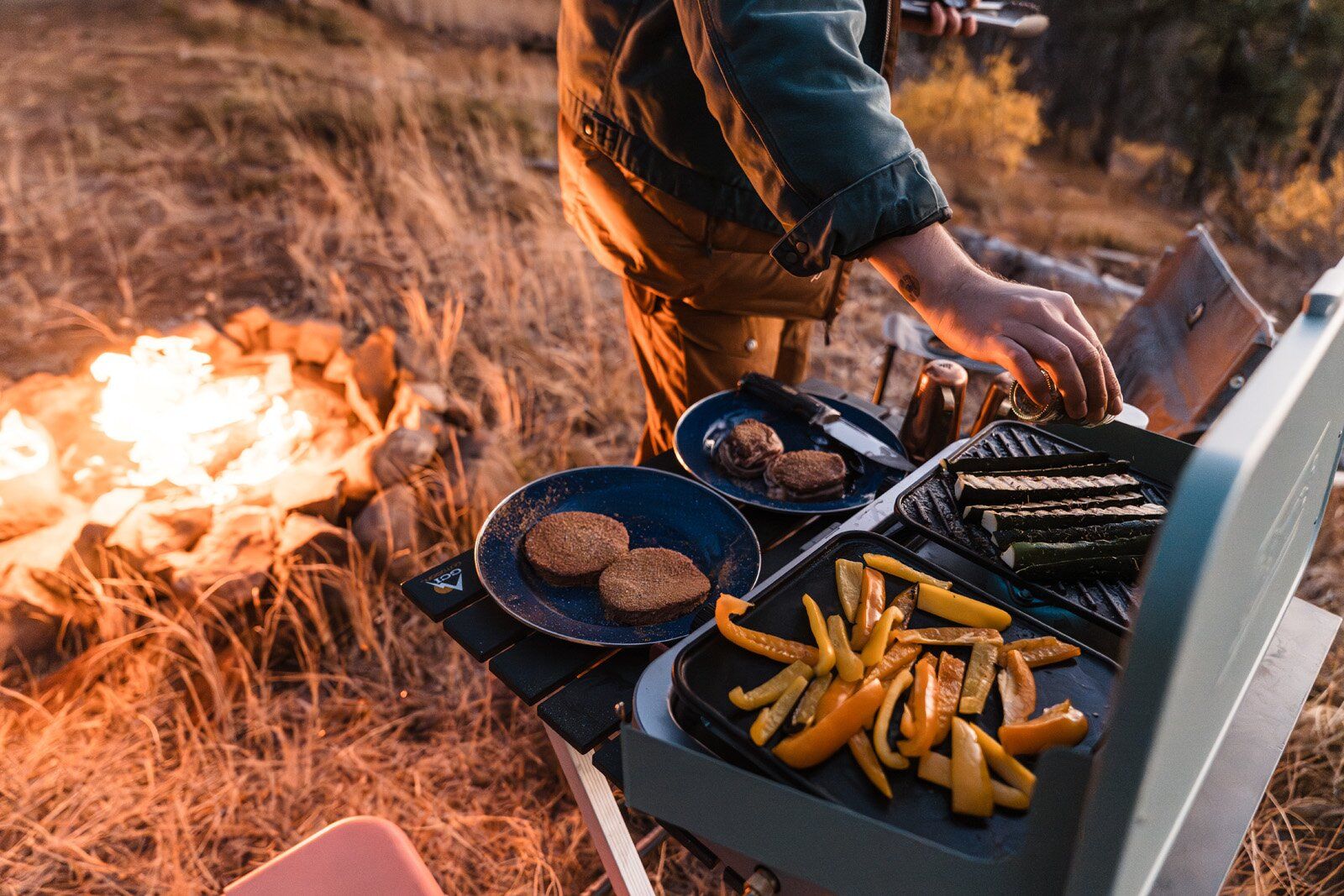
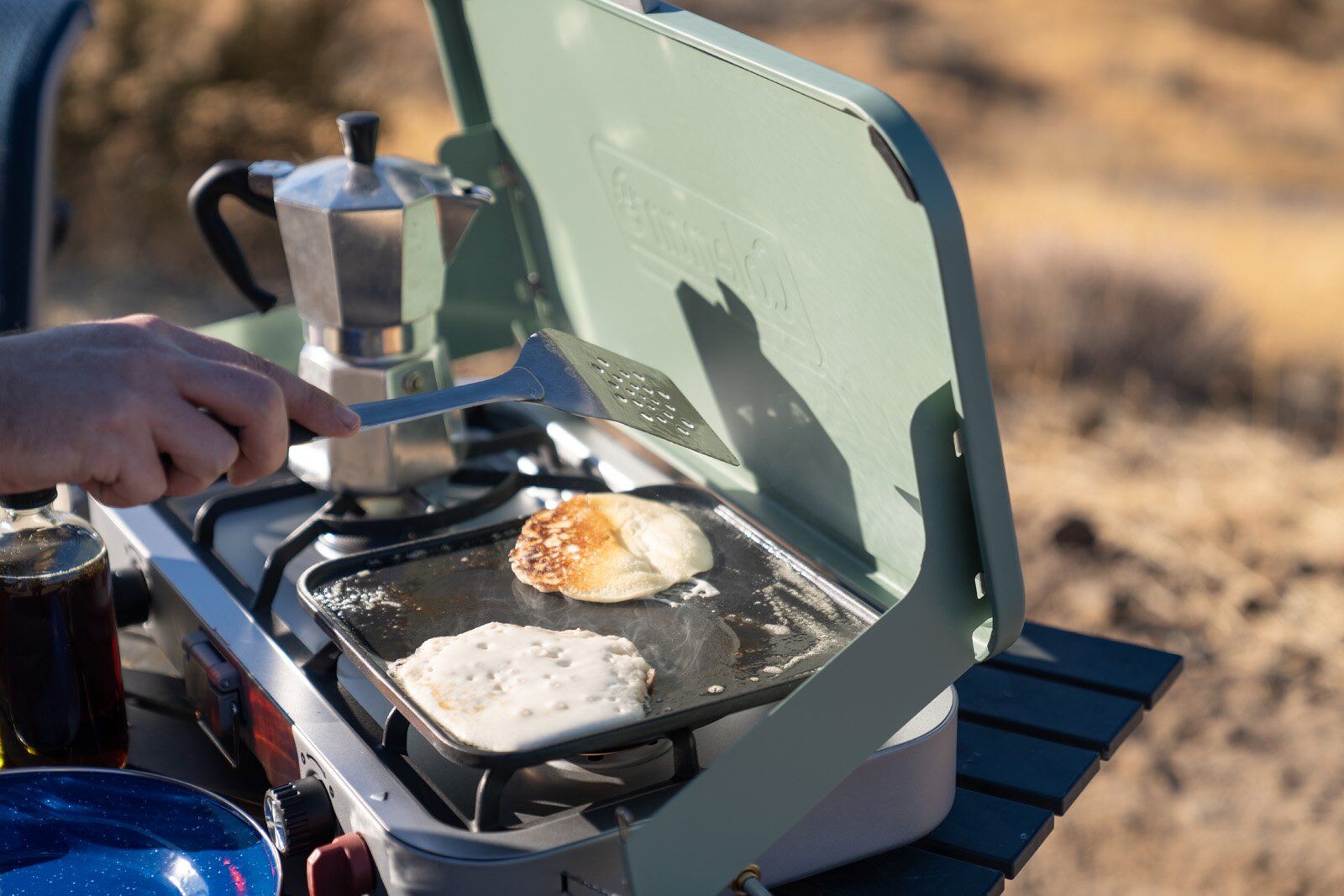
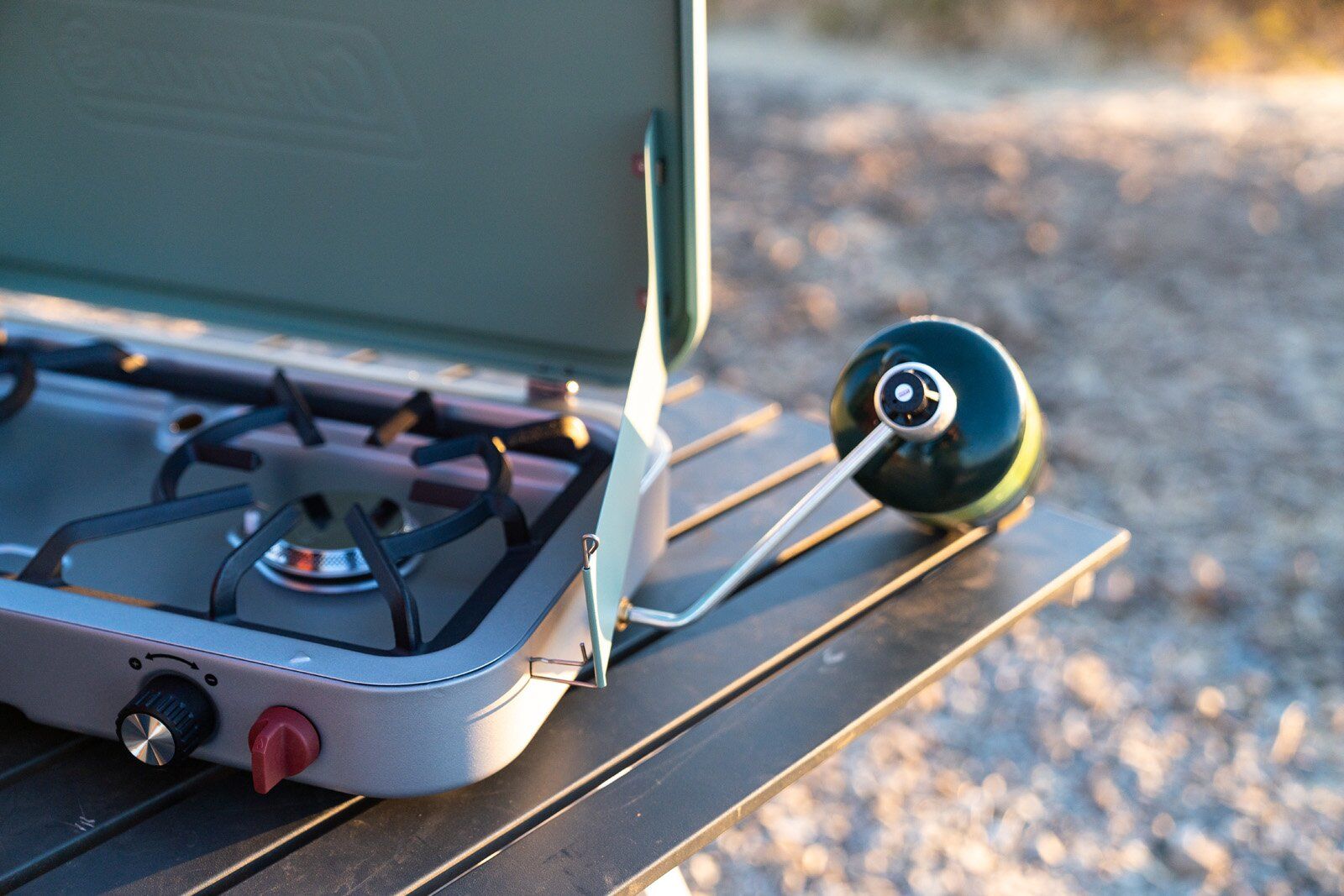
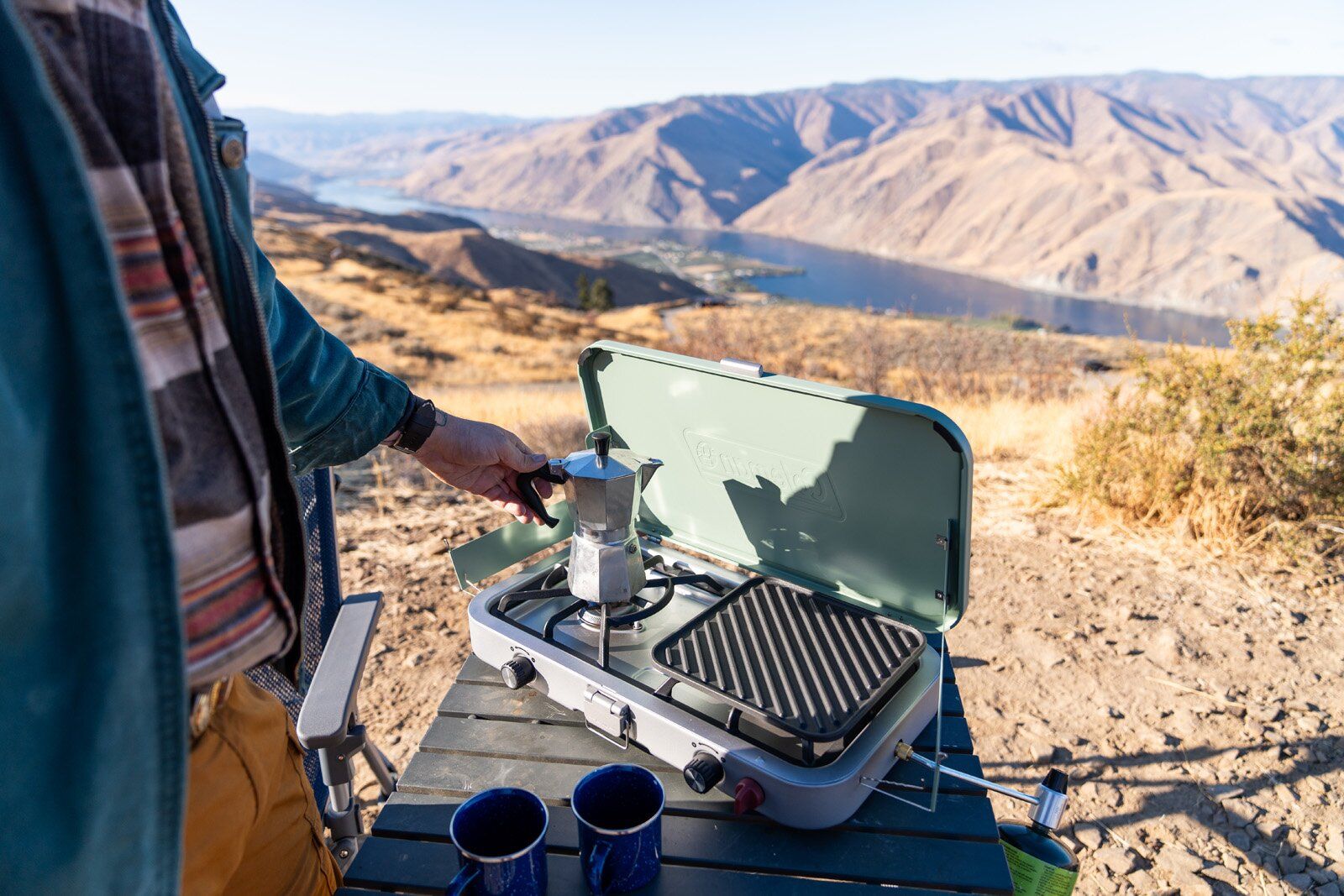
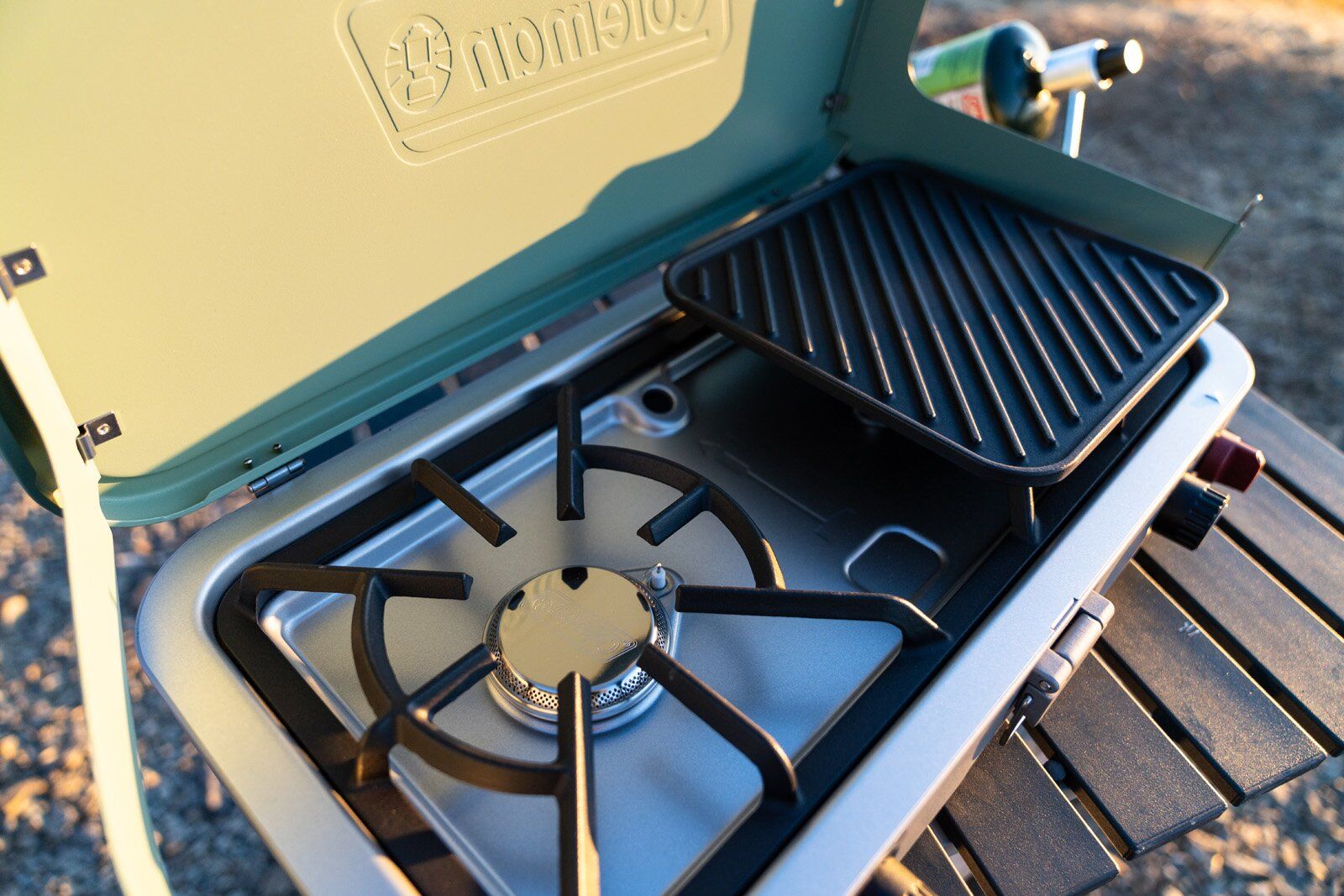
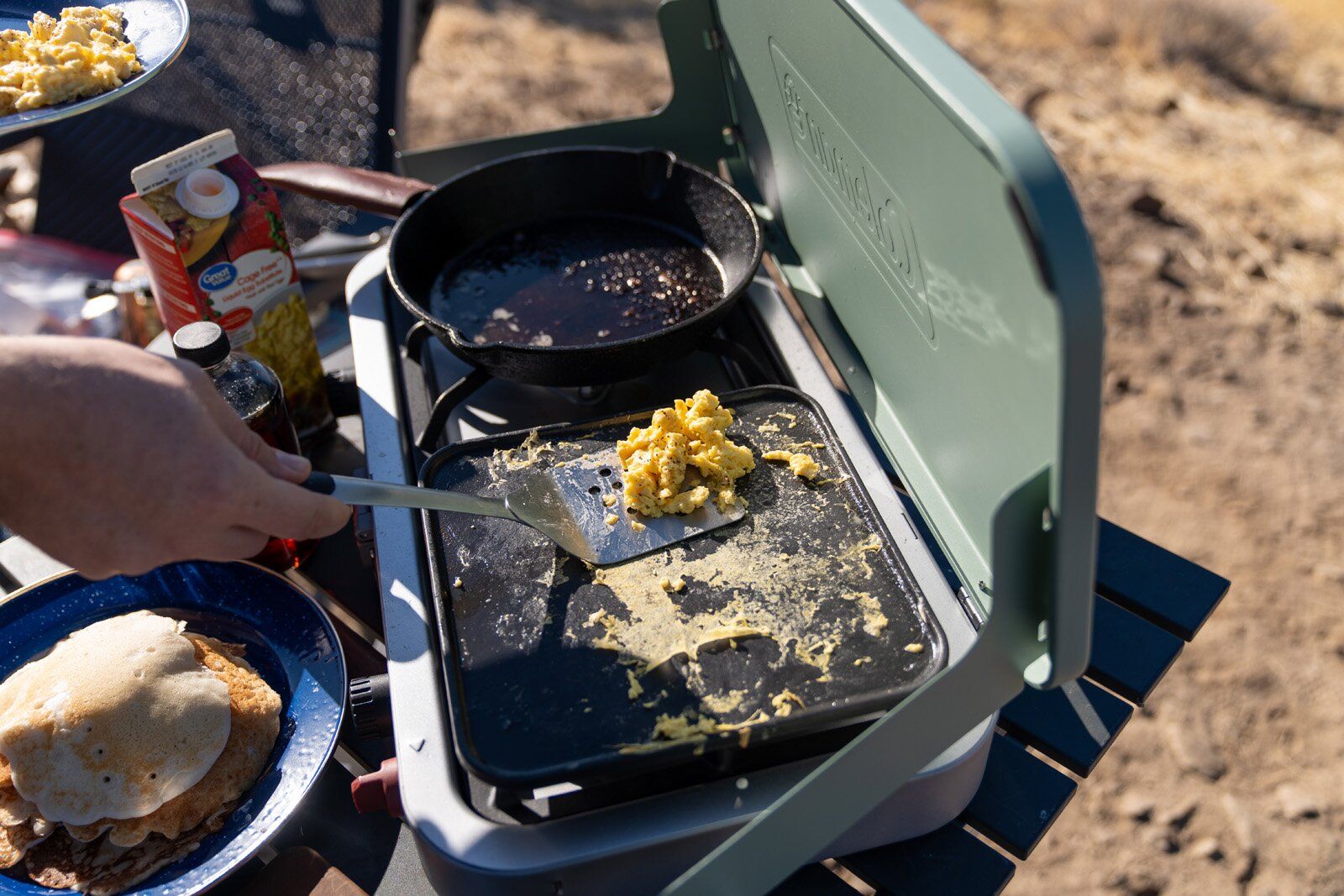
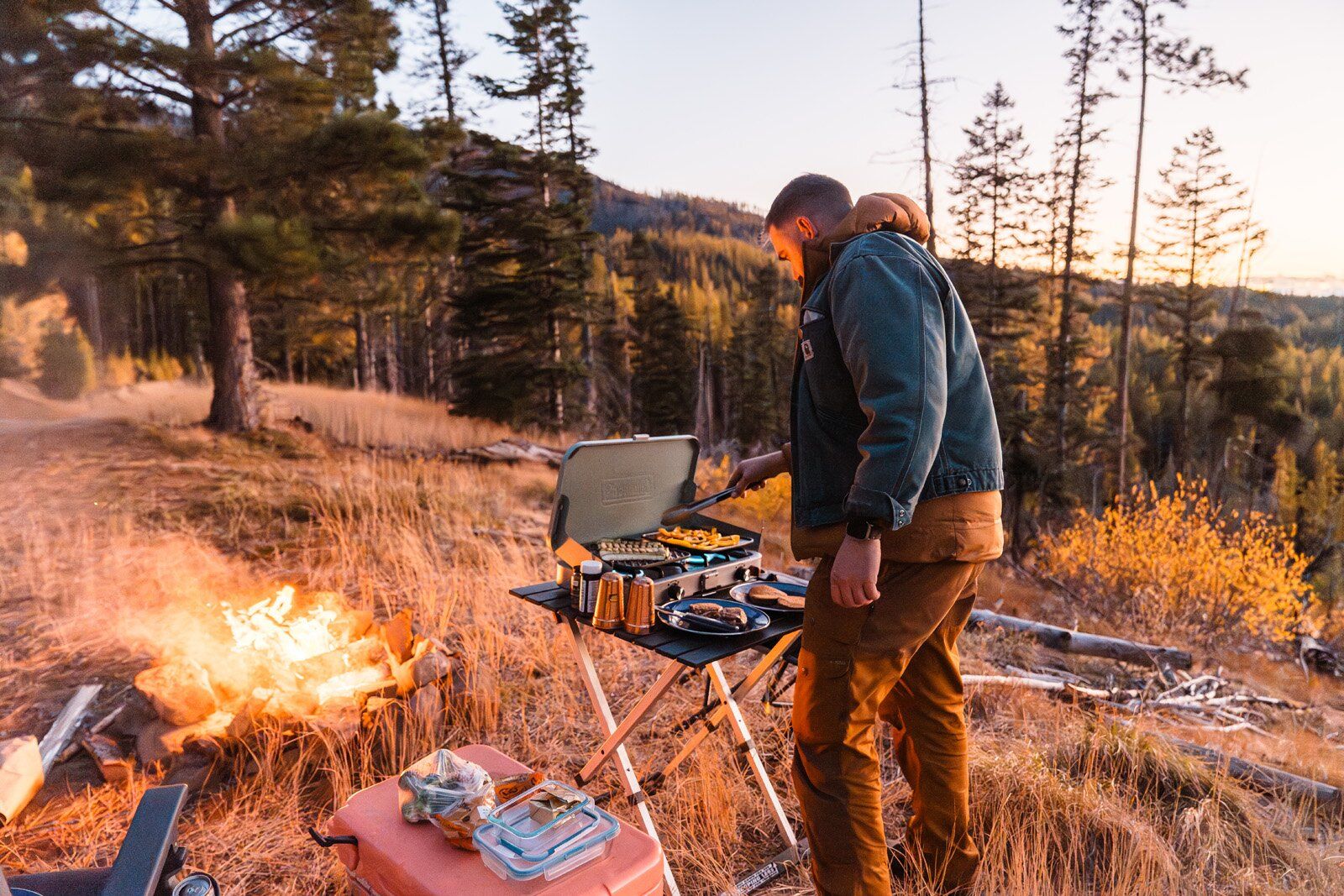
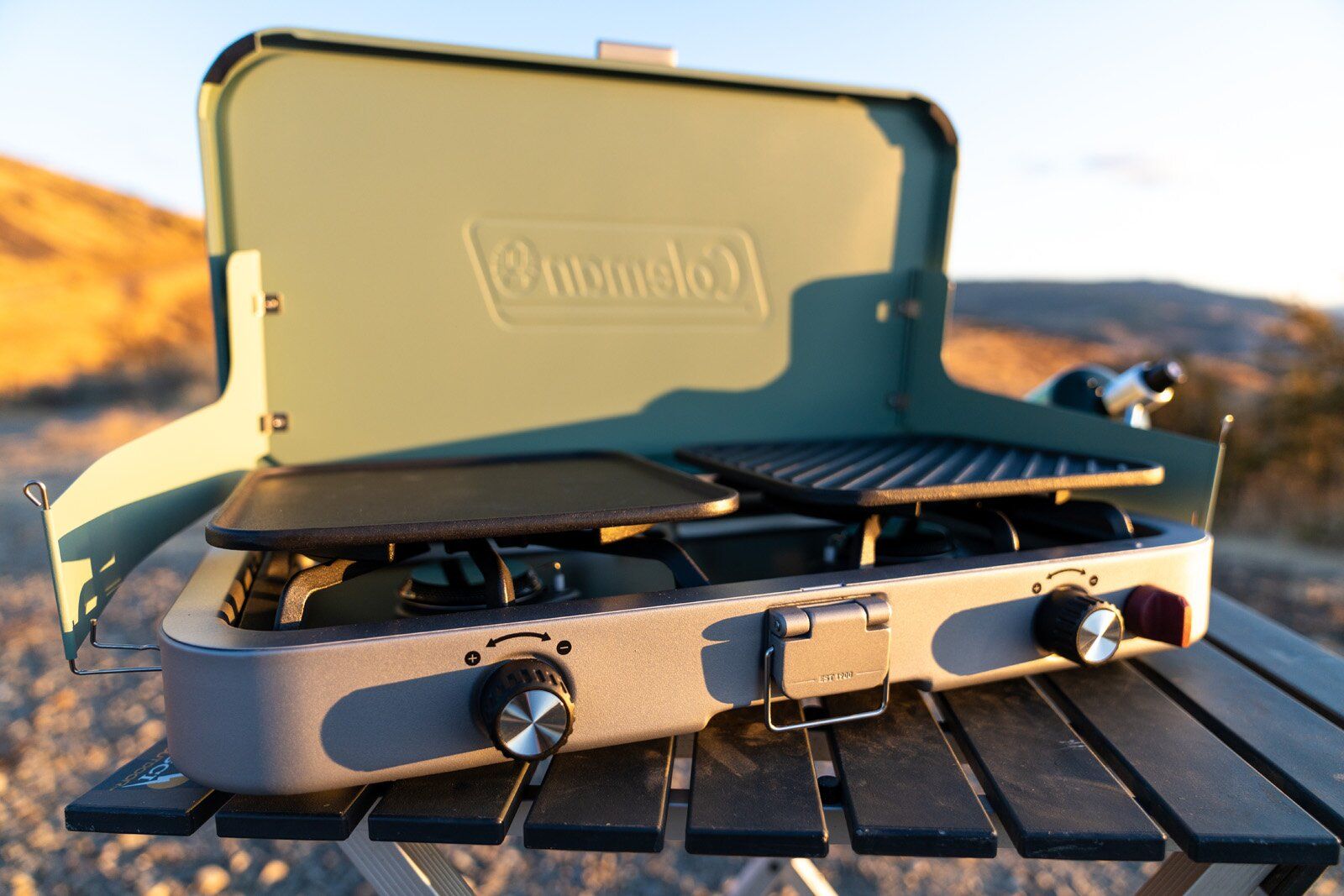
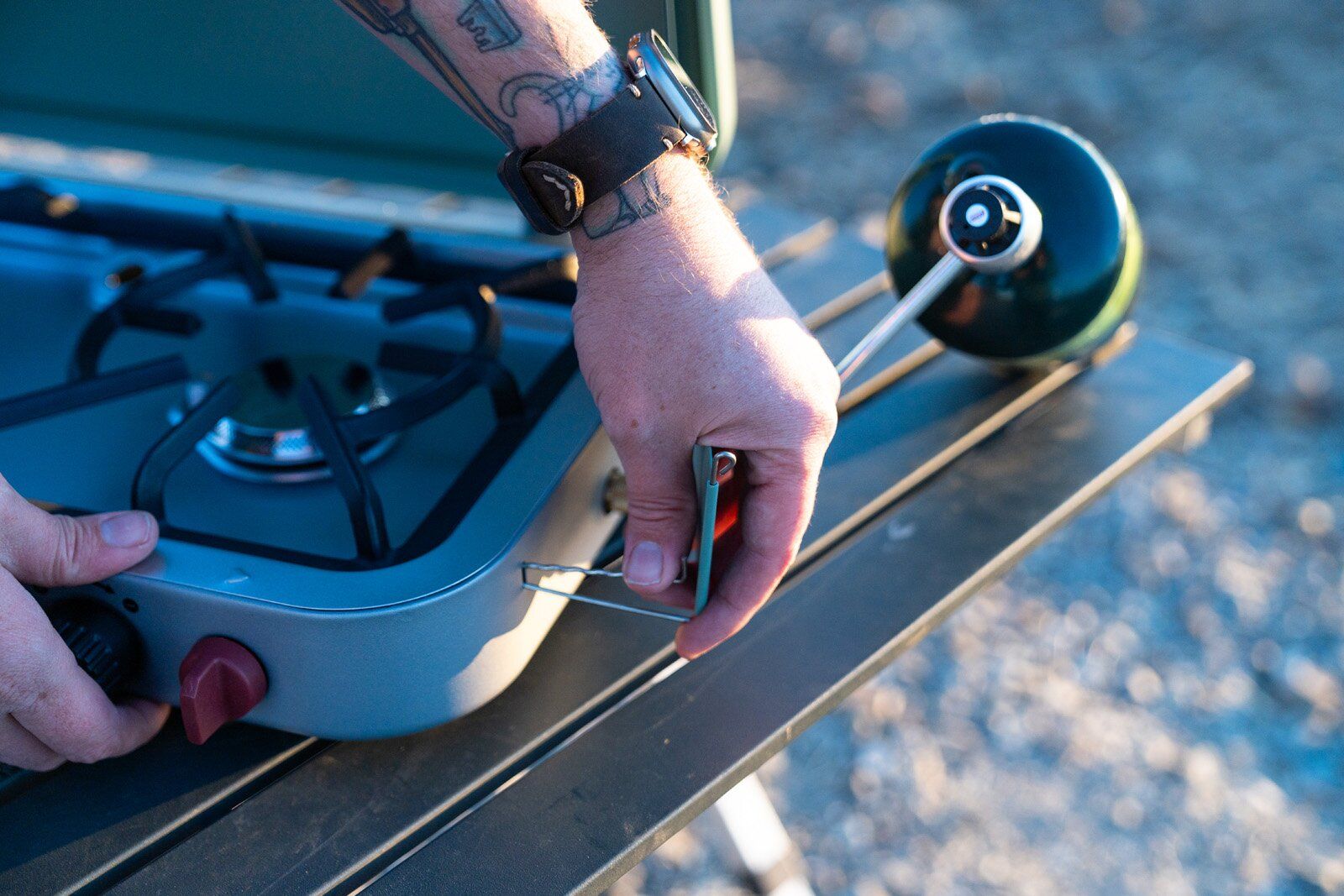
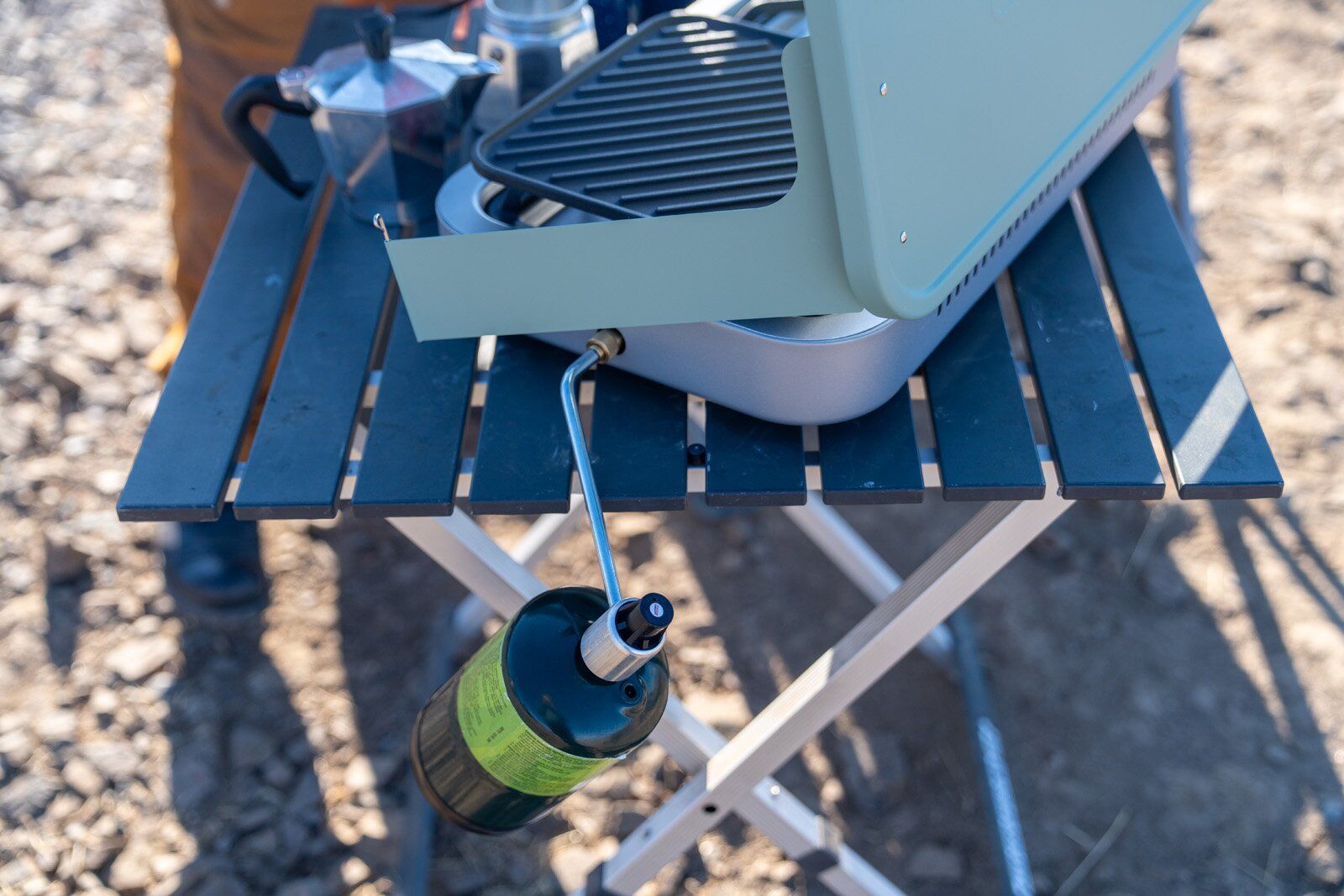
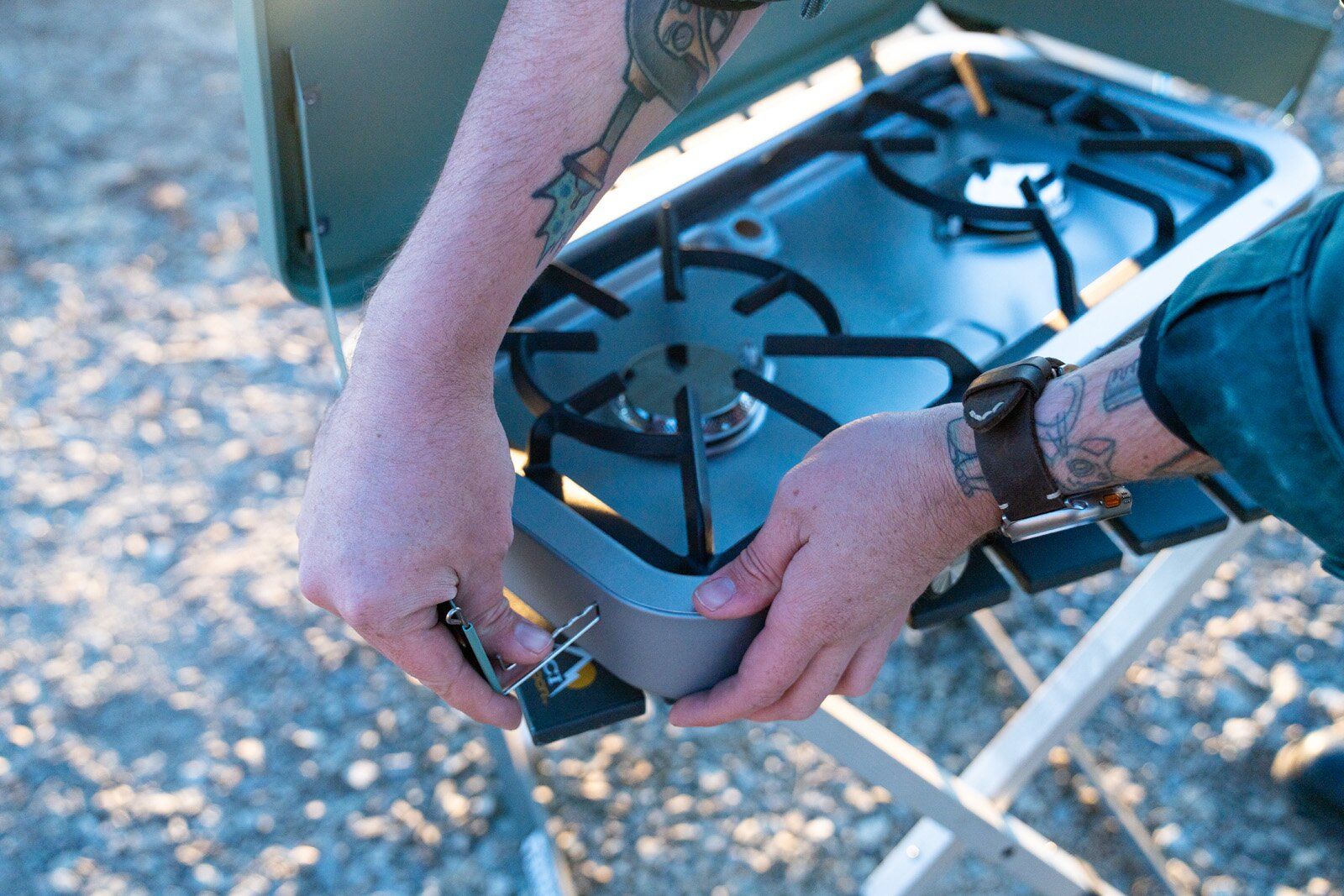
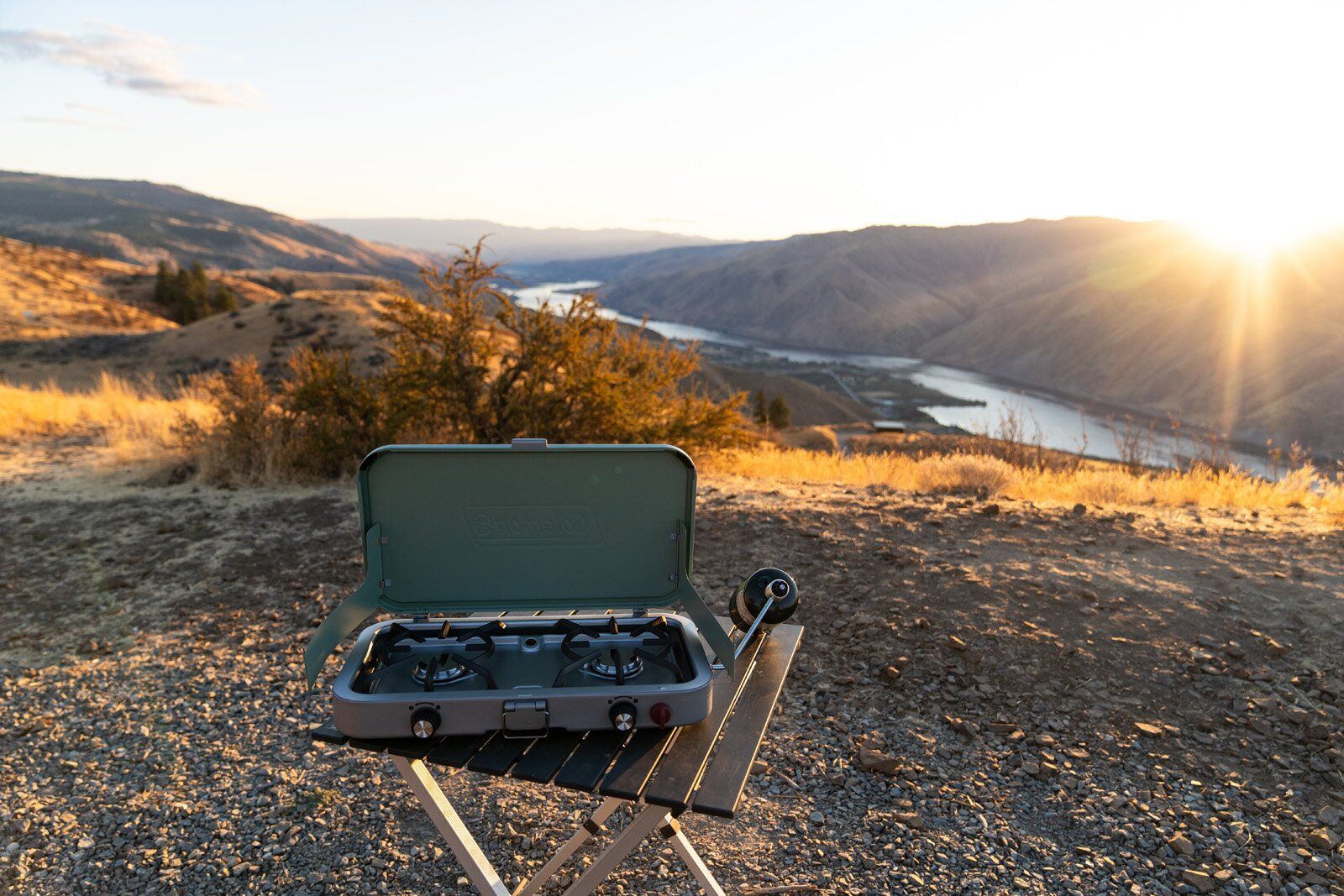
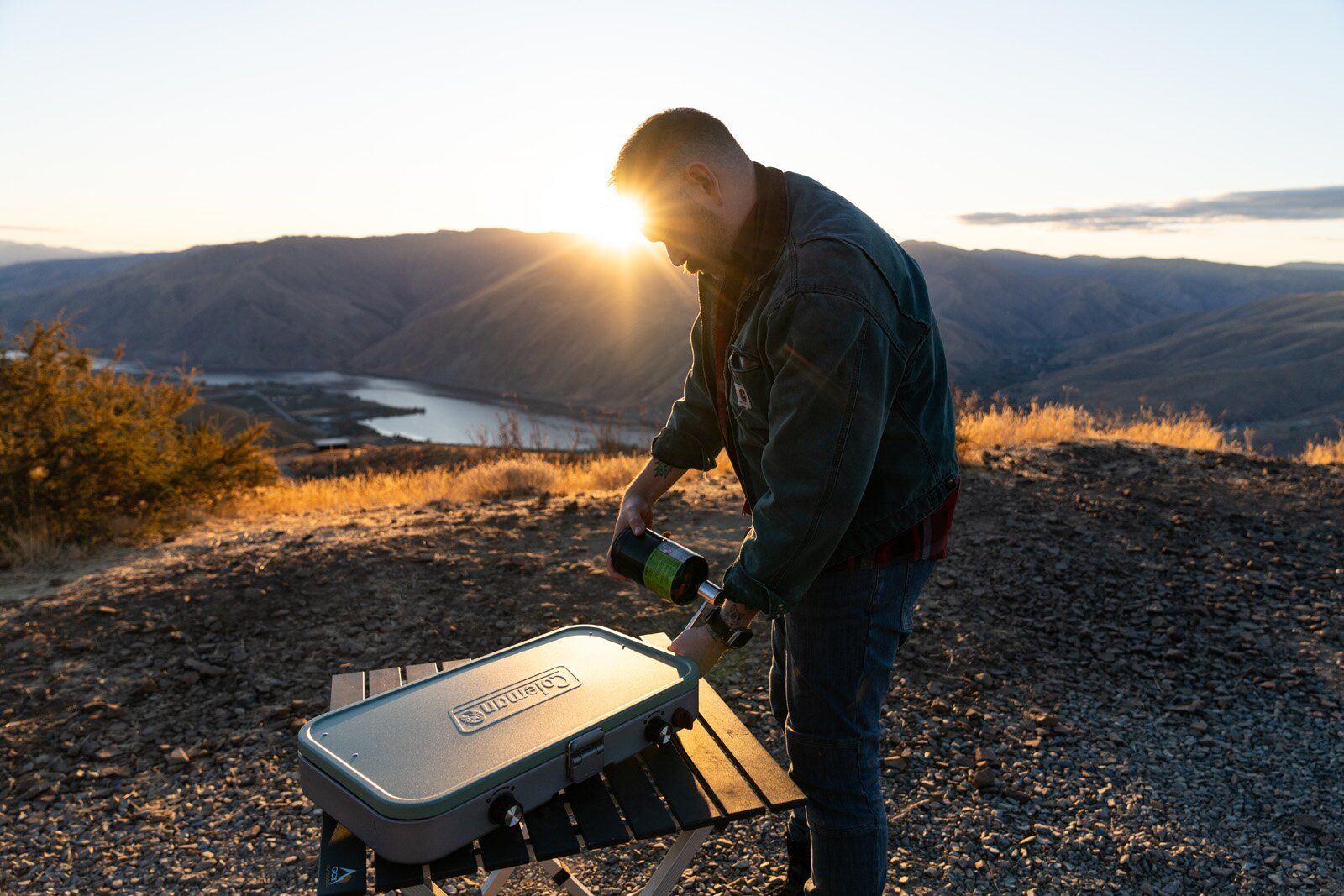
The Coleman Cascade 3-in-1 is a classic rectangular two-burner stove equipped with a cast-iron griddle and grill. The included accessories can expand your camp cooking repertoire, letting you prepare meals from steak and kebabs to French toast and breakfast hash. If you don’t need those add-ons, though, there are better stoves for less money.

Power

Temperature Control

Wind Protection

Build Quality & Durability

Ease of Use

Sustainability
Fuel Type
Propane
Burners (Output)
2 (12,000 BTUs each)
Auto Ignition
Yes
Weight
14 lb. 12.8 oz.
Pros
Cons
As one of Coleman’s more high-end models, the Cascade 3-in-1 promises a premium and versatile cooking experience. In addition to its standard two-burner stovetop, it comes with a cast-iron grill and griddle (hence the name) to help you prepare a variety of meals. Those accessories can add dishes such as burgers and fluffy pancakes to your usual camp menu, and the Cascade’s simmer control allowed our tester to cook eggs at low temperatures without issues. (However, there are stoves with even better simmer settings, such as the Camp Chef Everest 2X.) The included cookware can also help save time, especially when you’re preparing food for large groups. Our tester noted, however, that the grill and griddle can shift slightly when you cook if they’re not positioned carefully, which could cause issues for a distracted chef.
With two auto-ignition, 12,000-BTU burners, the Coleman Cascade 3-in-1’s power output ranks in the middle of the pack among the stoves we tested. The same is true for its boil time—it consistently brought one liter of water to a boil in about 4 minutes 30 seconds in varied climates and elevations. With nearly 300 square inches of cook space, you can easily fit two medium-sized pots or pans on this stove. After you’re done, the Cascade’s removable pan support makes it easy to wipe down any messes. And, though still bulky, its built-in handle and dedicated regulator storage space help make transportation easier (a separate nylon carrying case holds the cast-iron accessories).
The Cascade’s build quality also impressed us. Constructed with thick yet lightweight metal and with an aluminized steel cooktop, this stove will last for many camping trips. (Its cast-iron accessories feel high-quality as well.) Our biggest design knock was its wind shields. They’re noticeably flimsy and, compared to cheaper stoves such as the $225 Zempire 2-Burner DLX Grill Stove or even the $130 Coleman Cascade Classic, they provide significantly less coverage. Our tester found that the flames stayed lit and held their temperature in 15-mph winds, but don’t expect the Cascade to perform as well in blustery weather conditions. For campers prioritizing versatility above all else, we think the Cascade’s $275 price tag is worth it. Otherwise, there are better products available that will save you a few bucks. For more, read our review of the Coleman Cascade 3-in-1.
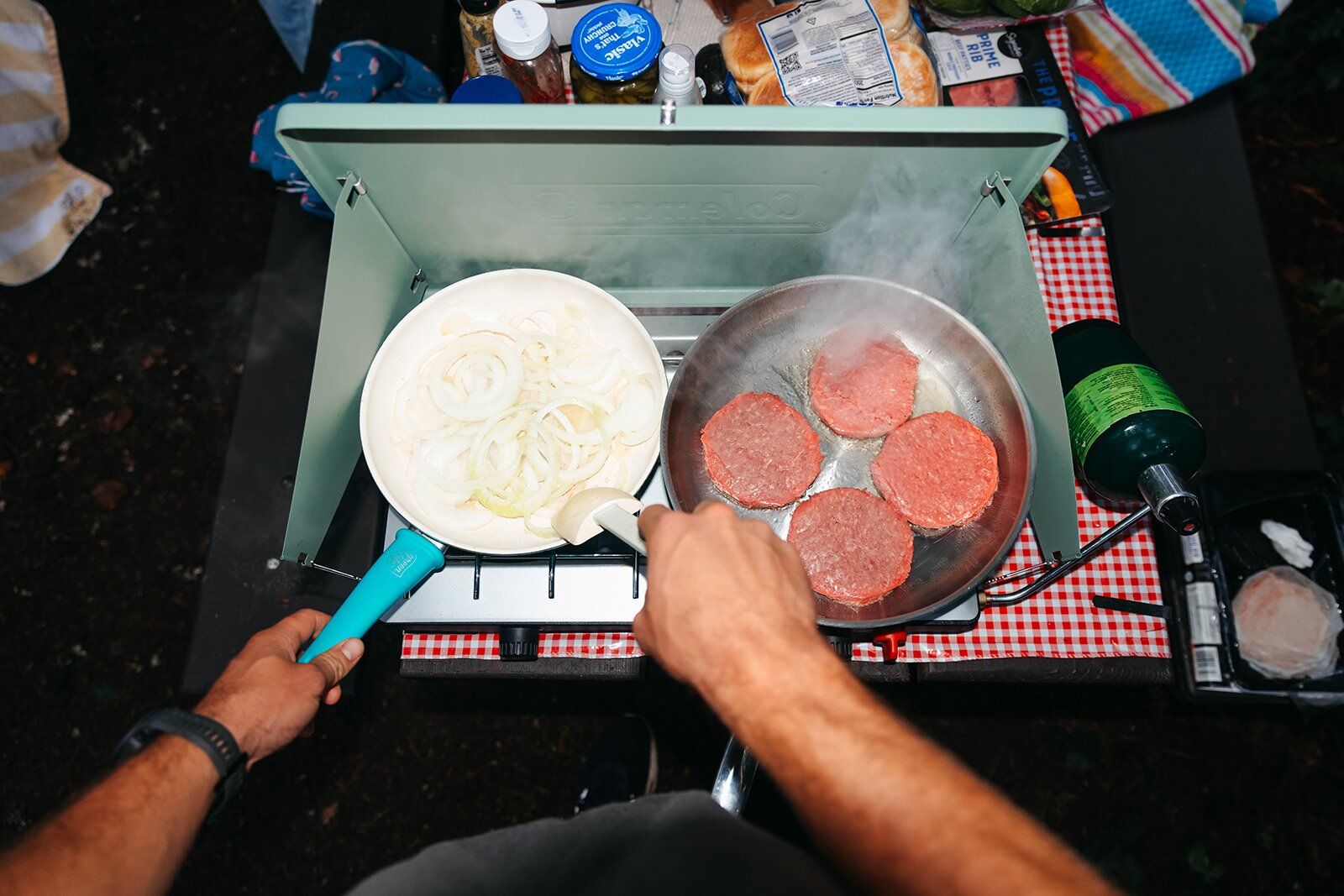
What the Cascade Classic lacks in performance and wind protection, it makes up for in value. While this is by no means a perfect stove, it’s a commendable option for campers looking for a no-frills model that’s light on the wallet and is fine for whipping up simple meals.
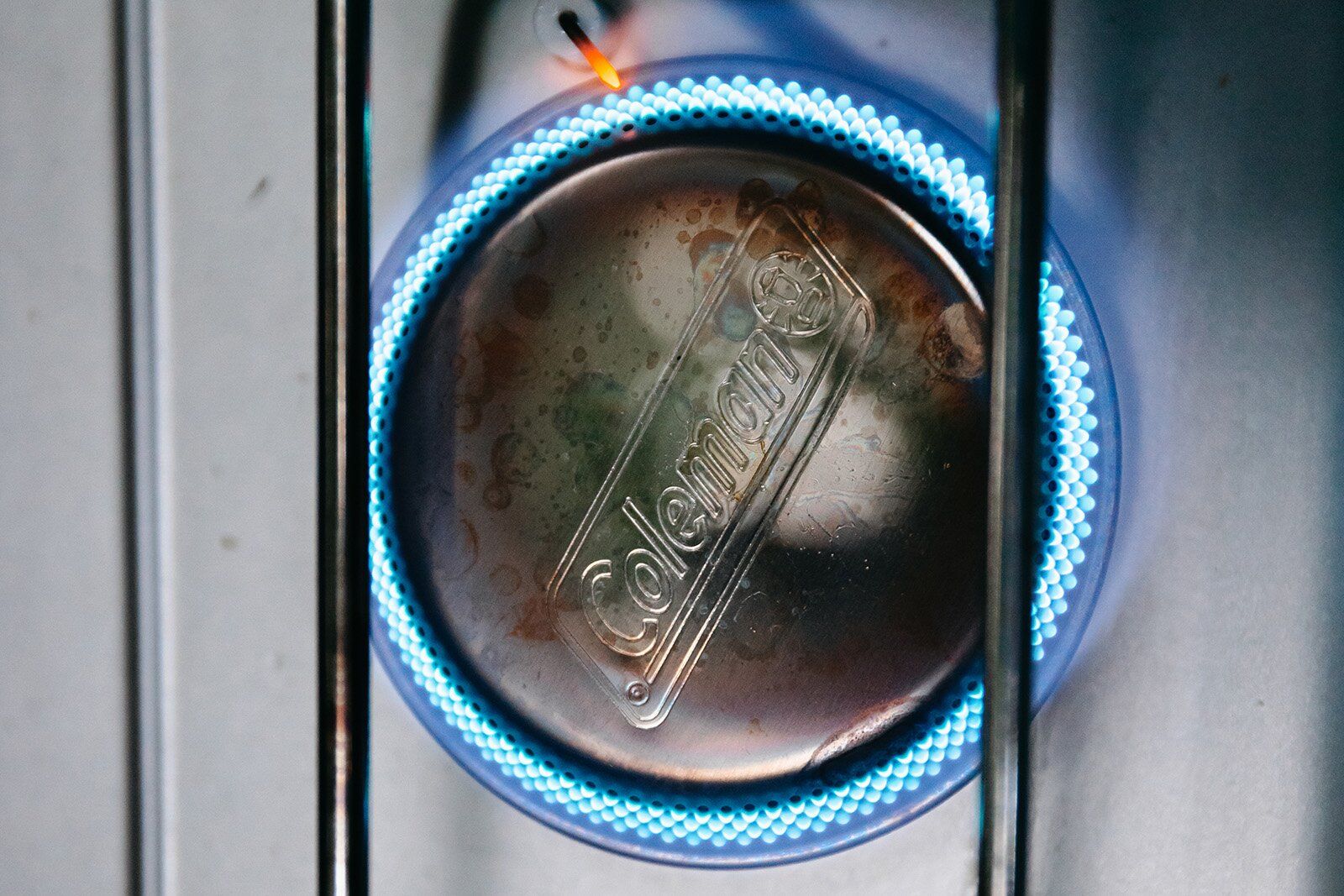
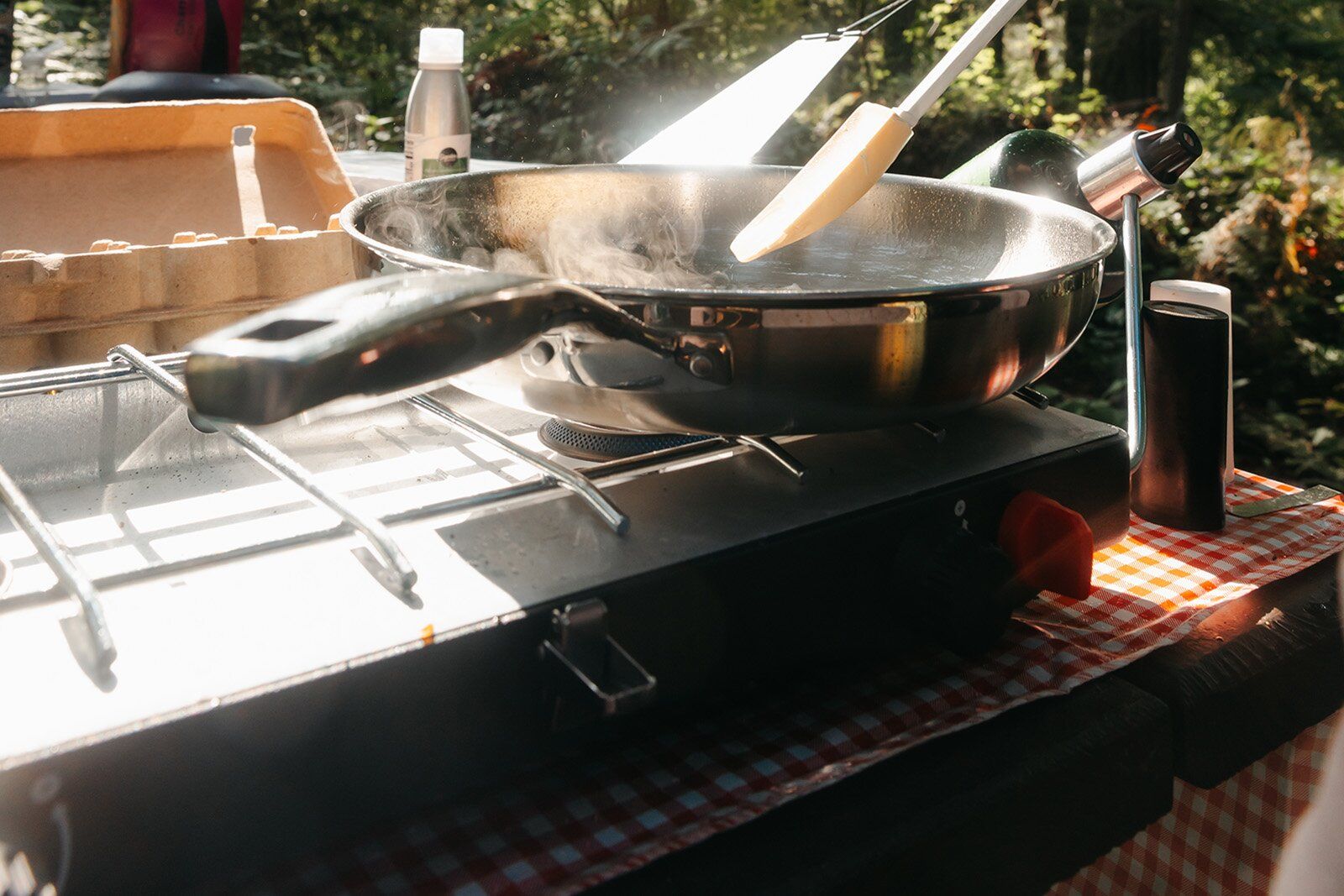
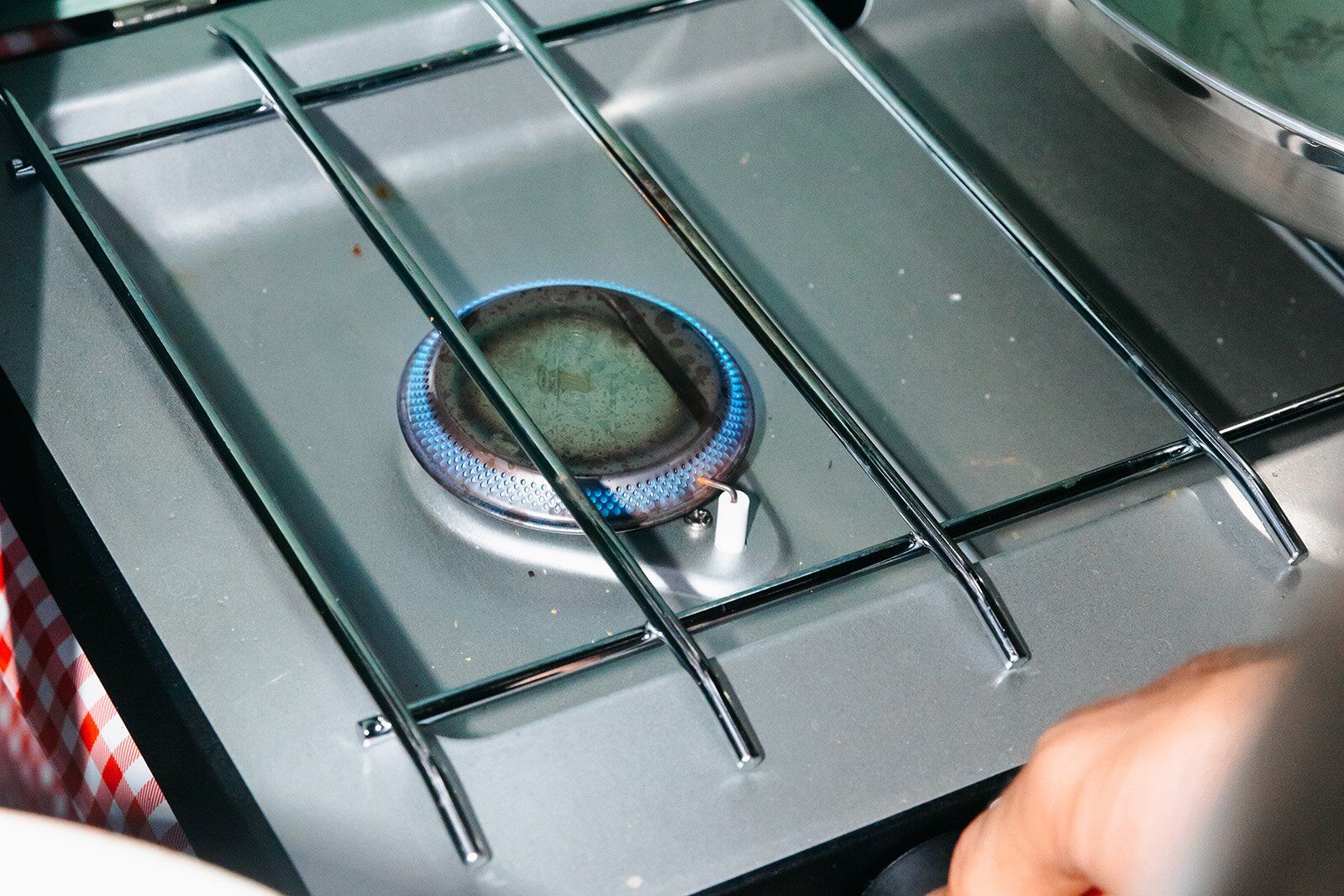
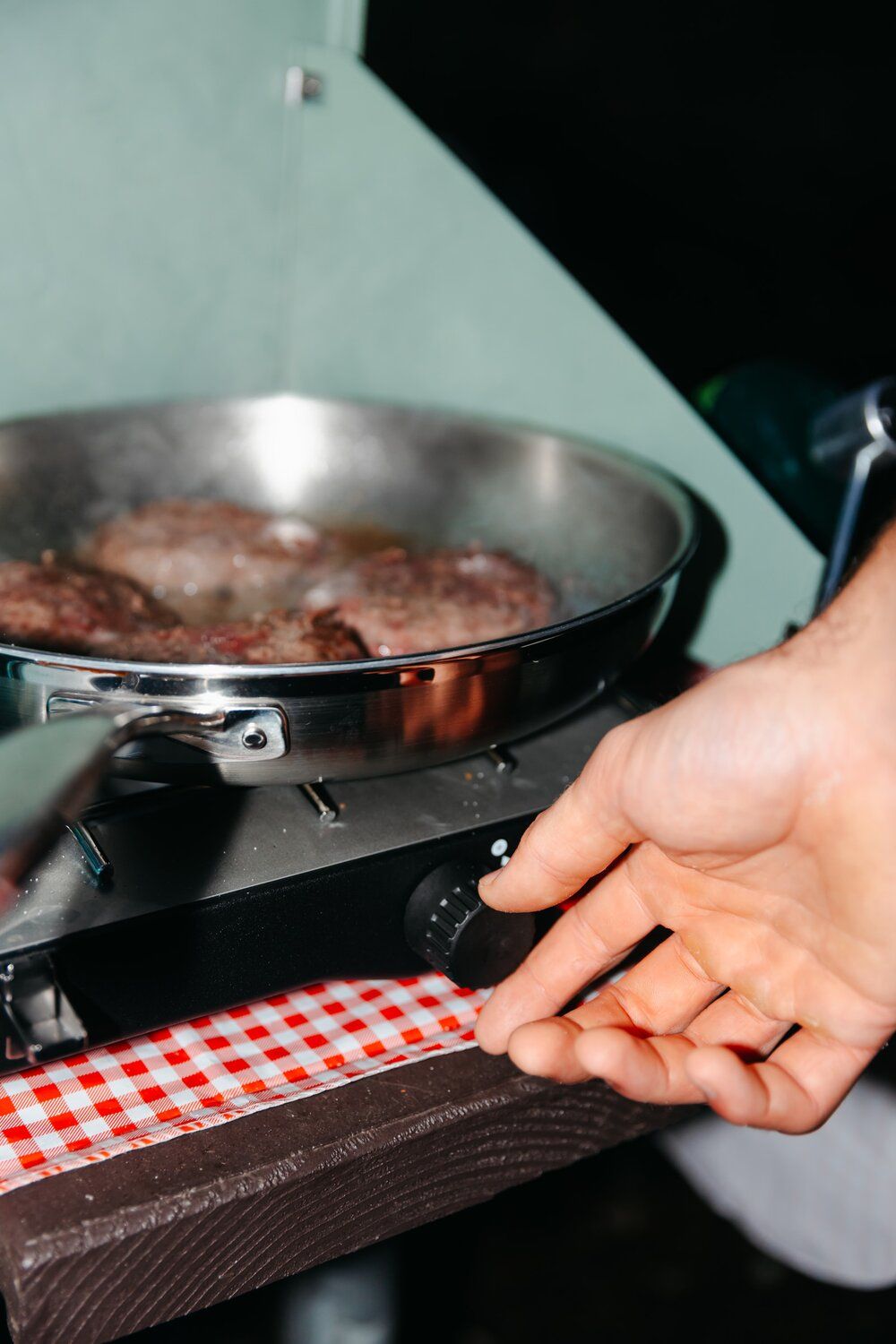
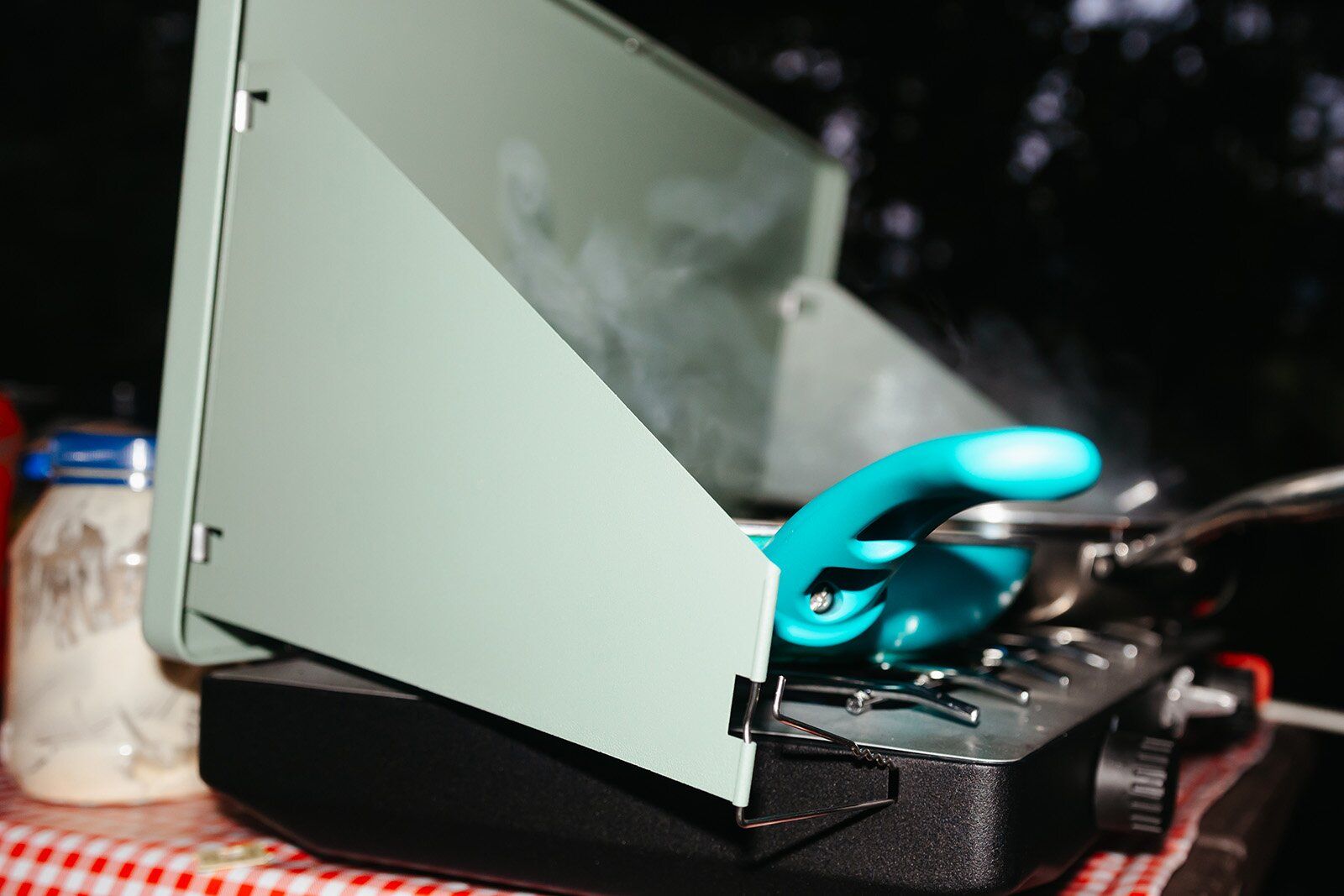
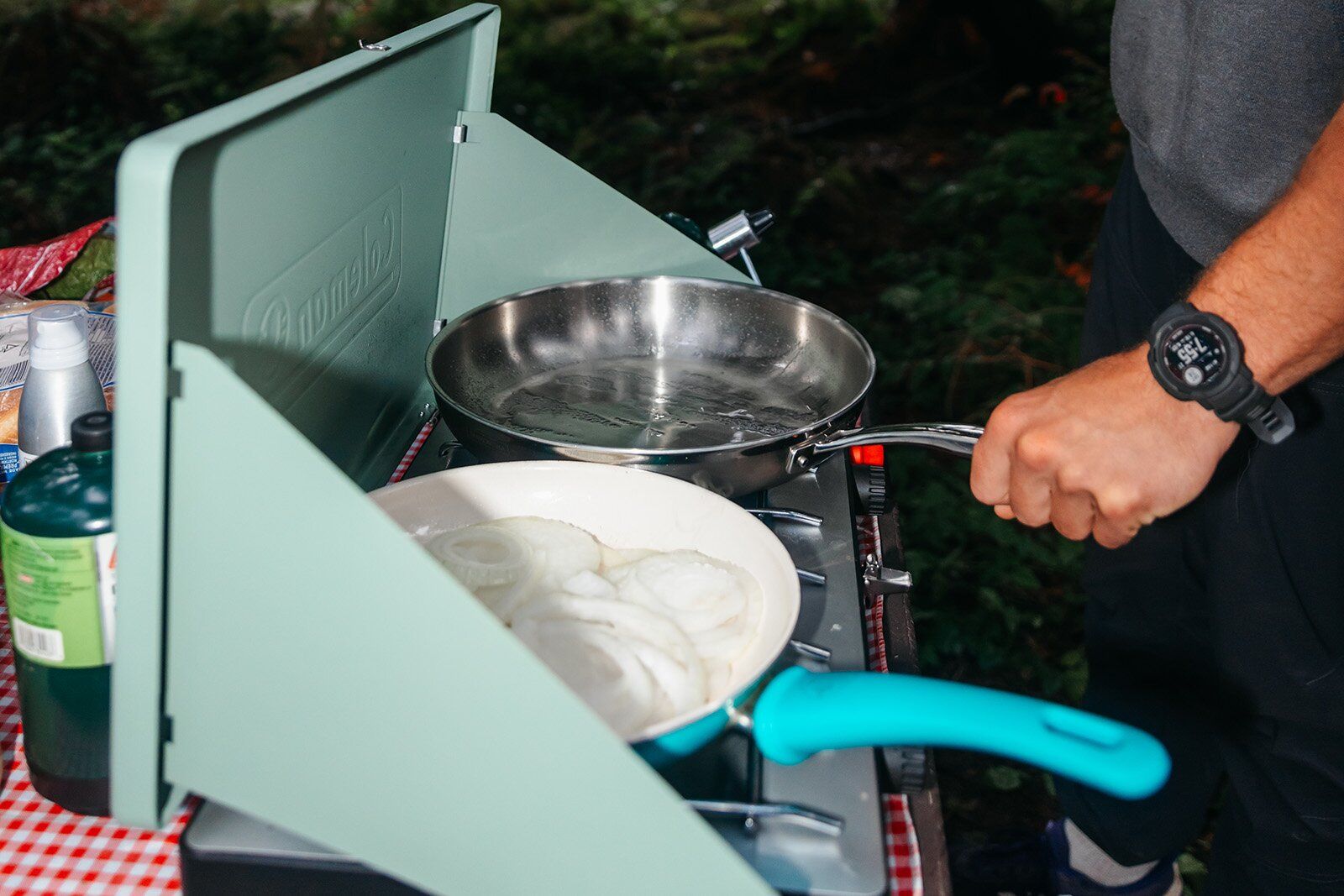

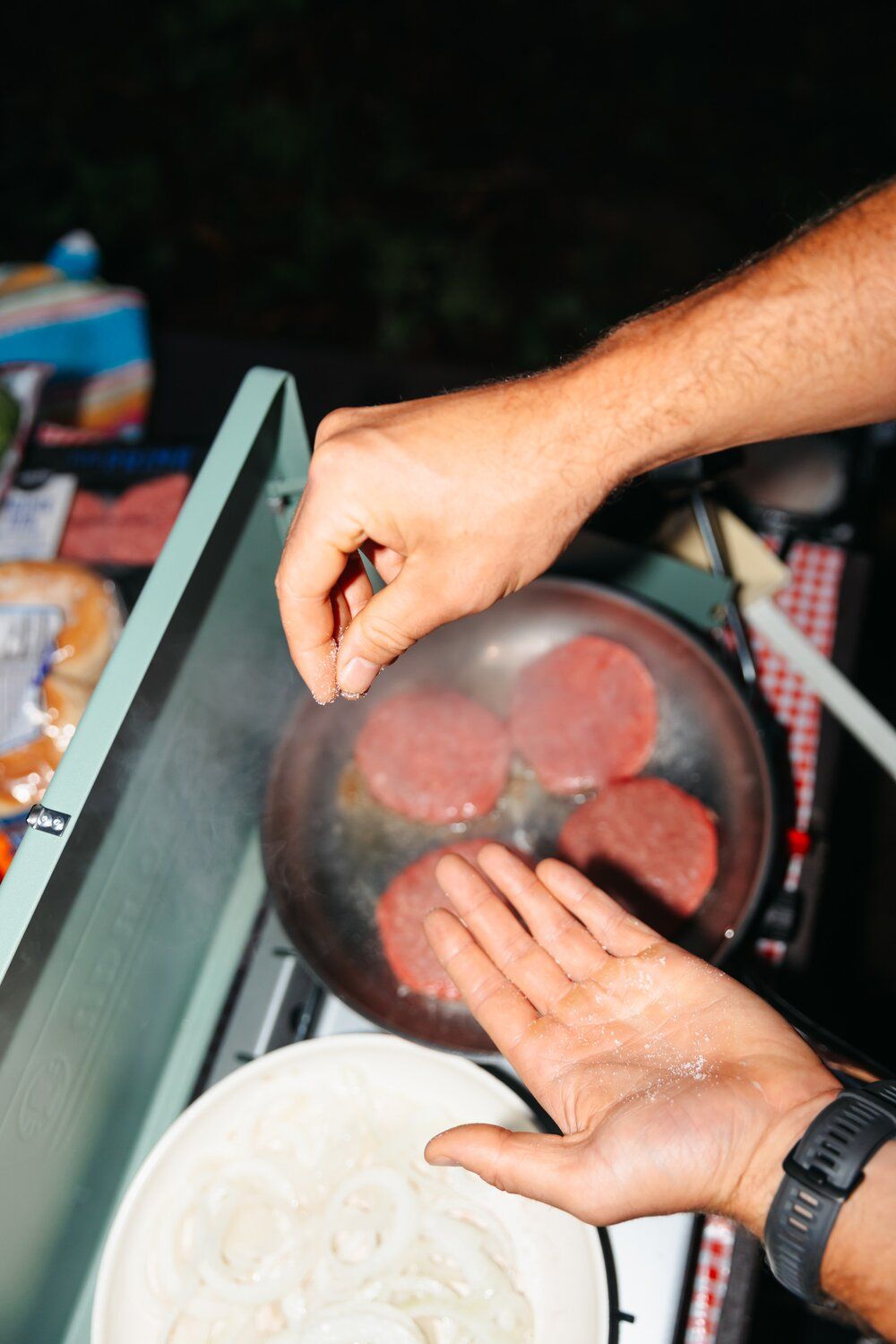

What the Cascade Classic lacks in performance and wind protection, it makes up for in value. While this is by no means a perfect stove, it’s a commendable option for campers looking for a no-frills model that’s light on the wallet and is fine for whipping up simple meals.
Power
Temperature Control
Wind Protection
Build Quality & Durability
Ease of Use
Sustainability
Fuel Type
Propane
Burners (Output)
2 (10,000 BTUs each)
Auto Ignition
Yes
Weight
11 lb. 14.4 oz.
Pros
Cons
The Coleman Cascade Classic is a two-burner stove designed with the budget-conscious camper in mind. At just $130, it’s the cheapest model we’ve tested, and while it struggles to keep up with its higher-end competition, it still excels in several areas. The Cascade Classic’s temperature control is a highlight: It isn’t as precise as its more premium counterparts, but our tester was still able to crank up the heat to quickly brown ground beef and turn it down low to sauté onions and prepare scrambled eggs. This stove’s power lags behind the field, though. Its two 10,000-BTU burners can cook most camp dishes, but its boil time was one of the slowest we’ve tested. It took our tester over 6 minutes to bring one liter of water to a boil in drizzling and slightly windy conditions.
The Cascade Classic’s build quality mostly impressed us. Its solid metal body should withstand the wear and tear of camping, and ours didn’t falter over about 20 uses. (However, our tester had issues with its auto ignition and had to let the propane run for a few seconds before it worked.) Design-wise, the Cascade Classic features a generous 269 square inches of cooking surface, which, after the Coleman Cascade 3-in-1 (which is double the cost), is the largest we’ve tested. You should easily have enough room to prepare meals for a small group of people. Furthermore, this stove’s removable grate and aluminized steel cooktop help make cleaning a non-issue. And, in terms of transportability, the Cascade Classic is comparable to other similarly designed stoves—at about 12 pounds and with a built-in handle, you shouldn’t have trouble carrying it short distances.
Unfortunately, we can’t sing the same praises about its wind shields, which are thin and of low quality compared to the rest of the stoves in this test. Our tester reported having trouble keeping the flames lit during moderately windy conditions, leading us to doubt its performance in less-than-ideal weather. While the wind shields are adjustable, she felt that they weren’t effective unless they were as close to the stove body as possible. Overall, there are better stoves that will make your camp cooking experience easier and more enjoyable if you’ve got money to splurge. But for $100, the budget-friendly Cascade Classic will get the job done, and for many campers, that’s all that matters. For more, read our review of the Coleman Cascade Classic.
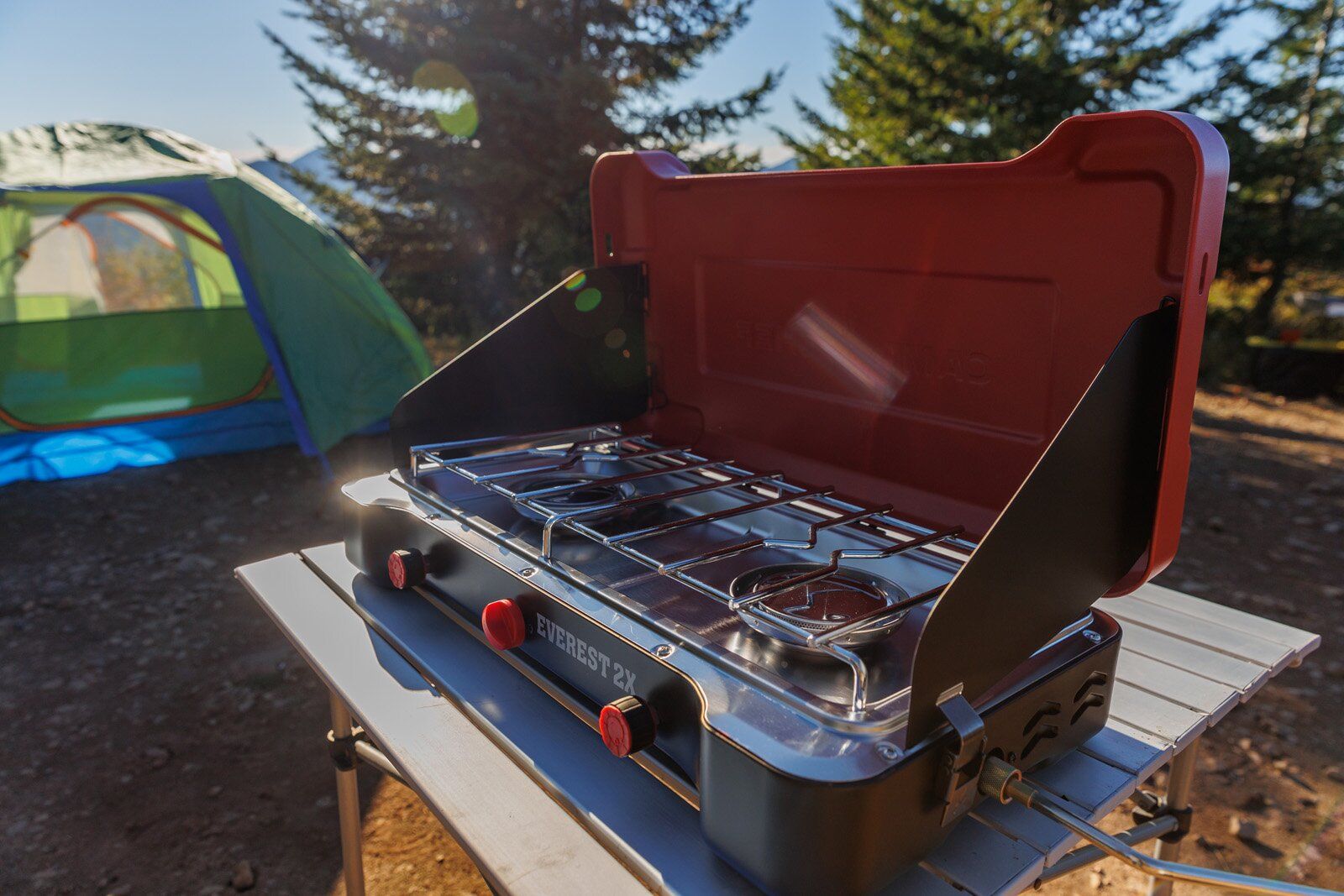
With its winning trifecta of serious power, delicate temperature control, and impressive wind resistance, the Camp Chef Everest 2X can handle nearly any meal you can cook. It might be out of budget for cost-conscious campers, but we still think it’s one of the best camp stoves money can buy.
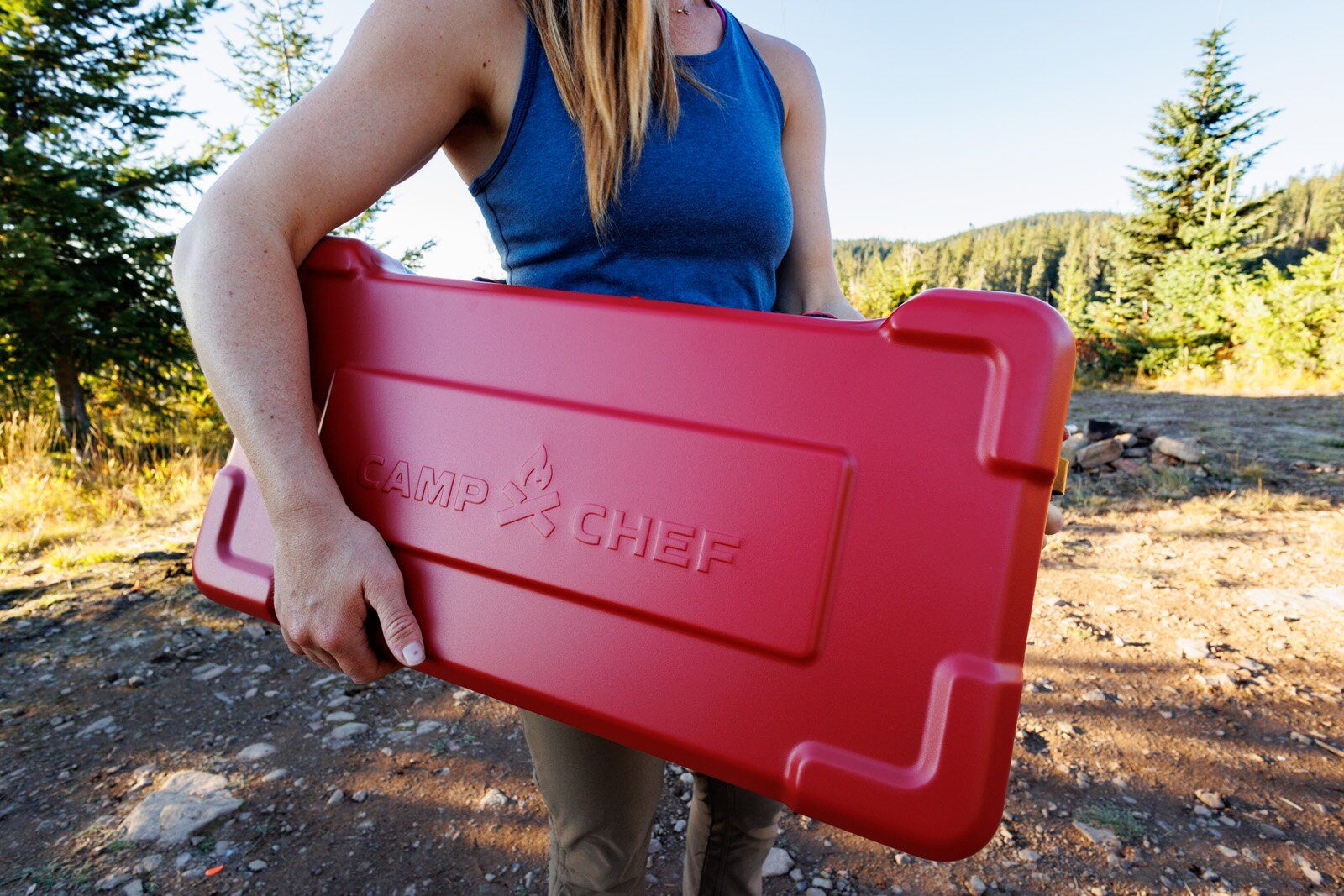
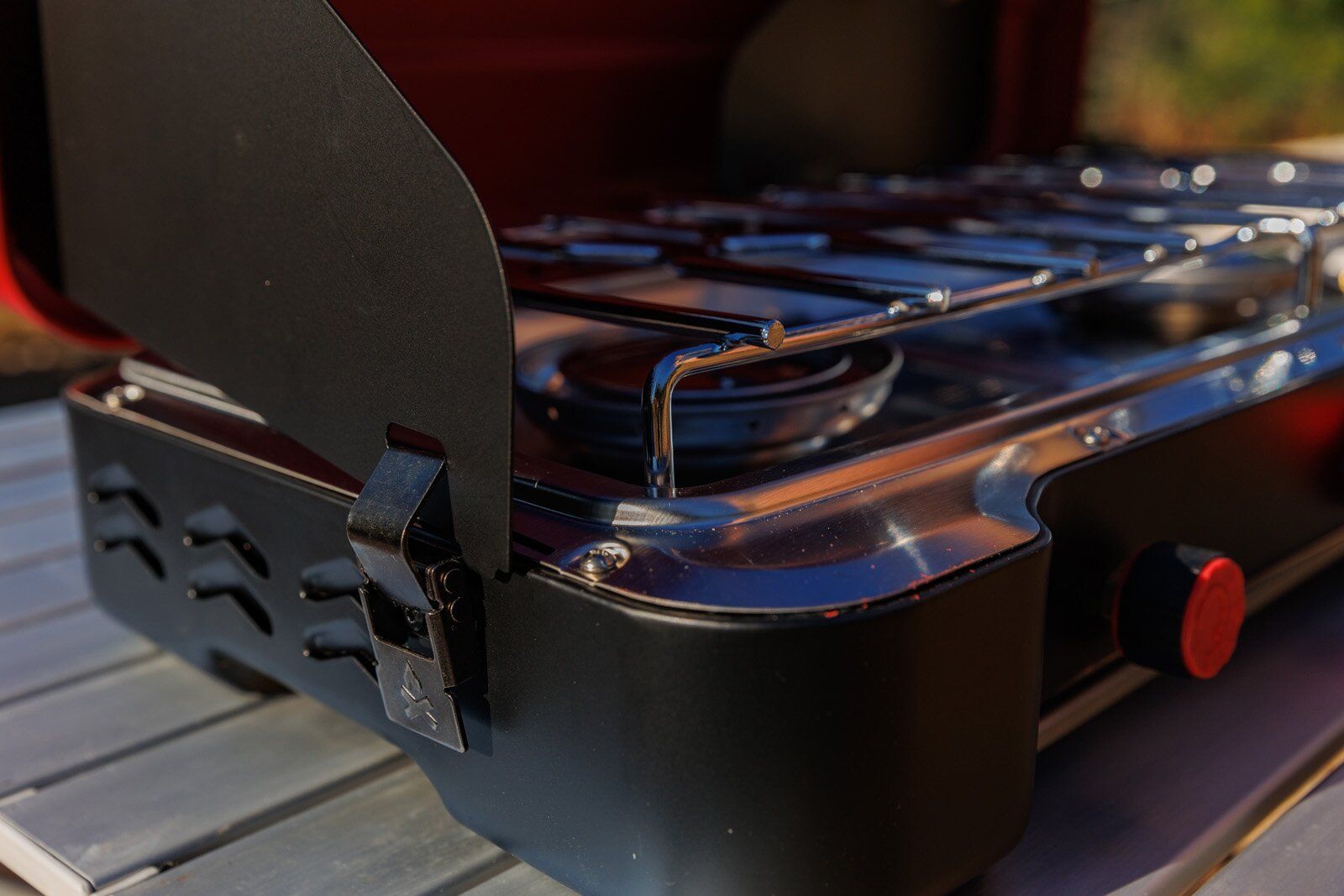
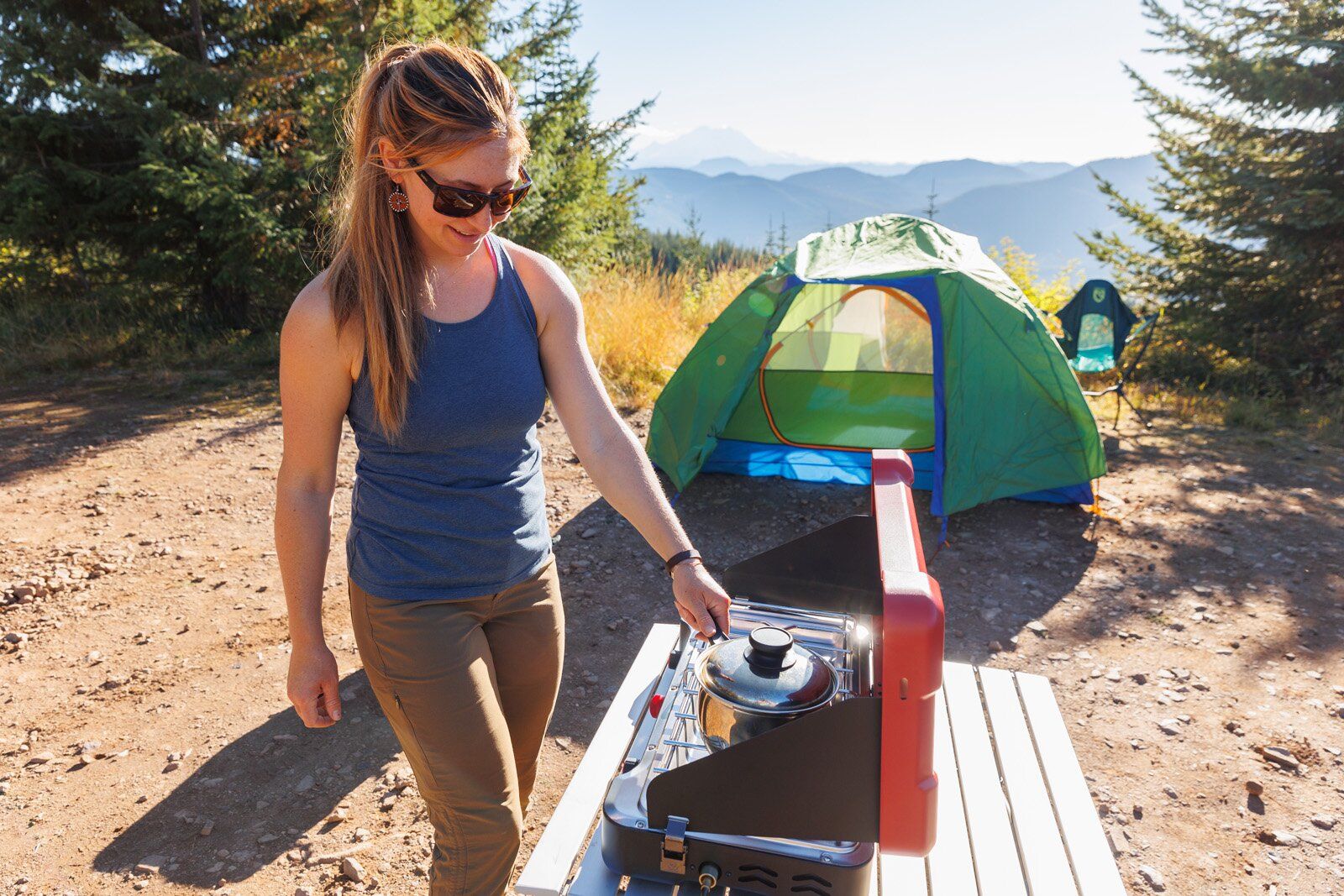
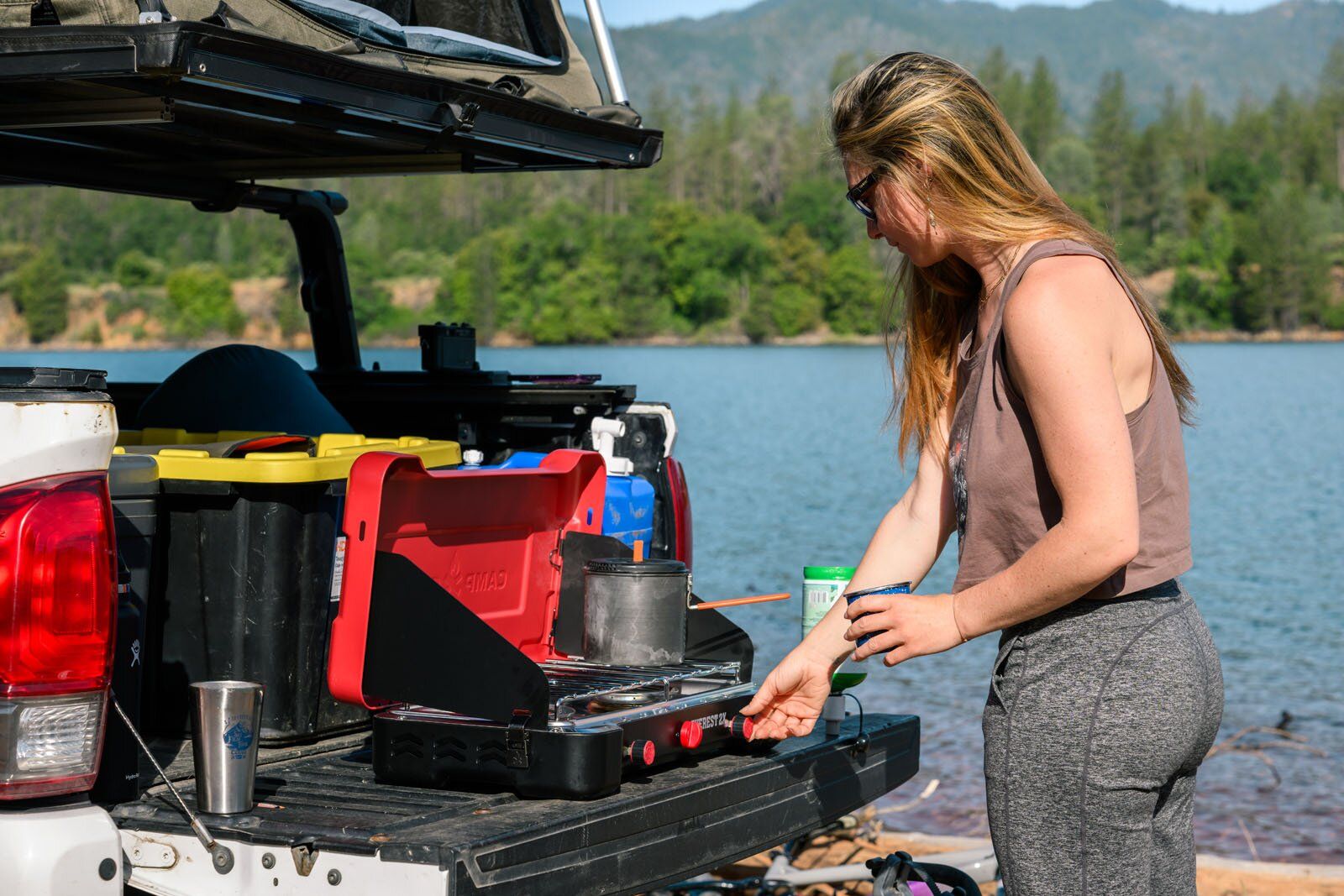
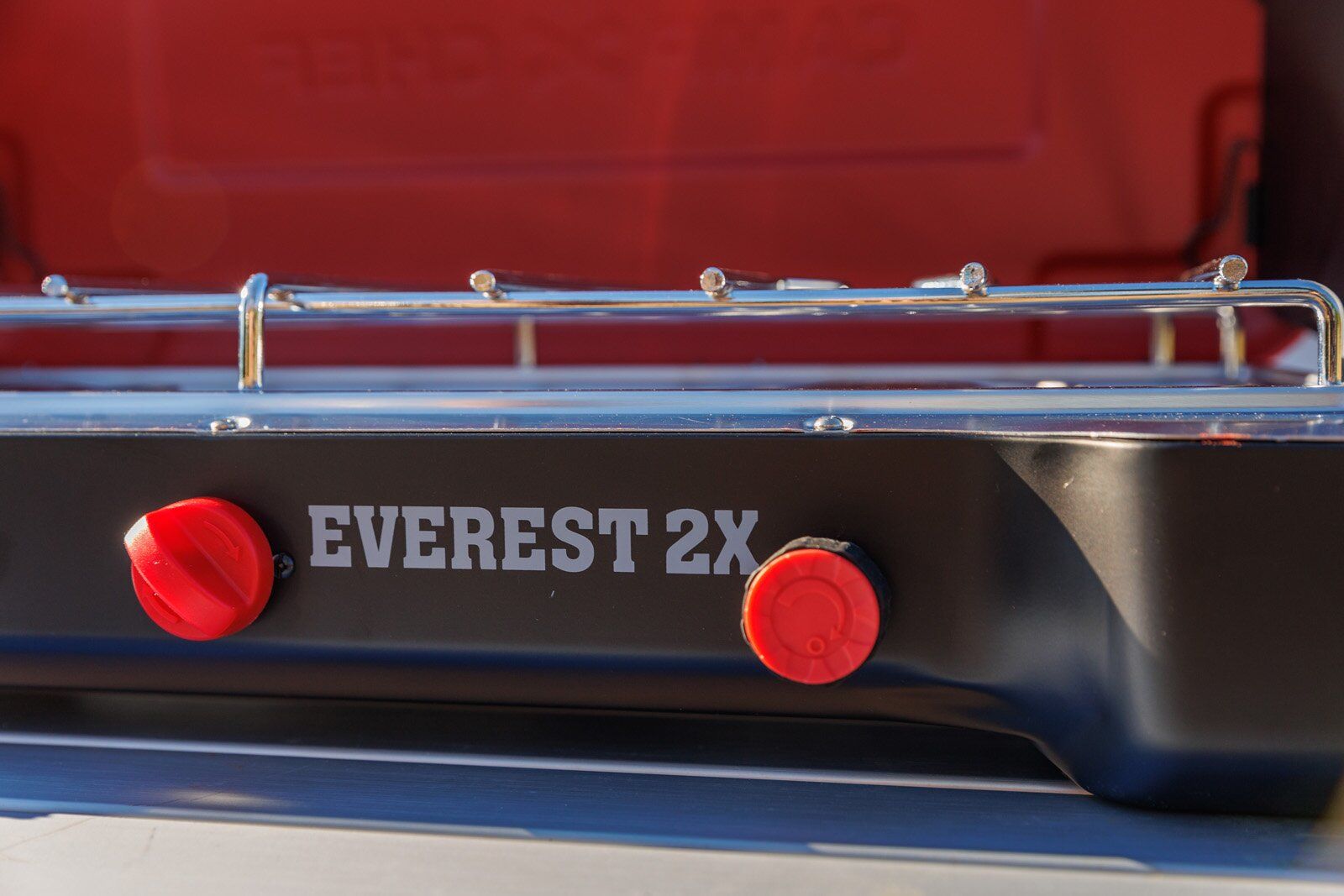
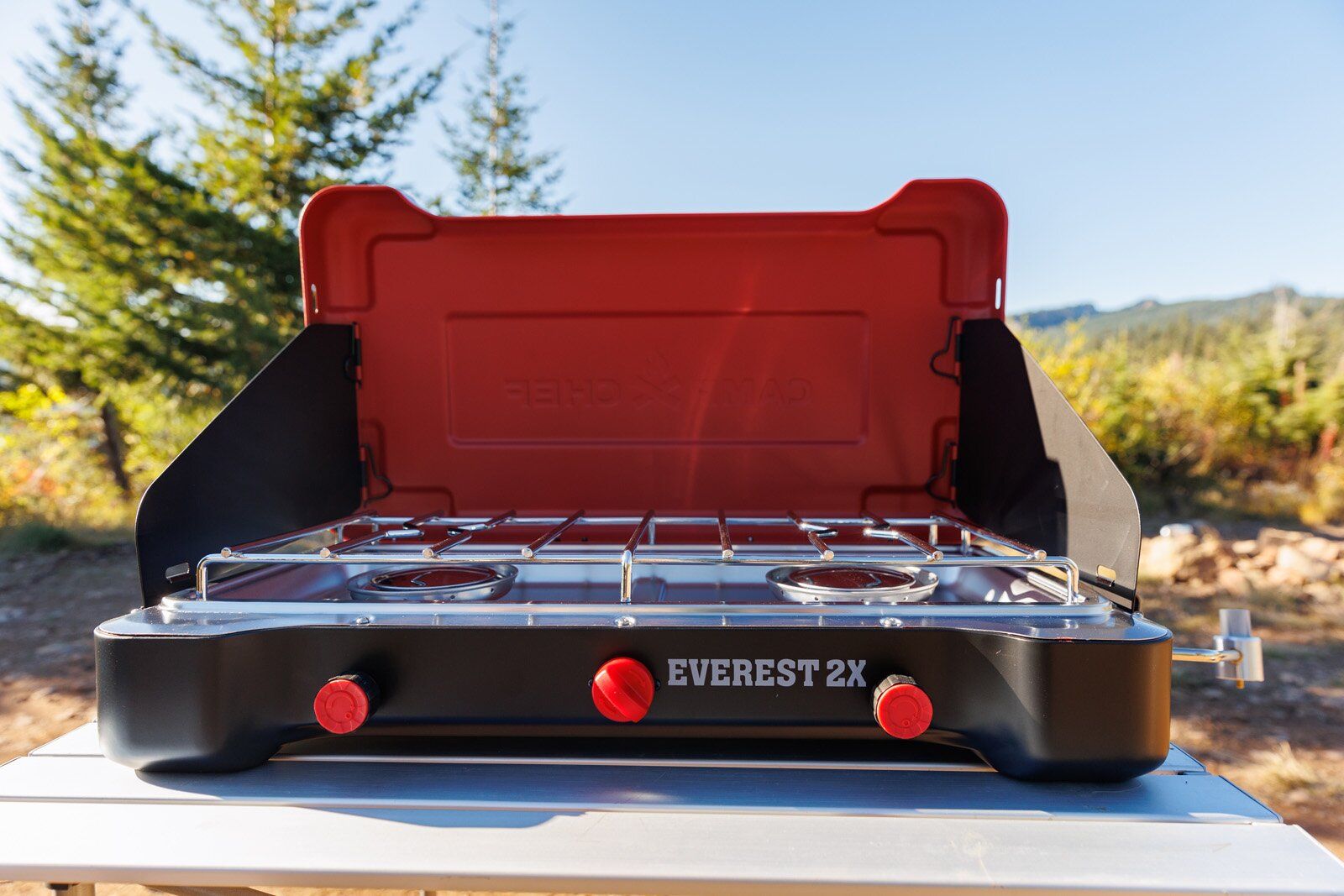
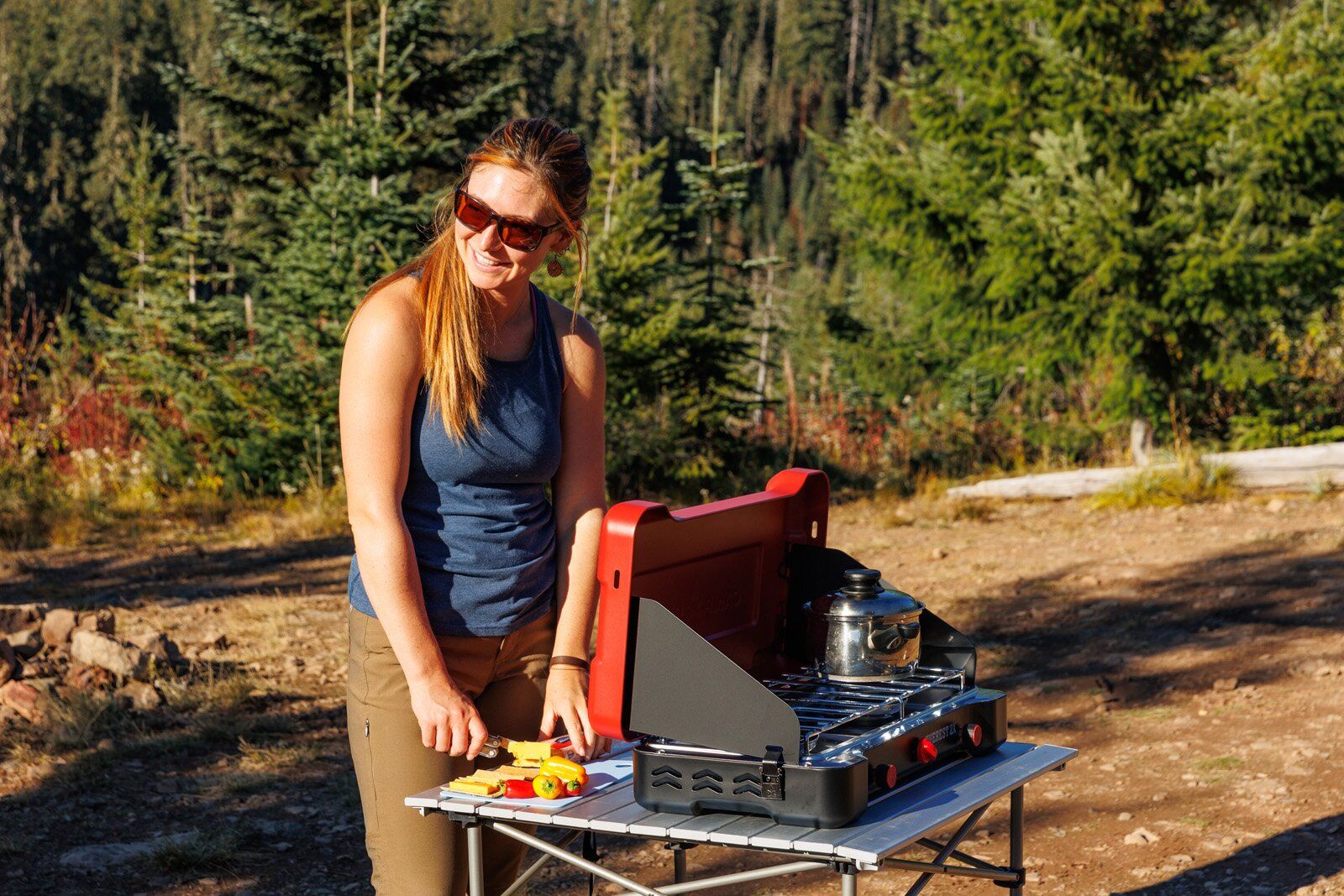
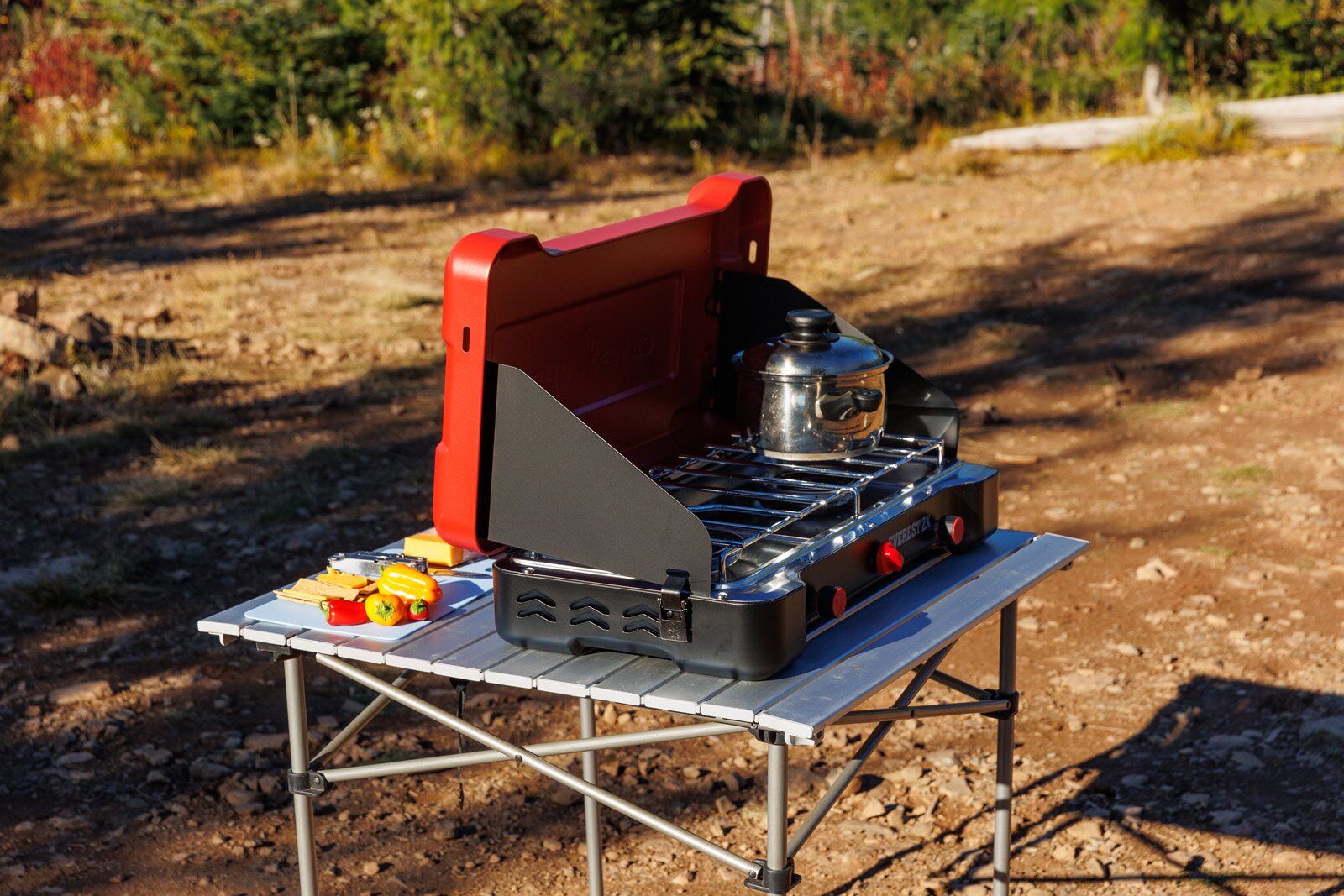
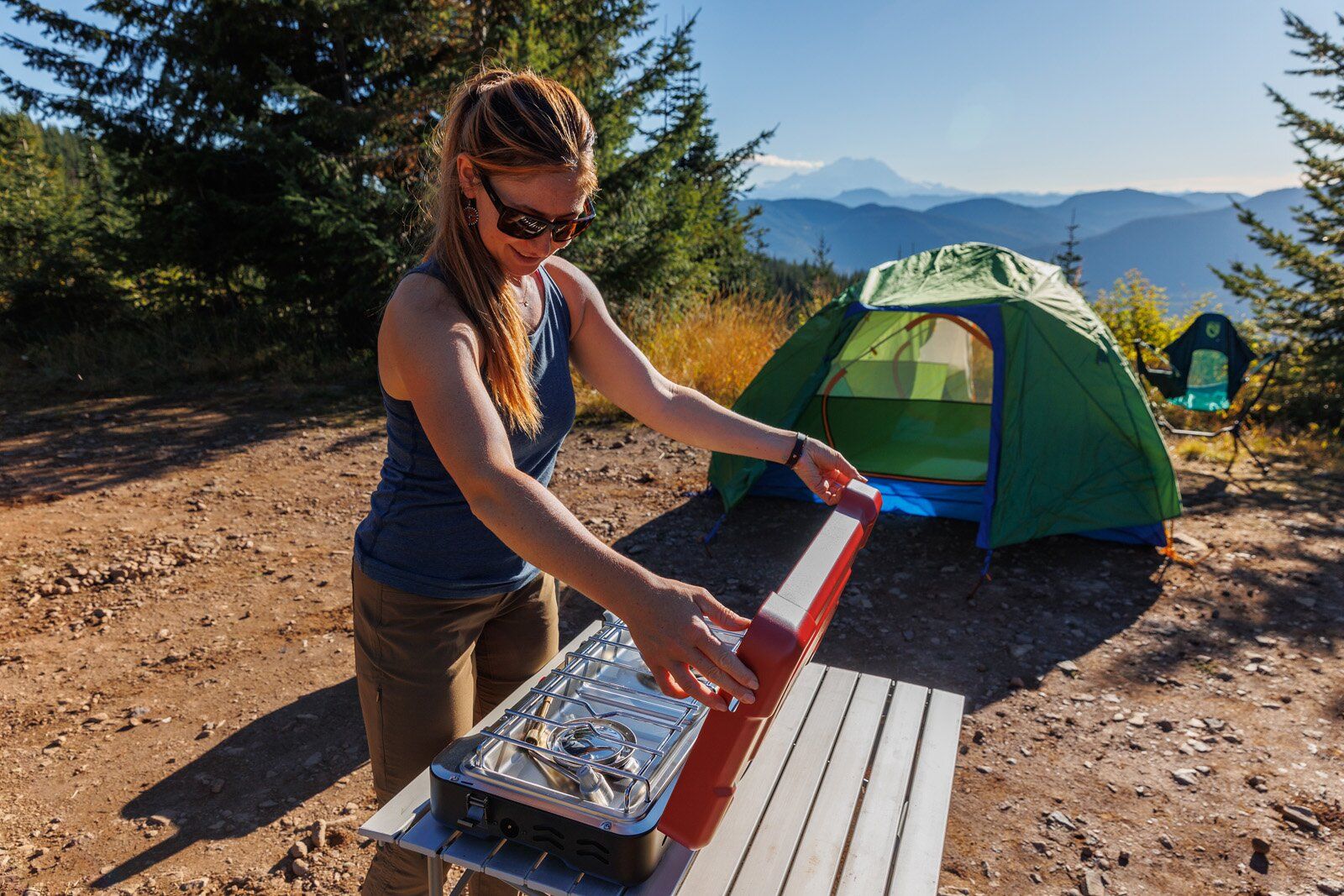
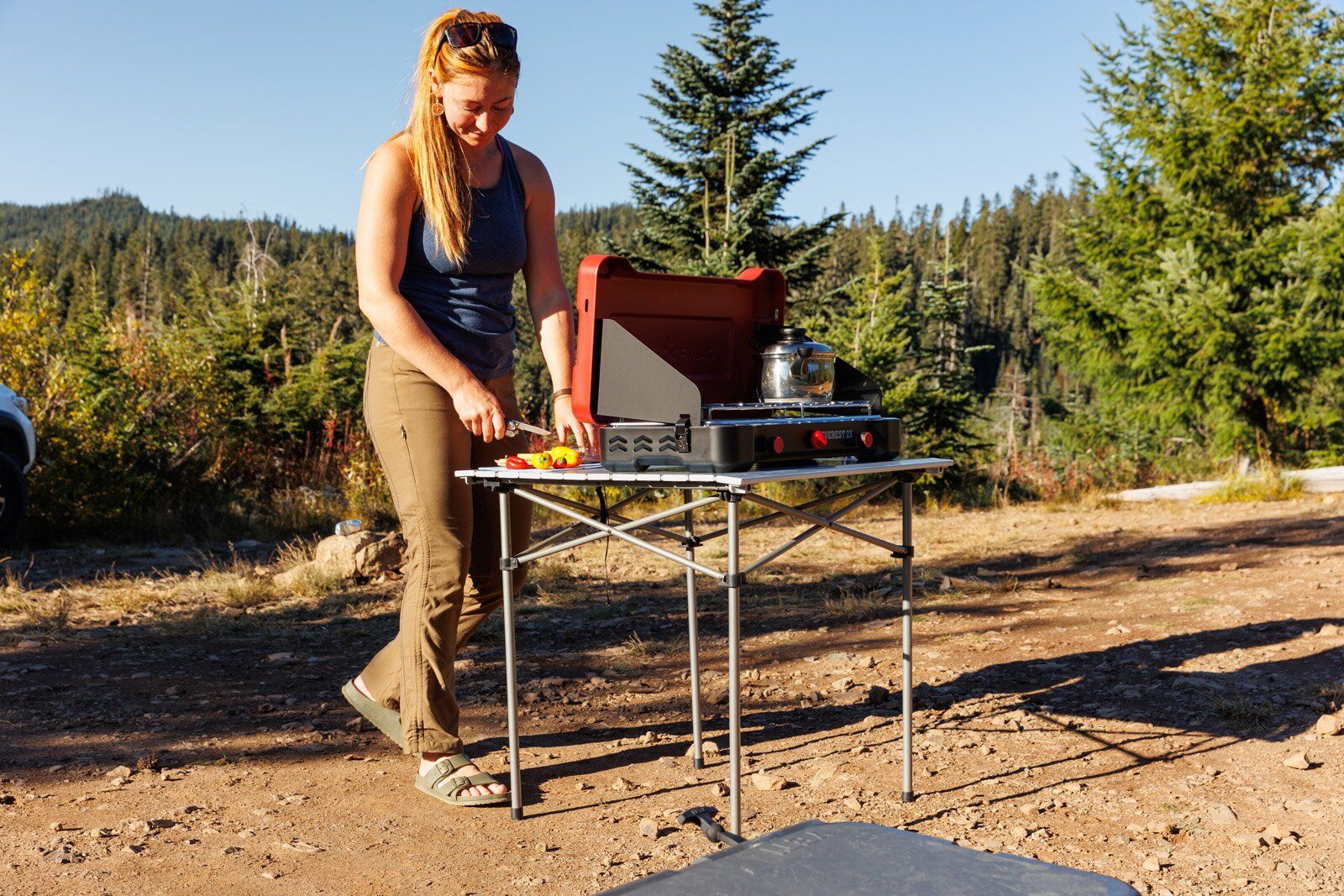
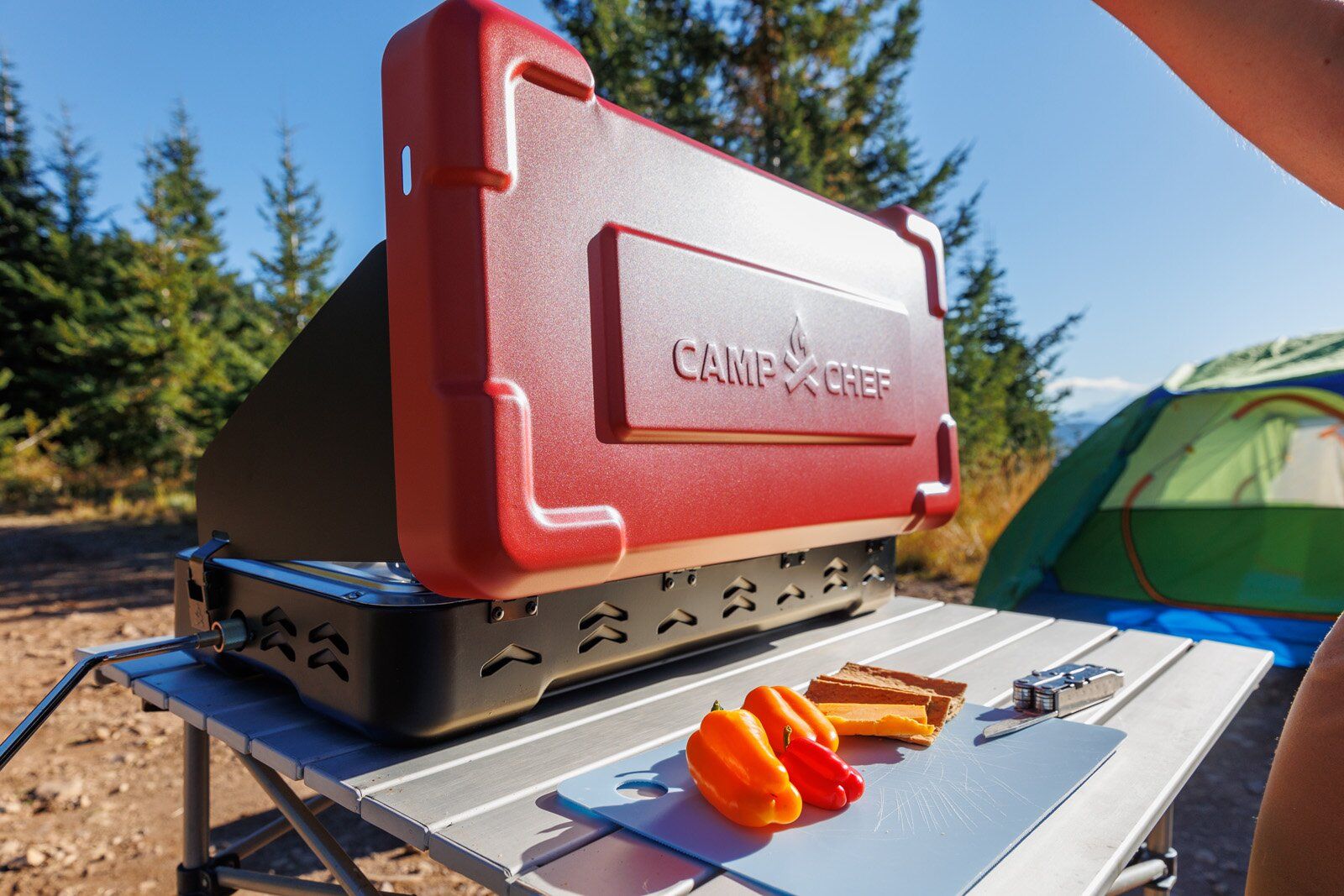
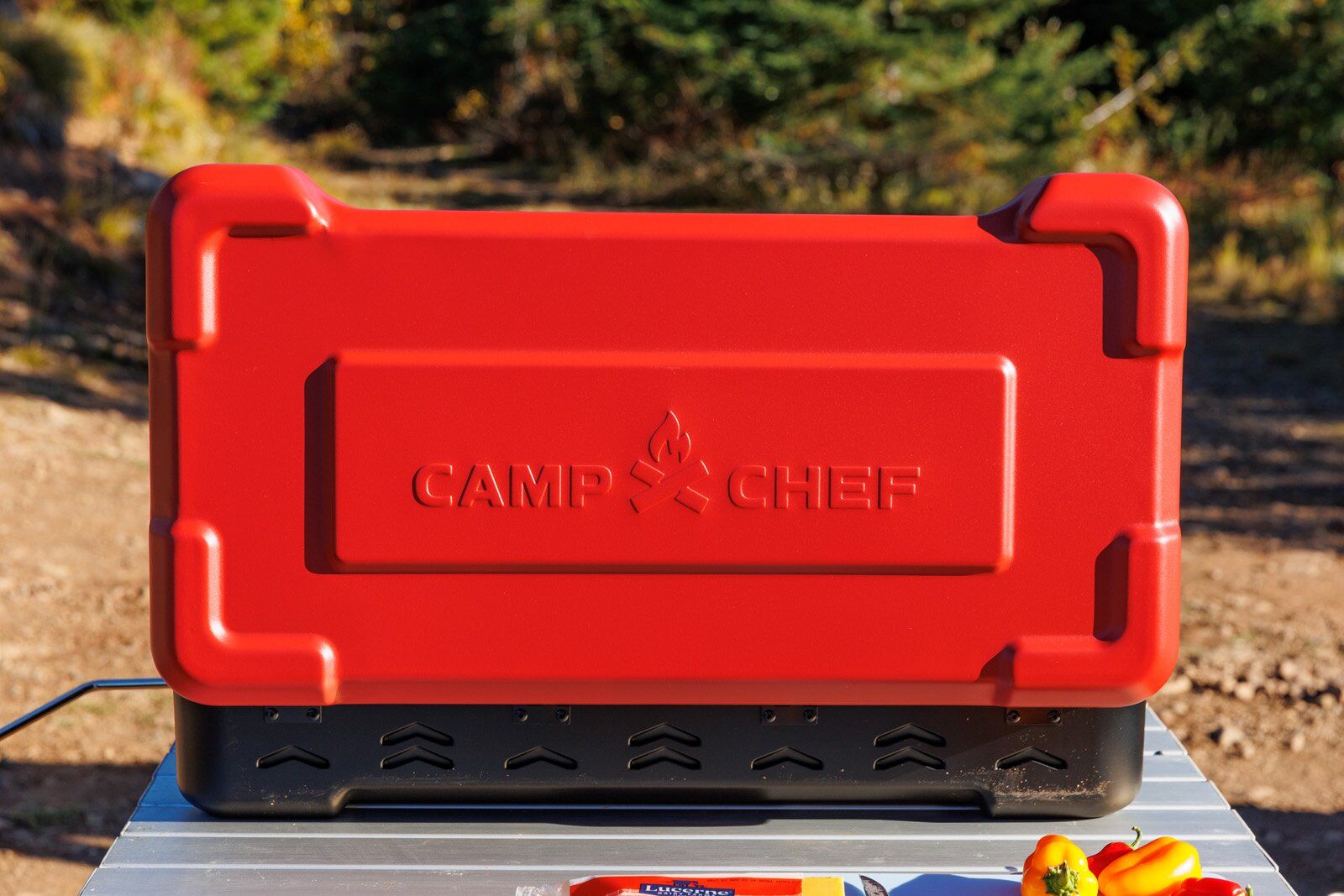
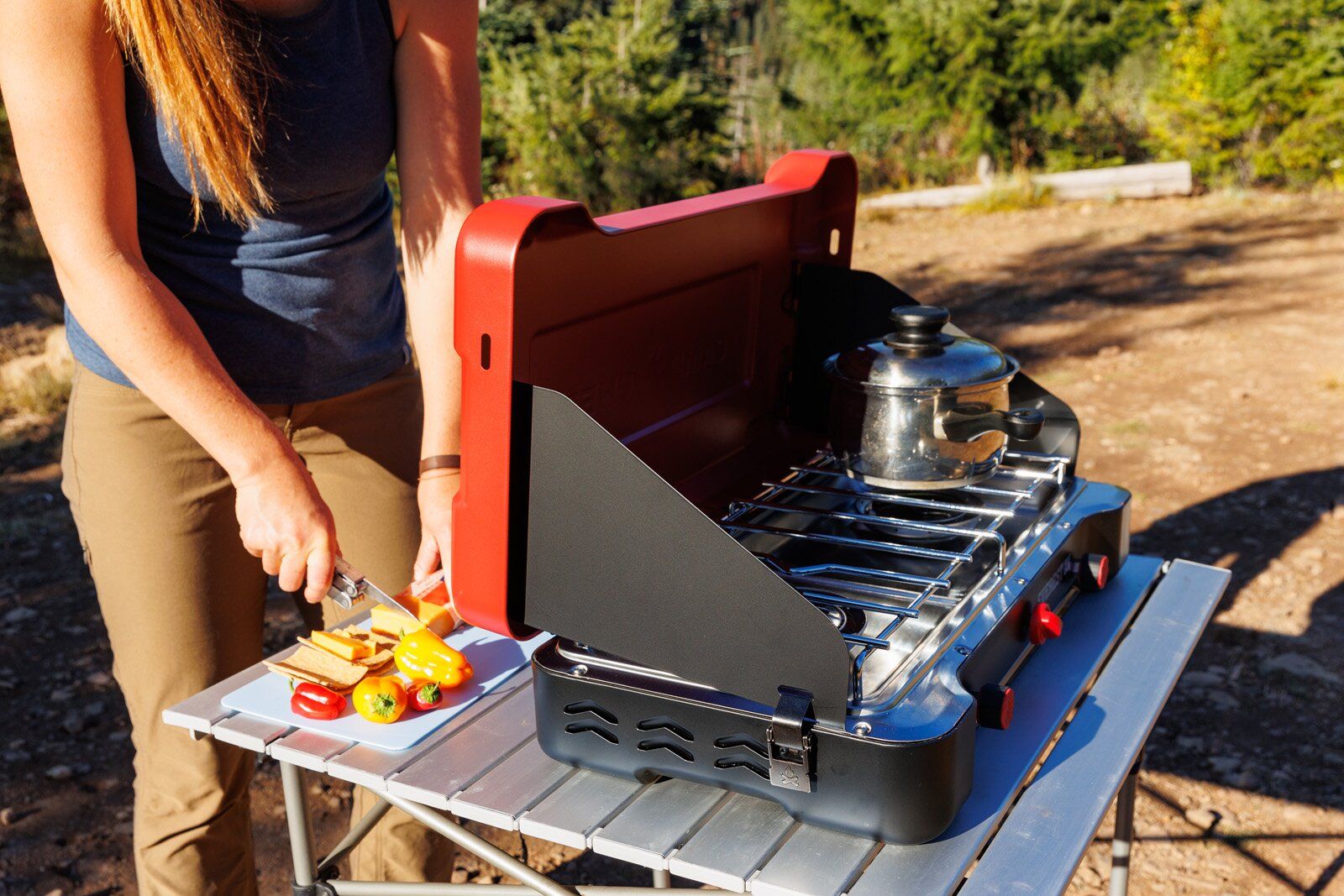
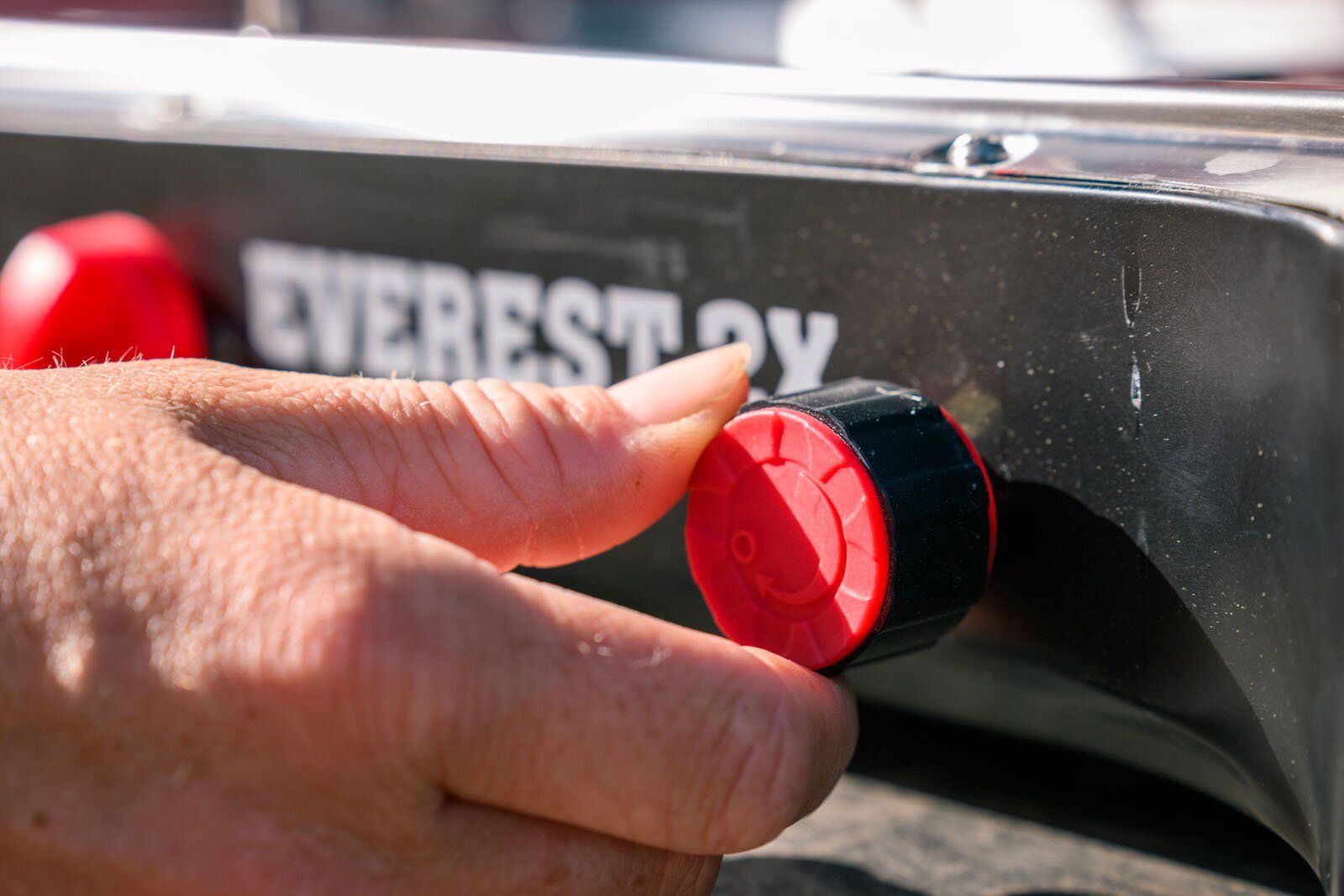
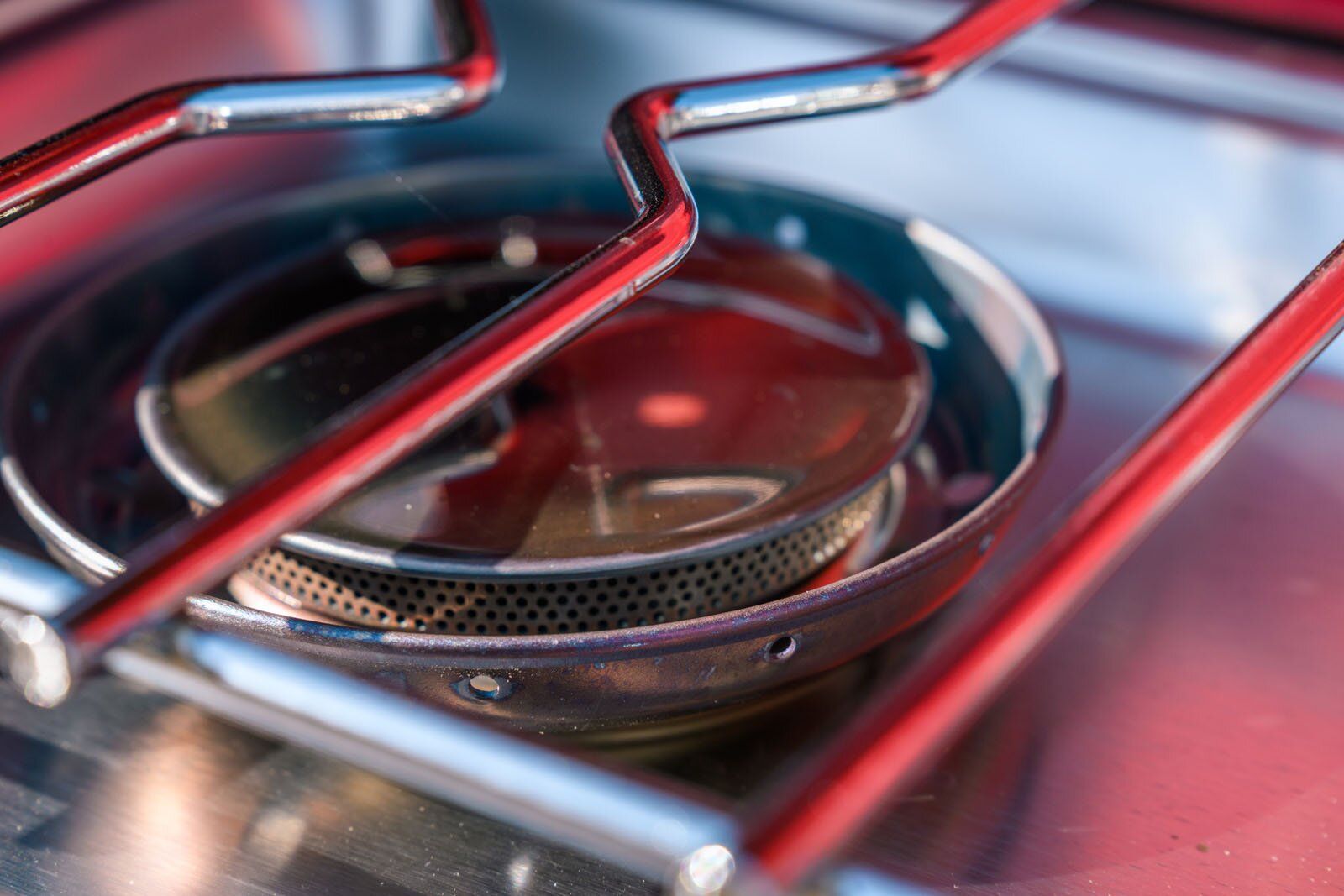
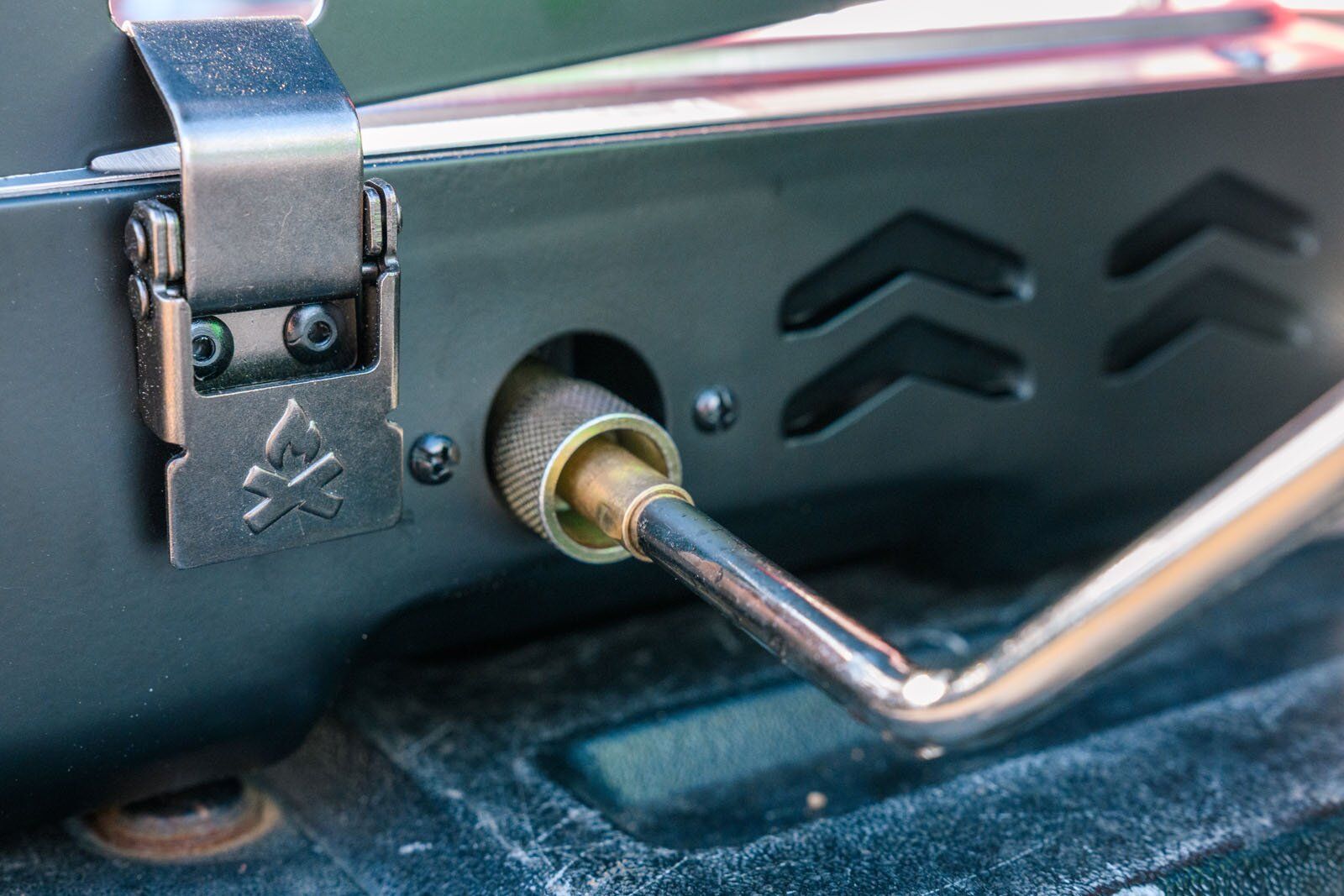
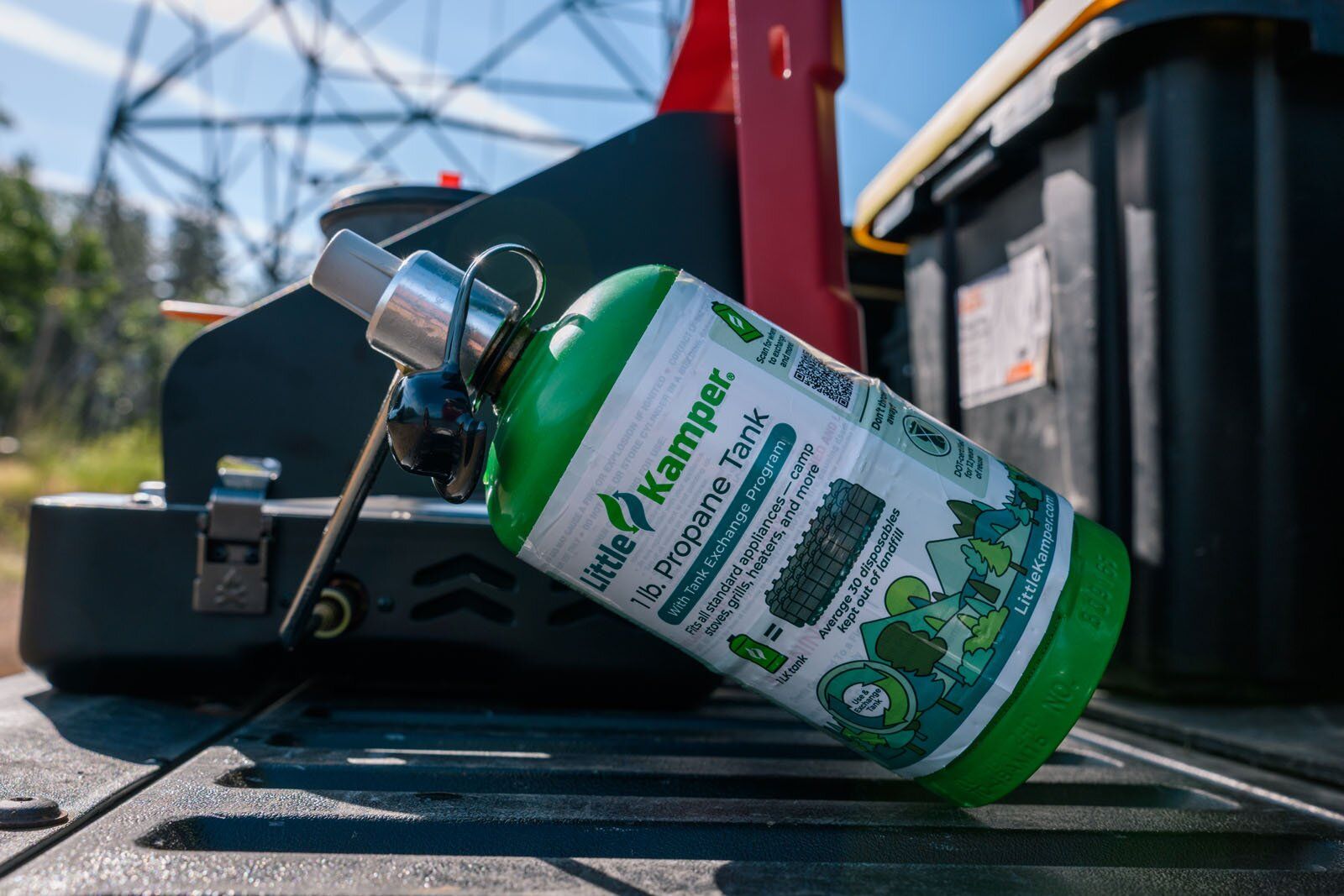
With its winning trifecta of serious power, delicate temperature control, and impressive wind resistance, the Camp Chef Everest 2X can handle nearly any meal you can cook. It might be out of budget for cost-conscious campers, but we still think it’s one of the best camp stoves money can buy.
Power
Temperature Control
Wind Protection
Build Quality & Durability
Ease of Use
Sustainability
Fuel Type
Propane
Burners (Output)
2 (20,000 BTUs each)
Auto Ignition
Yes
Weight
12 lb.
Pros
Cons
The Camp Chef Everest 2X is a true workhorse that contains almost all of the features we look for in a high-quality camp stove. Boasting two 20,000-BTU burners and with built-in auto ignition, it’s far and away the most powerful model we’ve reviewed (though at the expense of fuel efficiency). In the field, our tester consistently boiled one liter of water in less than 4 minutes, and the Everest's simmer control is also one of the best in the class. Like the Jetboil Genesis Basecamp (which, by the way, costs more than double the Everest), it evenly distributes heat and offers four full knob rotations per burner—perfect for meals that require nuanced heat. When you’re done cooking the Everest’s removable nickel-coated grate and stainless steel drip tray help simplify the clean-up process, and our tester had no issues with residue or buildup.
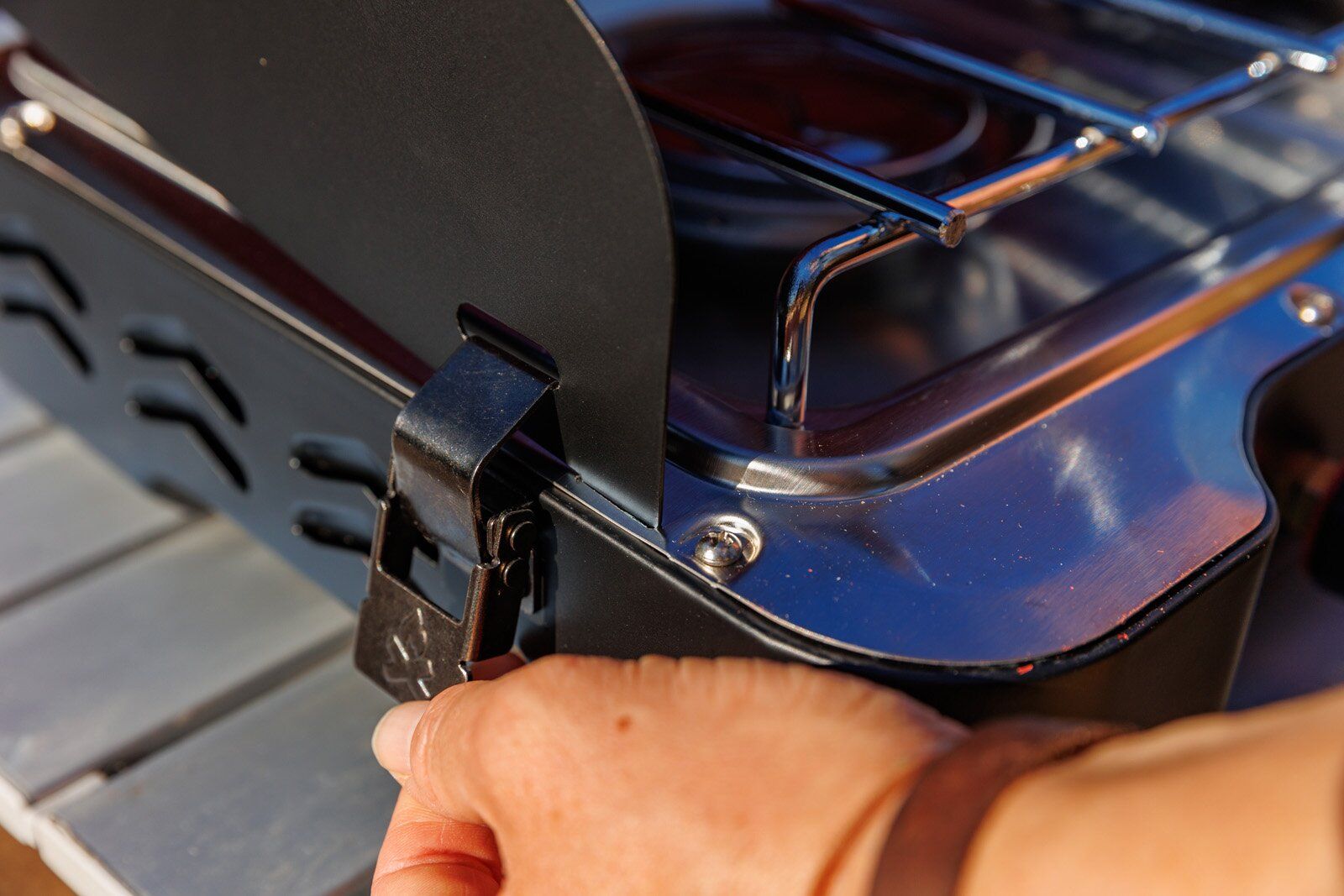
The Camp Chef Everest 2X also earns high marks for its ability to combat wind. This stove features two burly wind shields that securely clip into the sides of the stove body. When combined with the powerful burners, the shields ensure reliable flames even in strong gusts, and our tester effortlessly prepared meals in surprisingly blustery conditions with only a slight decrease in performance. Plus, while the Everest’s 215-square-inch cook surface is smaller than the Coleman stoves we tested, it still can accommodate two 10-inch pots, making it suitable for a family camping trip or cooking for a small group of friends.
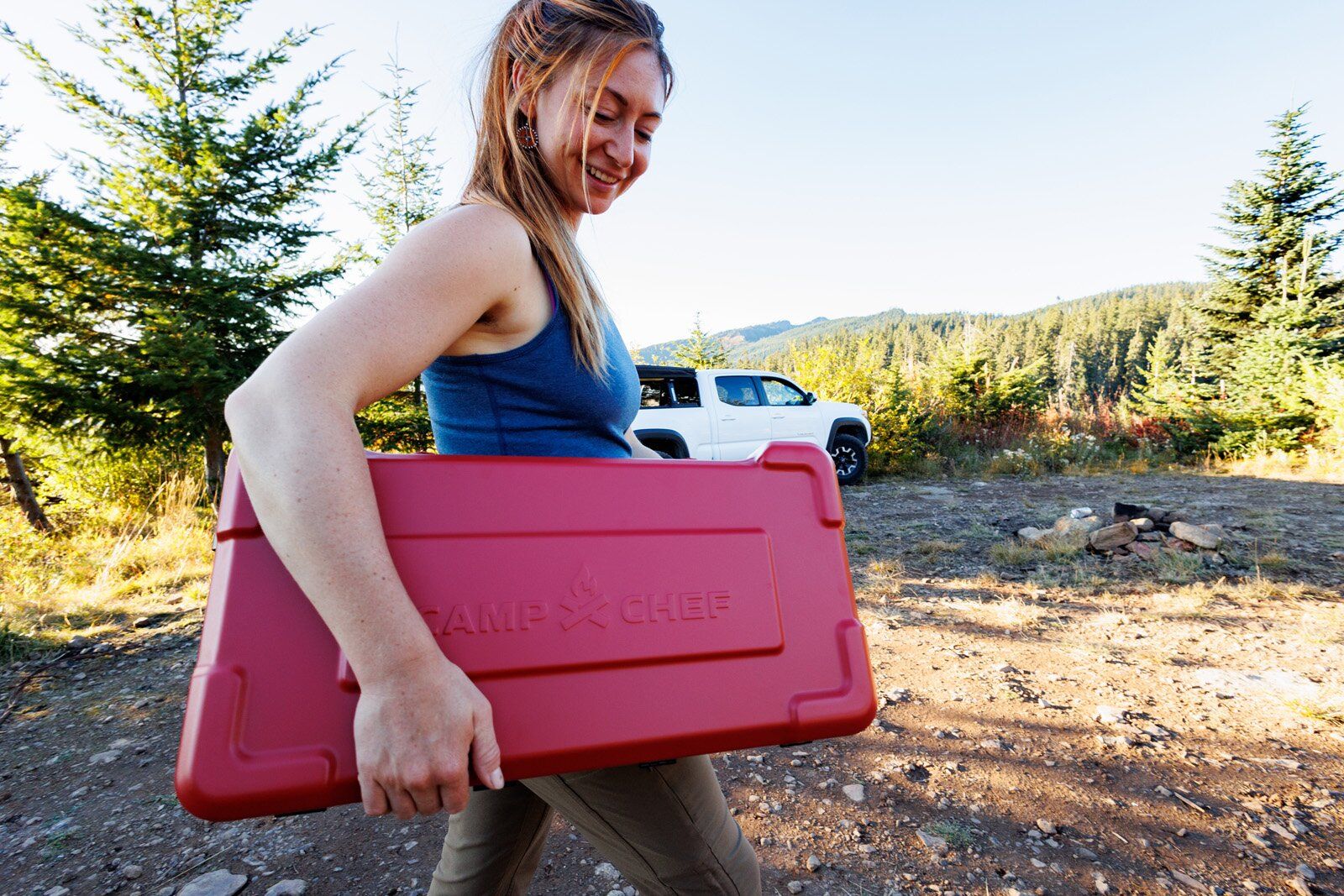
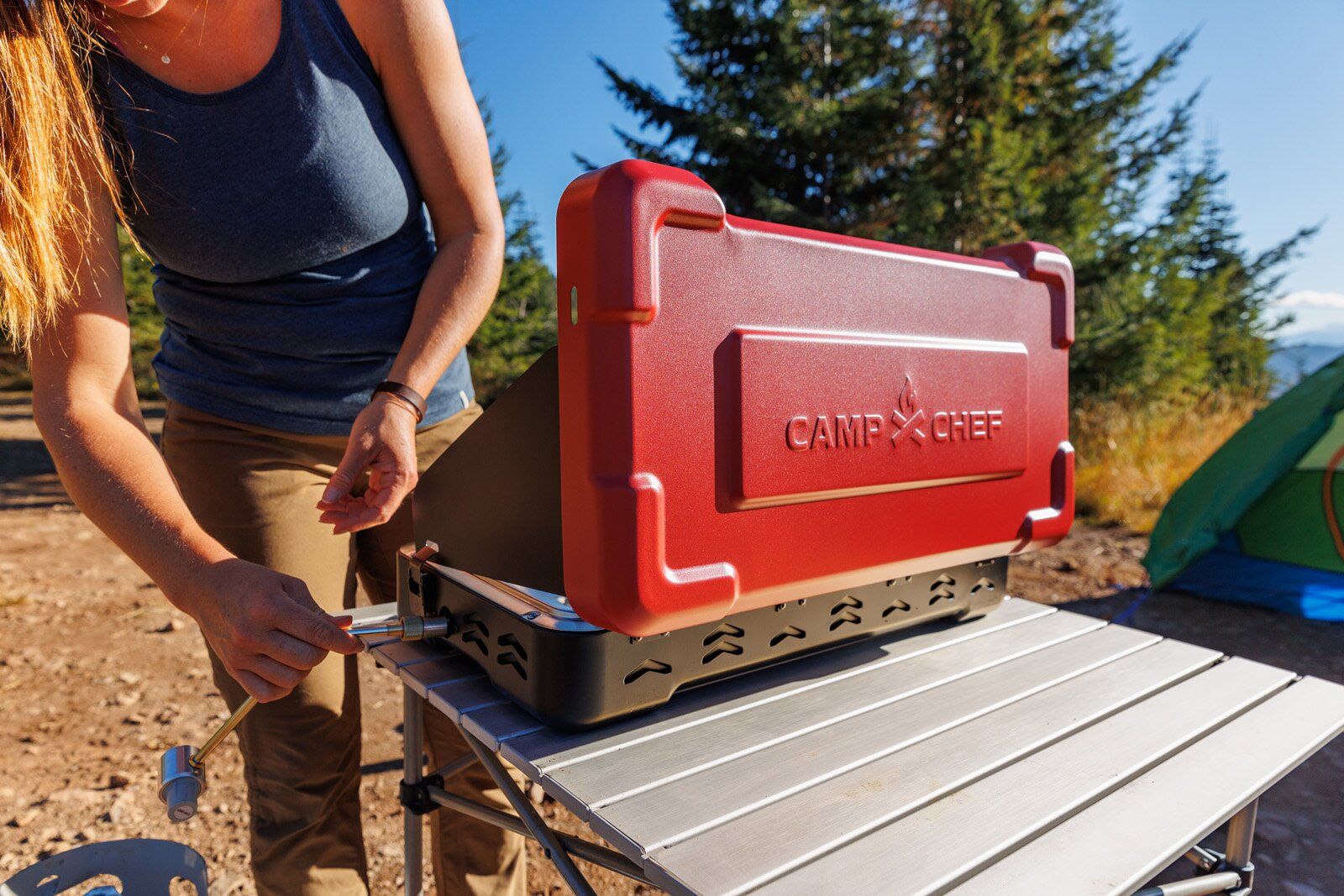
Given the price point, it’s not surprising that the Everest’s build quality is superb. Our tester praised the stove’s sturdy metal frame and ability to hold up well to regular use. The only design complaint he had was that it was sometimes difficult to screw the pressure regulator into the stove body. Portability is also subpar: While the Everest is by no means a pain to lug around—it includes a built-in carry handle, and both its size and weight are comparable to similarly designed two-burner stoves—it’s not as compact or light as, say, the Genesis Basecamp. But don’t let these quibbles distract you from the fact that the Everest 2X is a standout camp stove. At $190, it may be a bit pricey for budget-conscious campers who are happy with the basics. But for everyone else looking for a stove that can cook it all, the Everest 2X is a winner. For more, read our review of the Camp Chef Everest 2X.
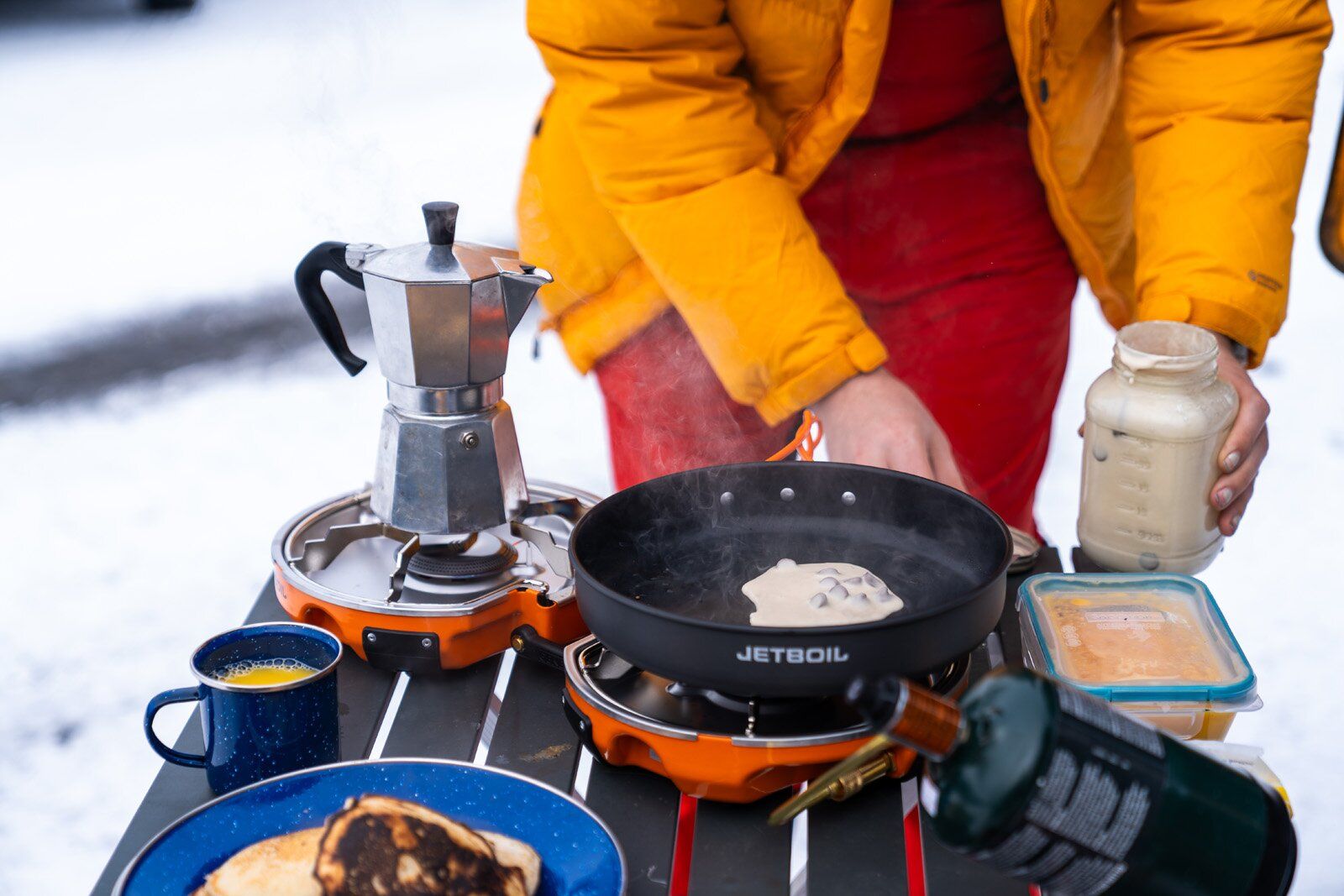
The Jetboil Genesis Basecamp System is a complete cooking setup designed with both performance and packability in mind. It can easily handle quick boils as well as delicate, low-and-slow recipes, and its included pot and pan make it a one-stop shop for a camp chef. However, it’s super pricey and has some awkward design choices.
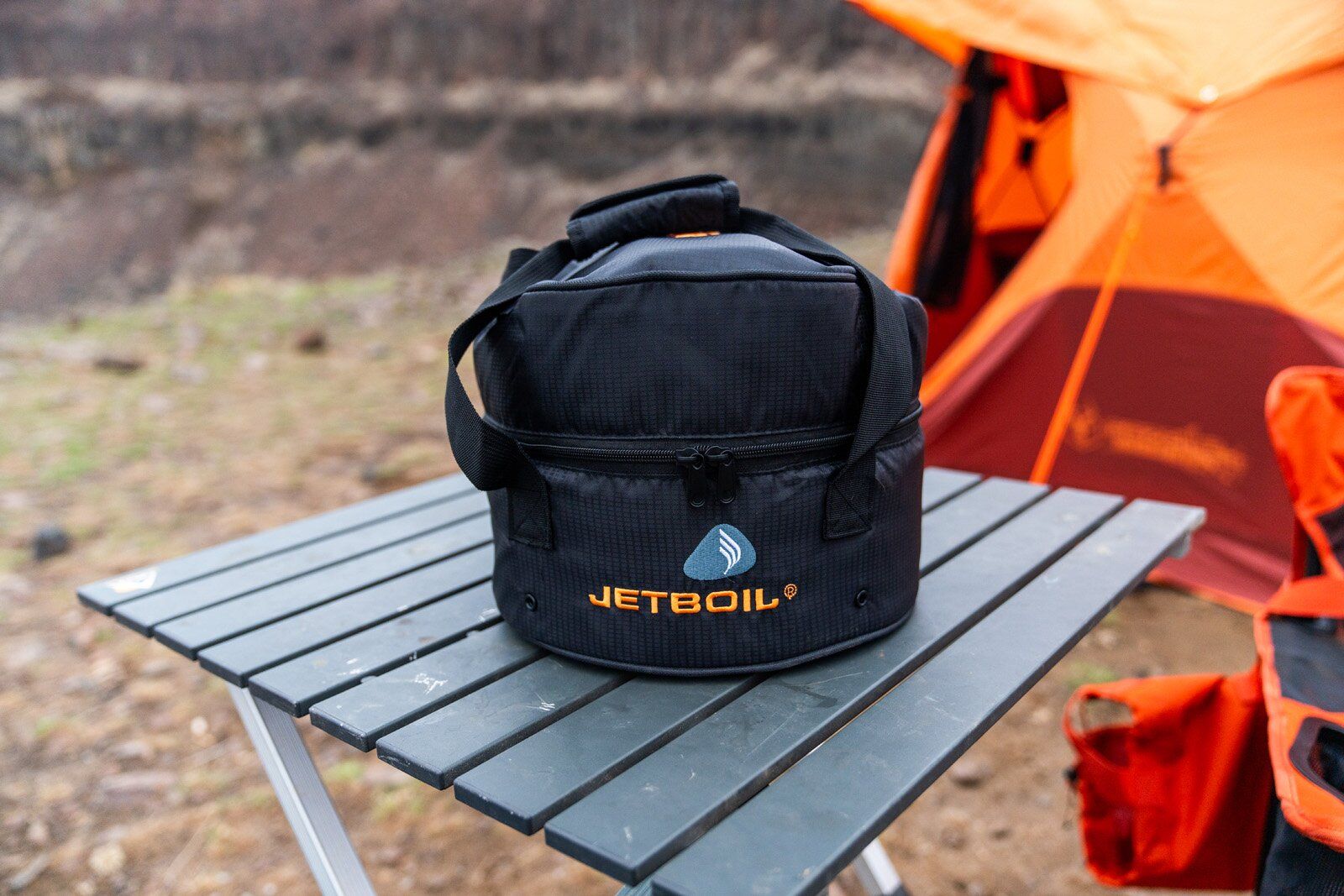
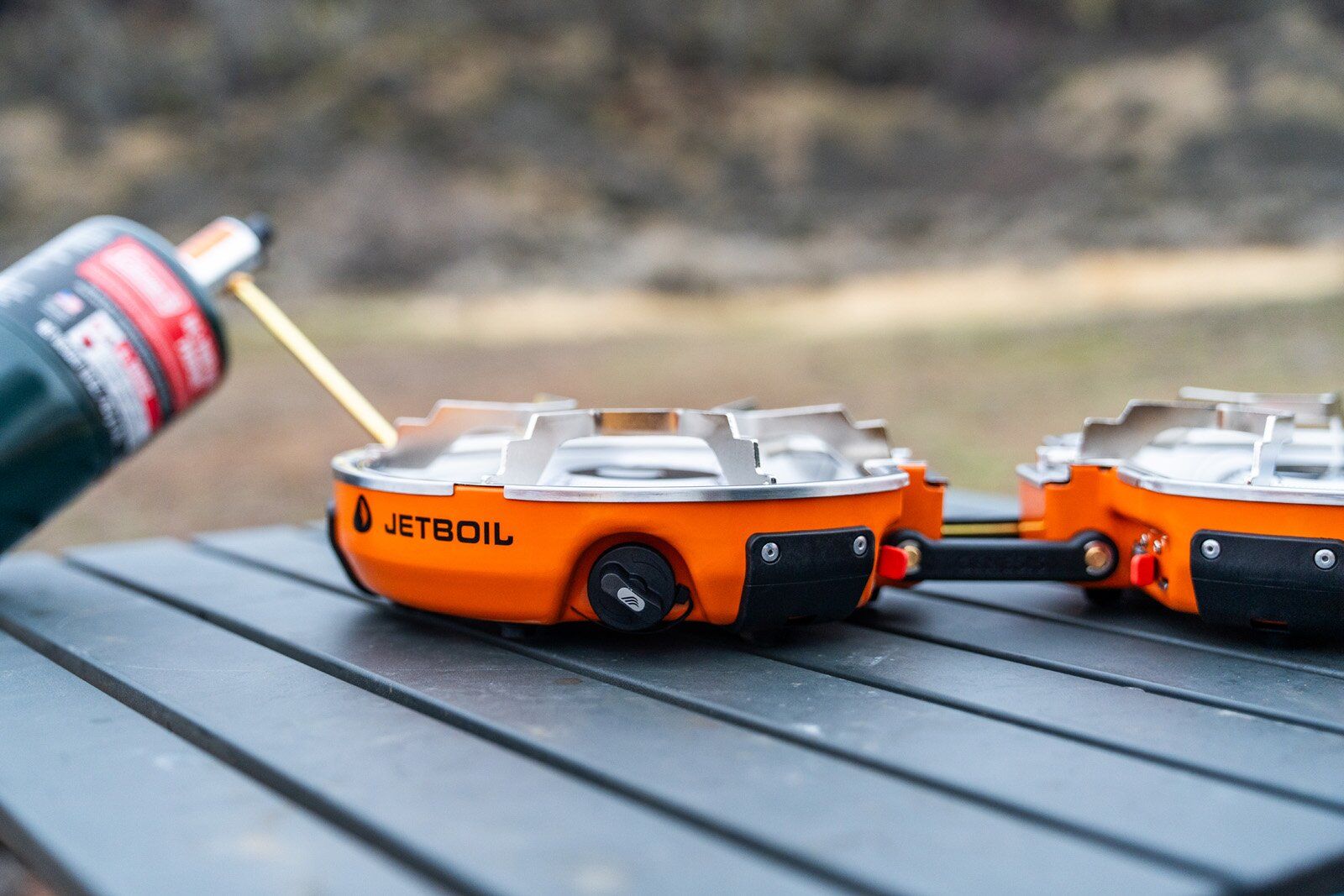
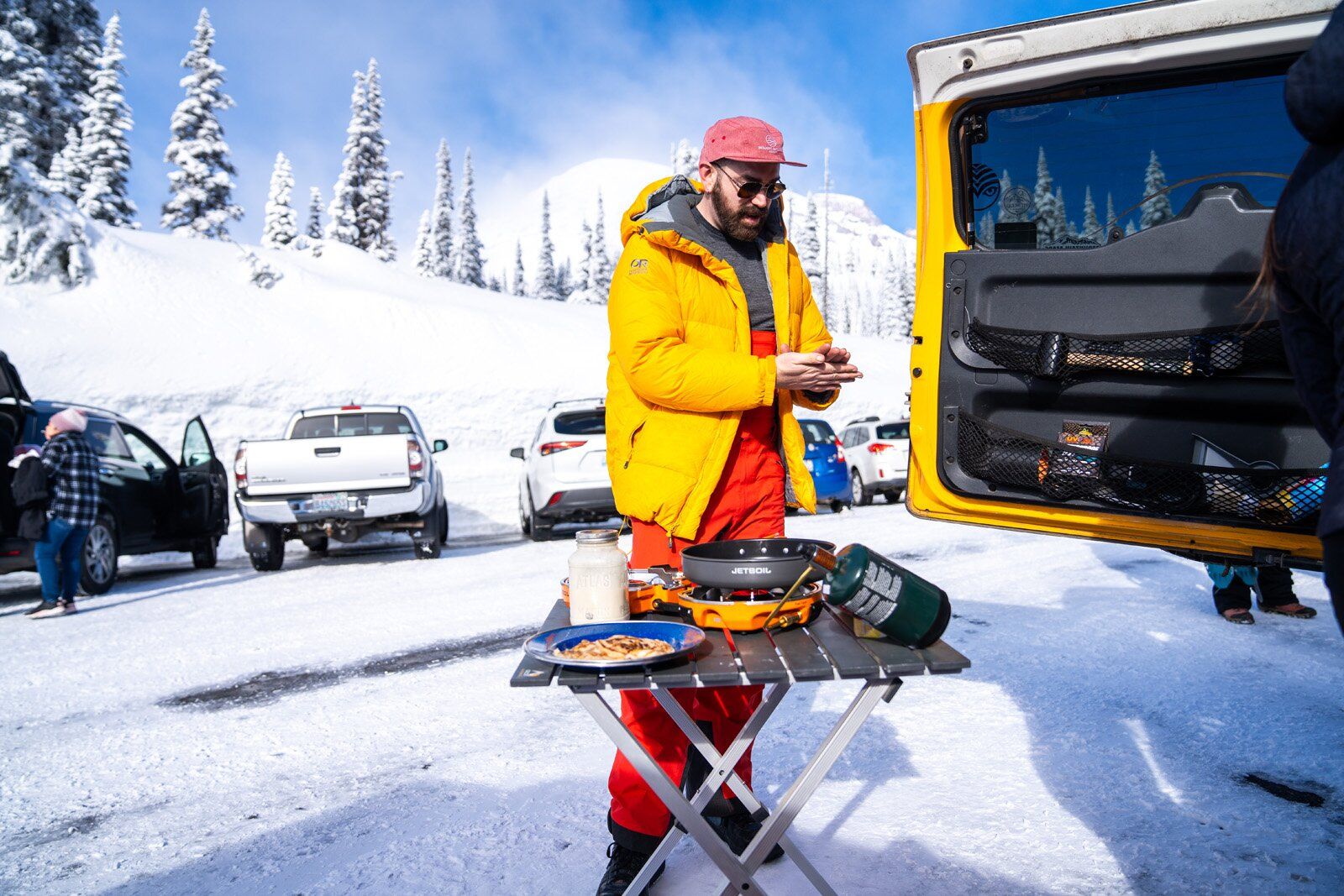
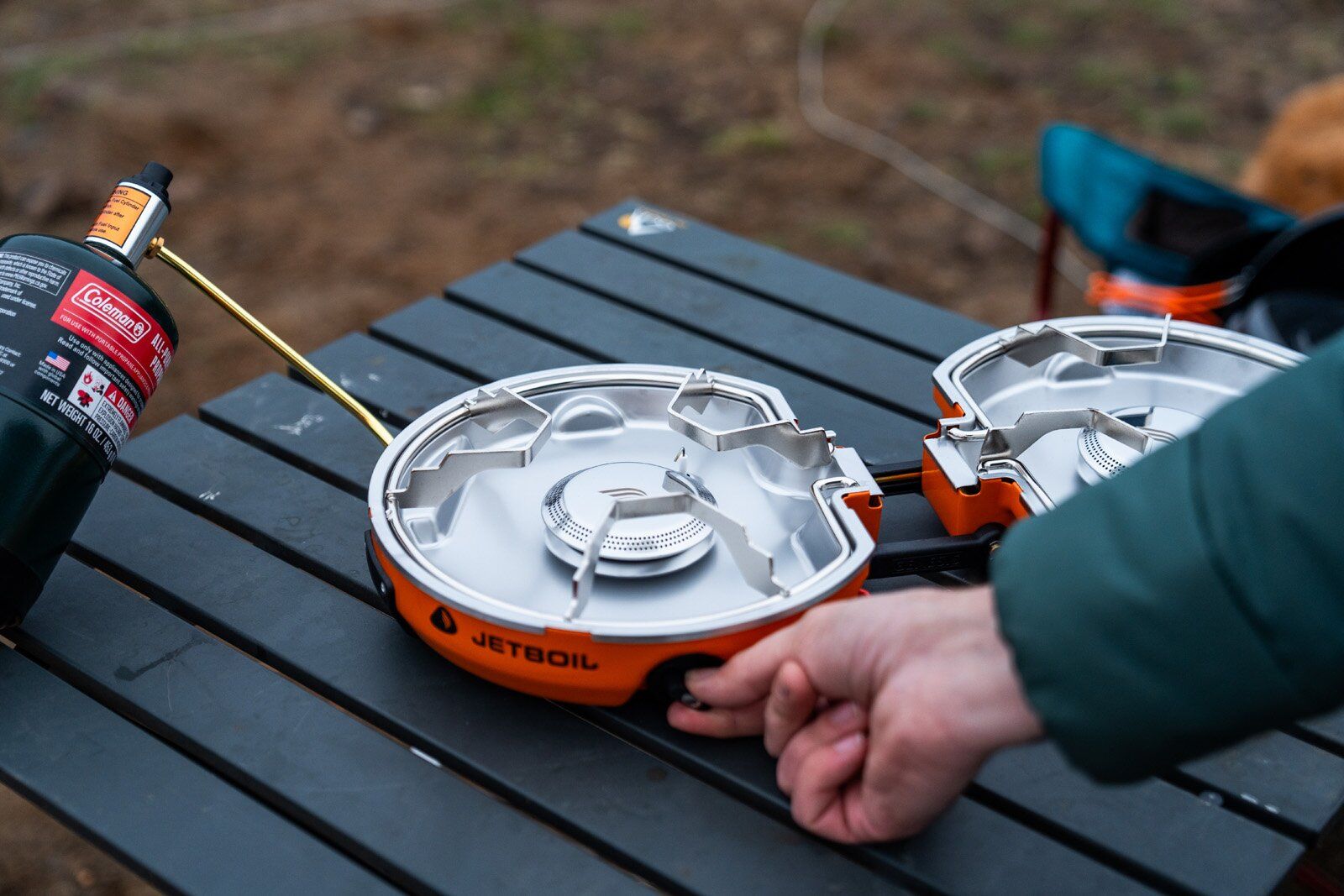
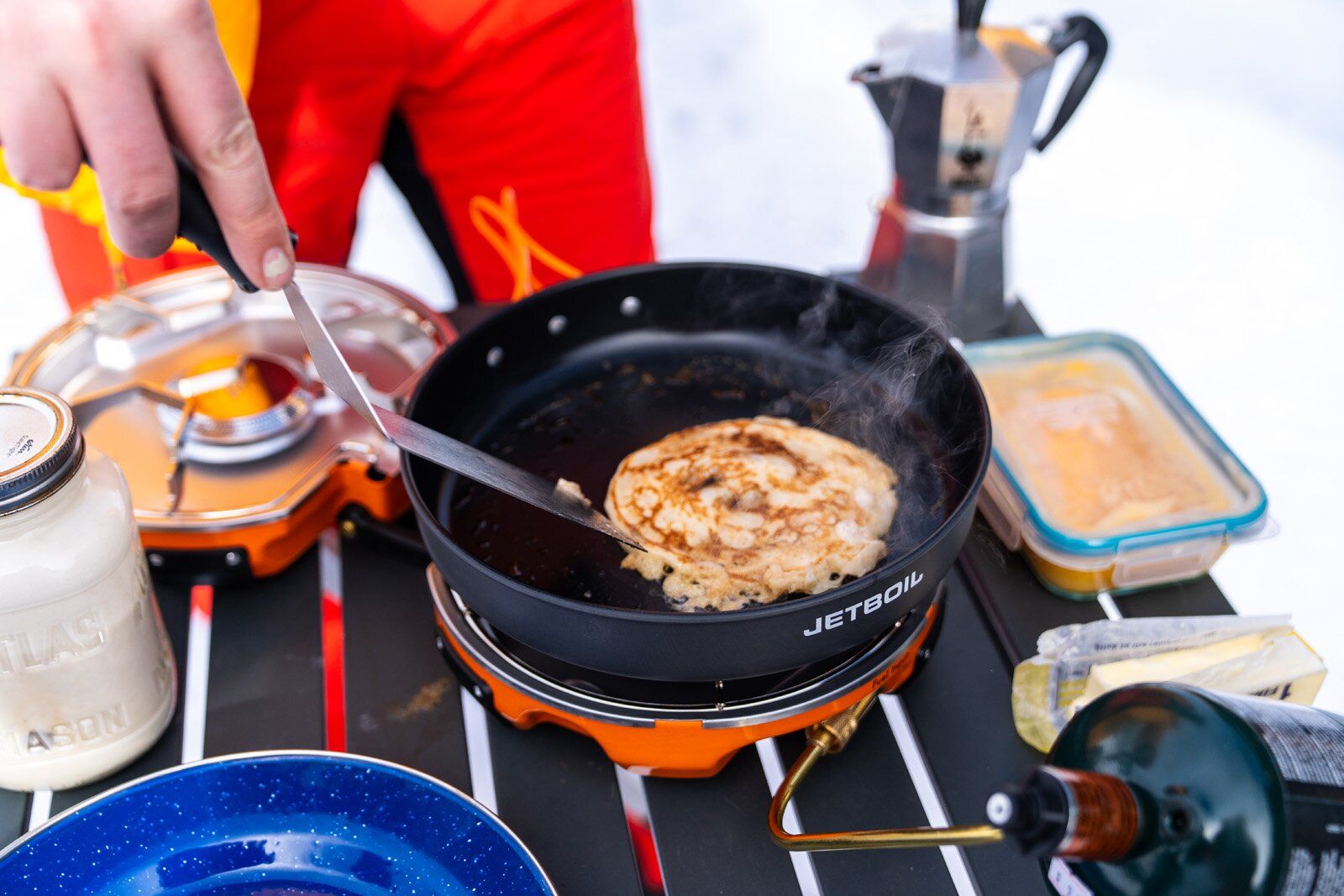
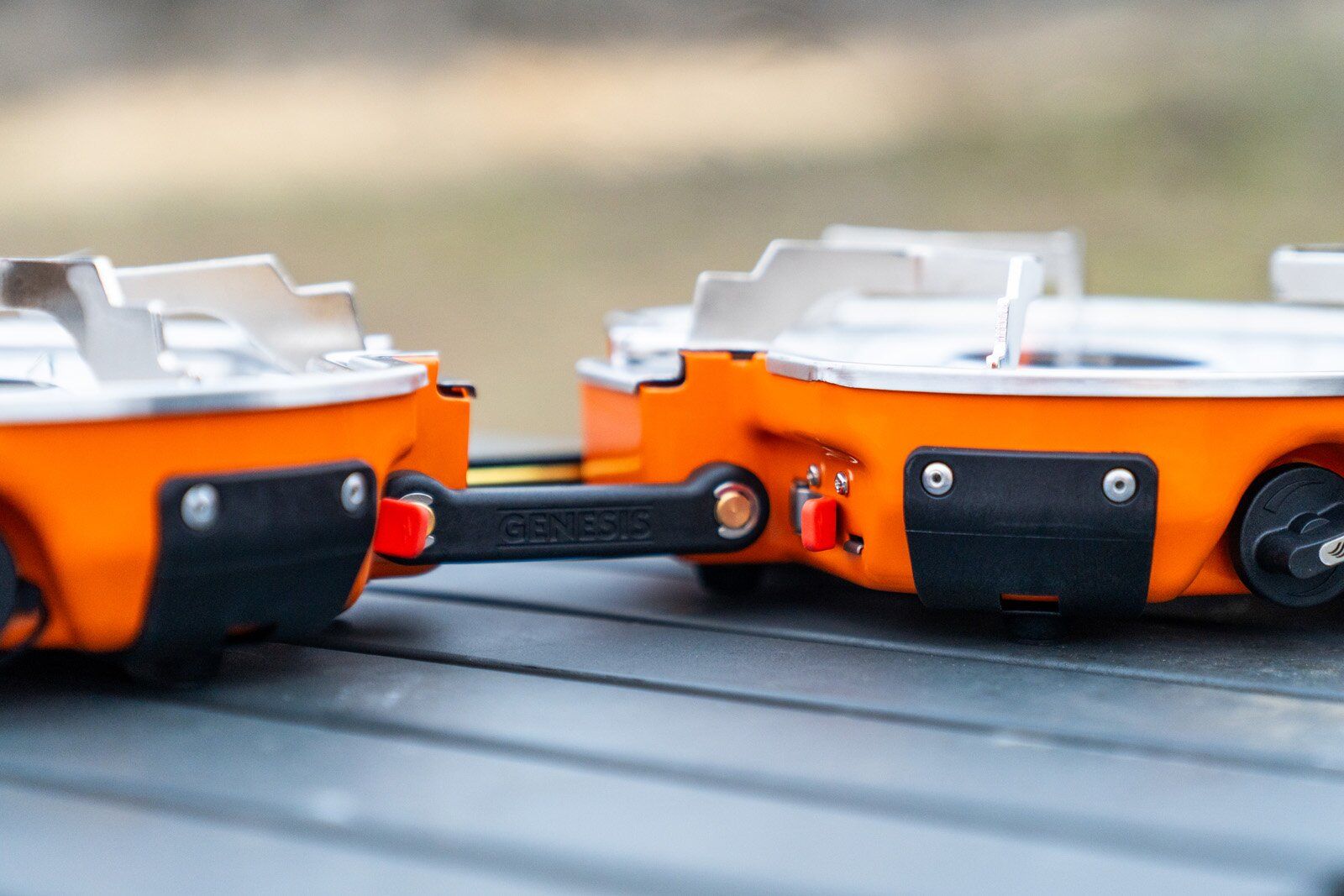
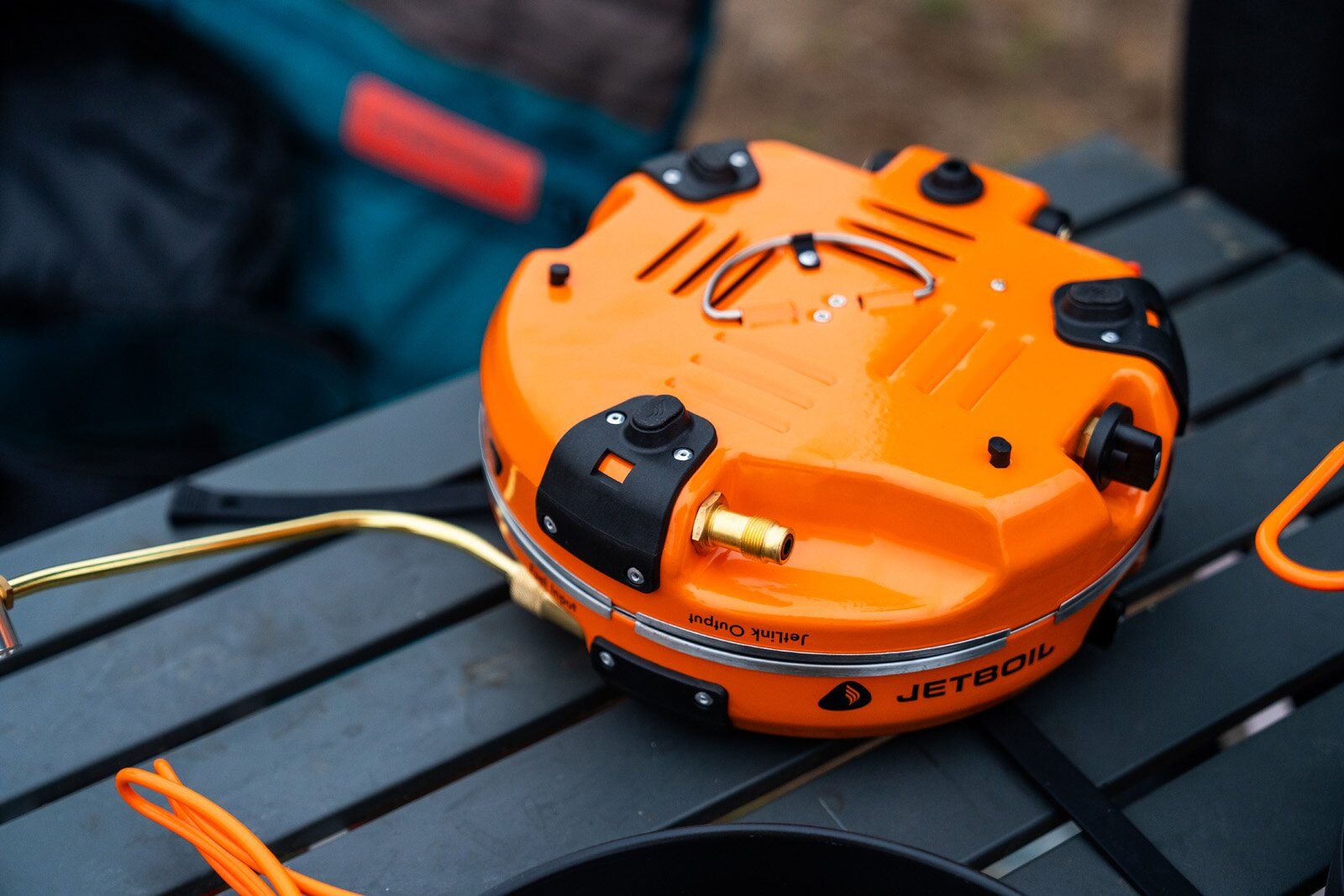
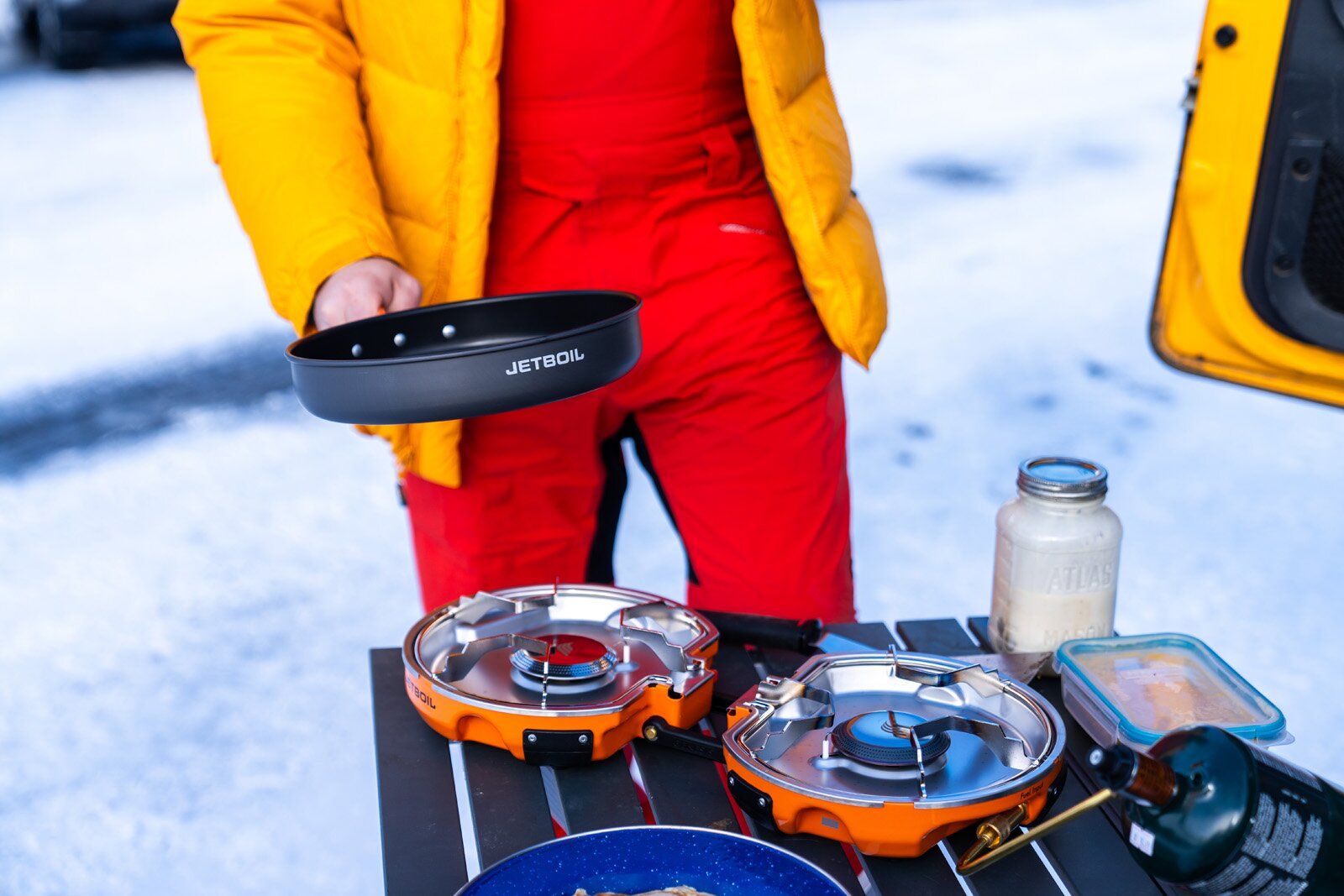
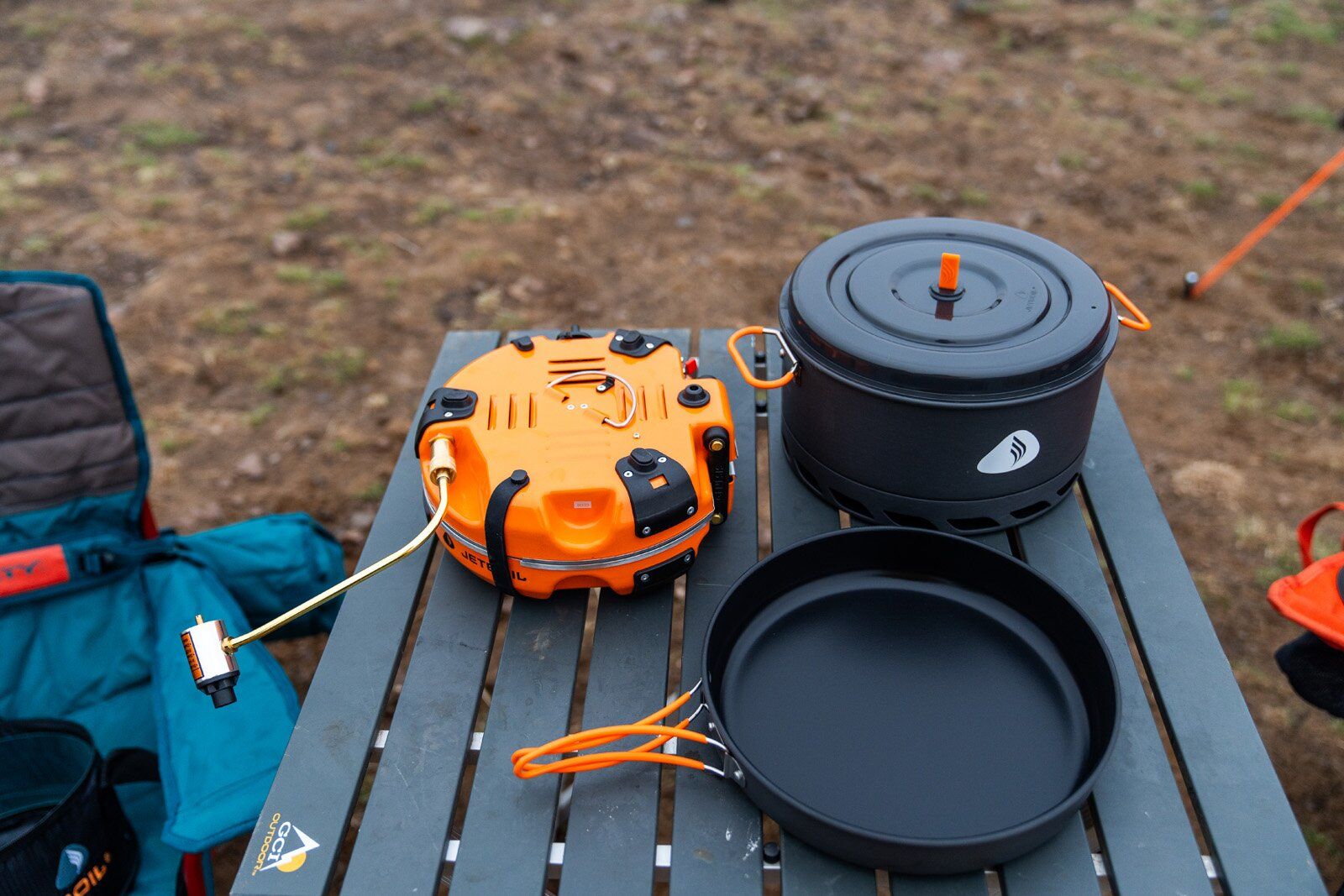
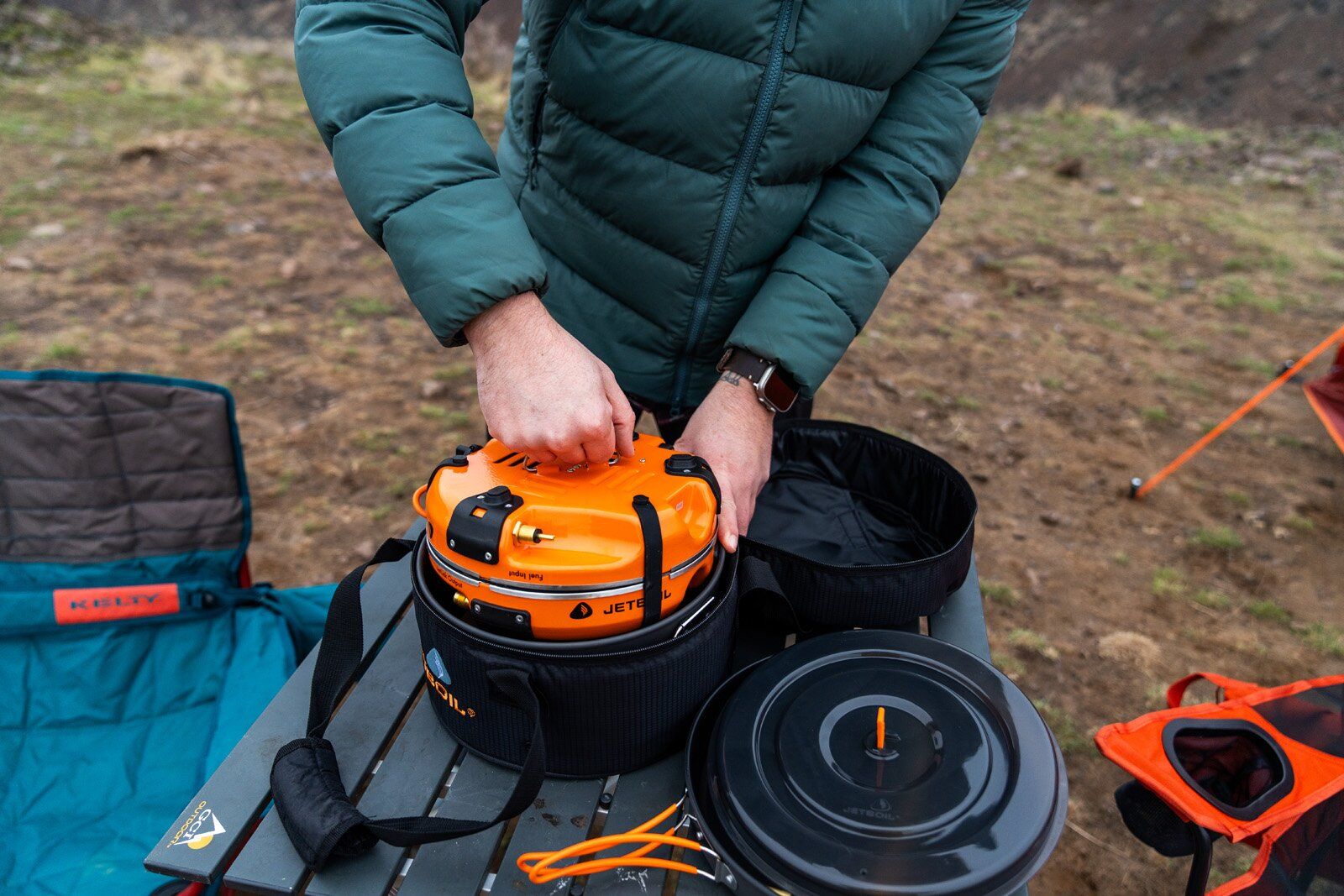
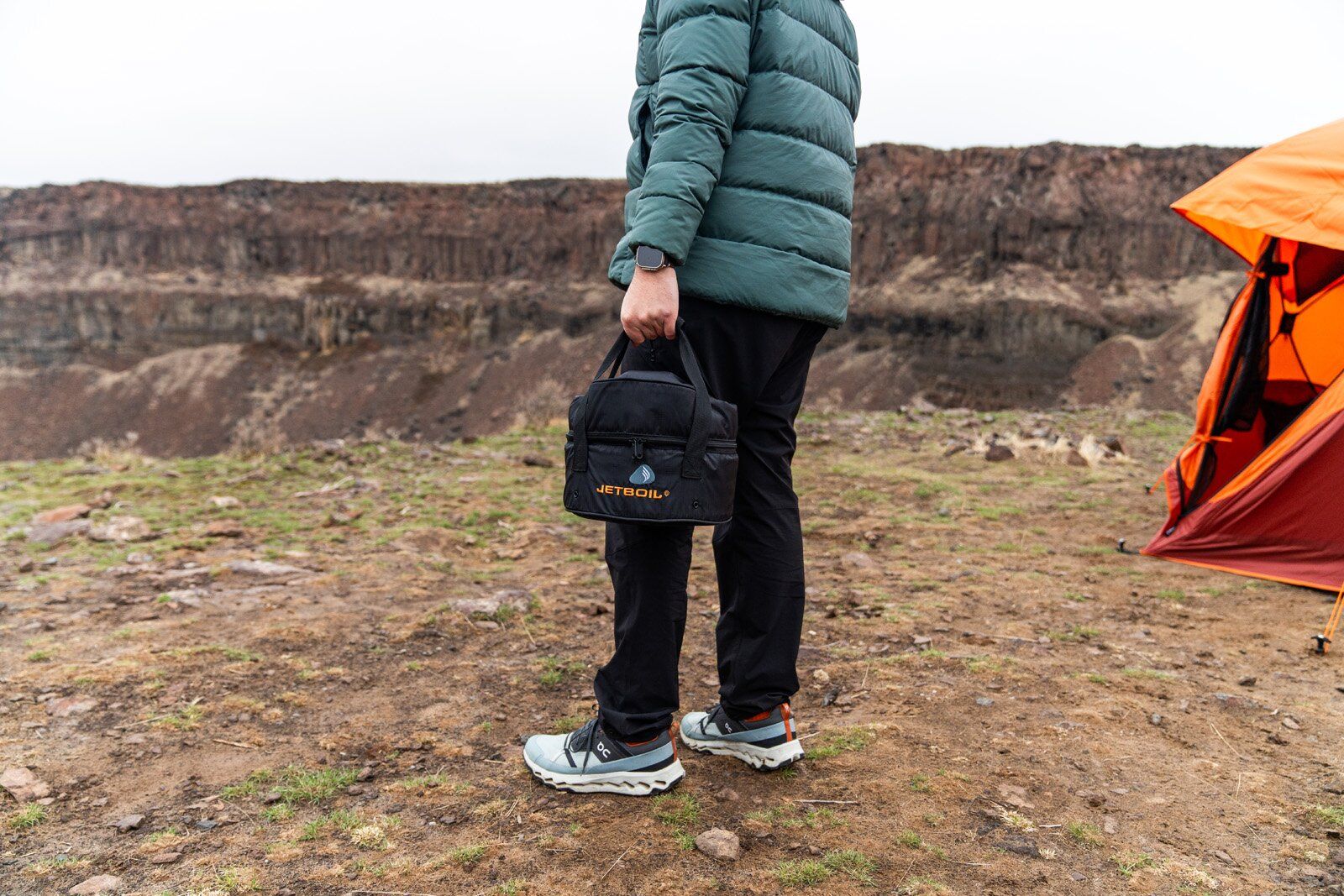
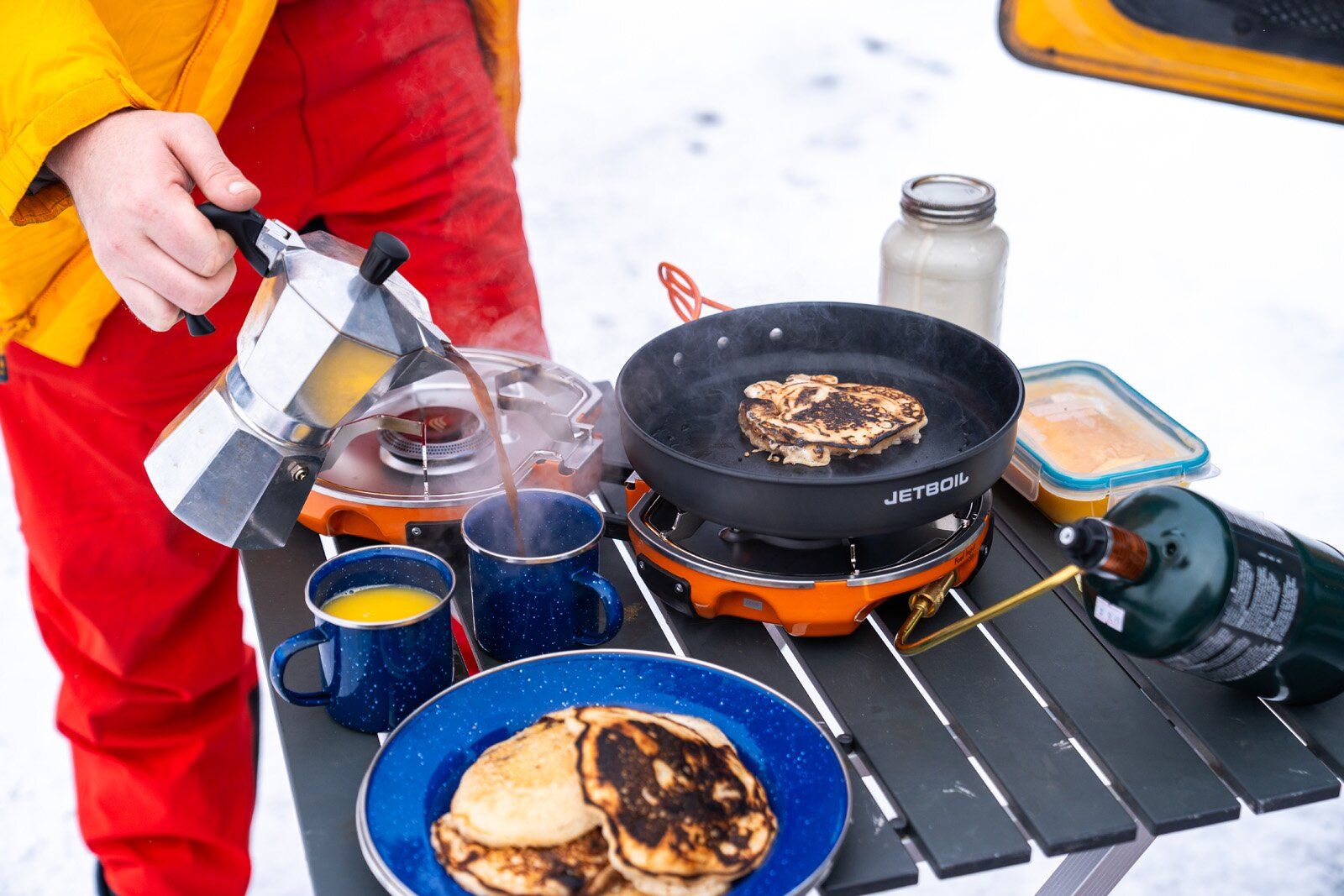
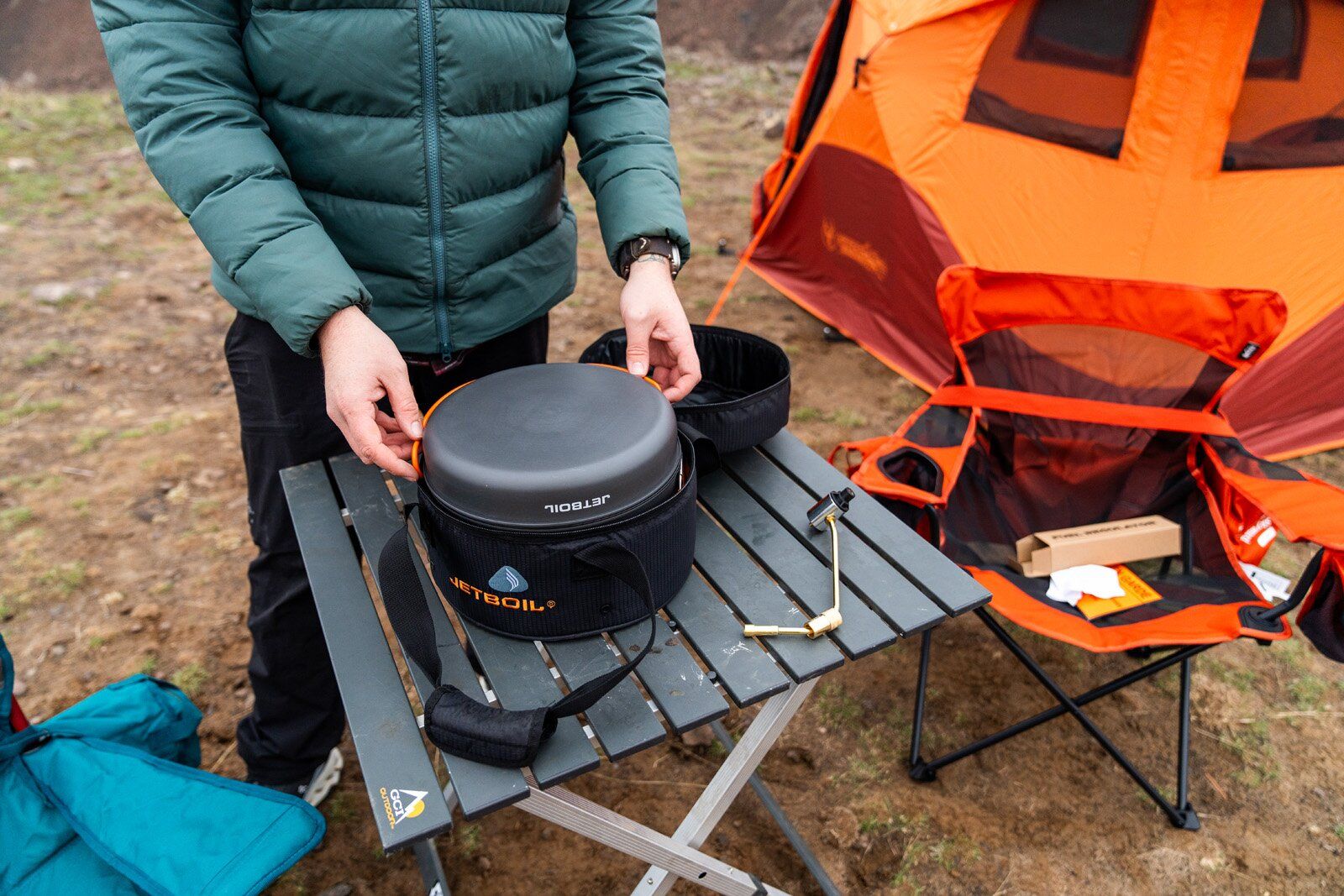
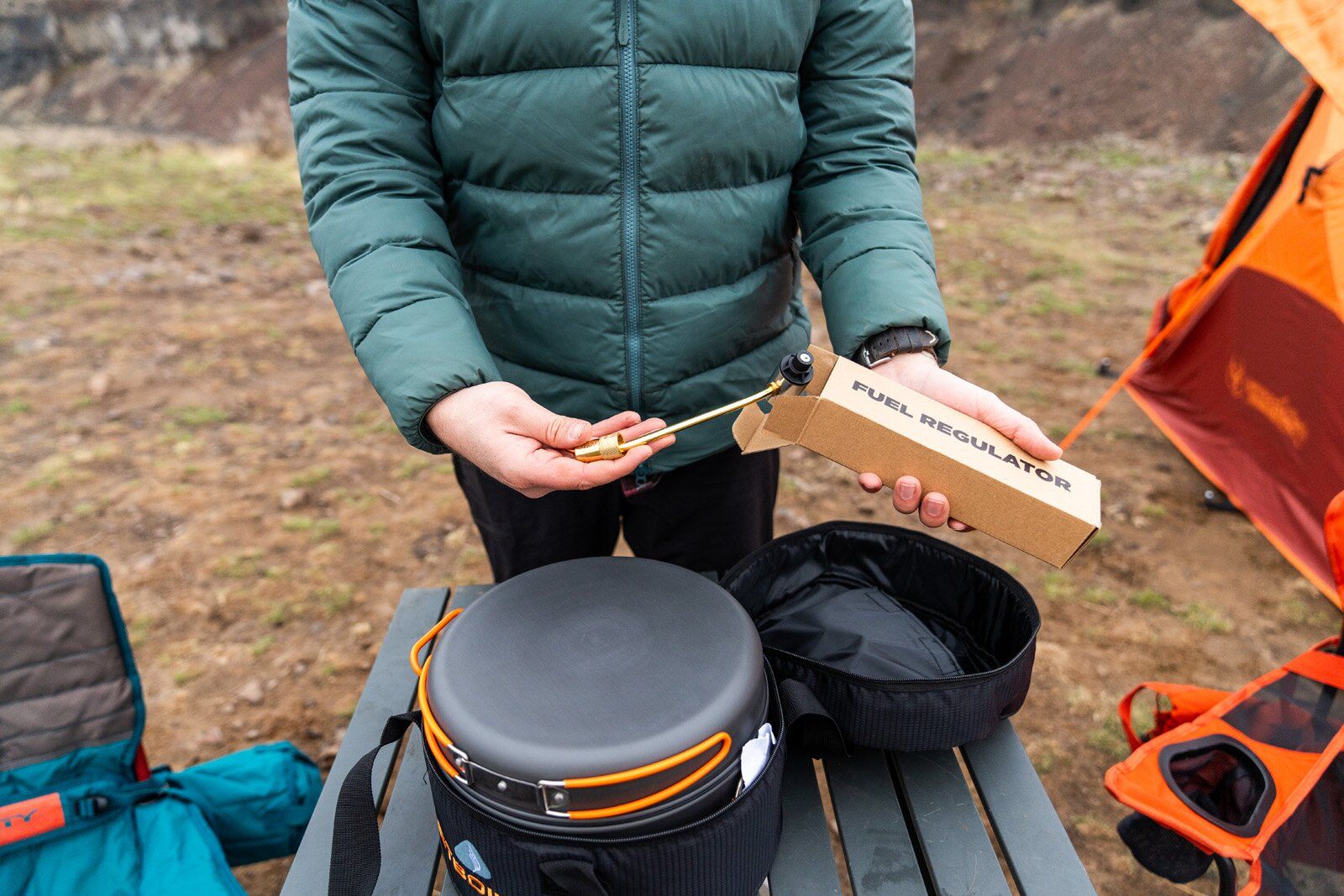
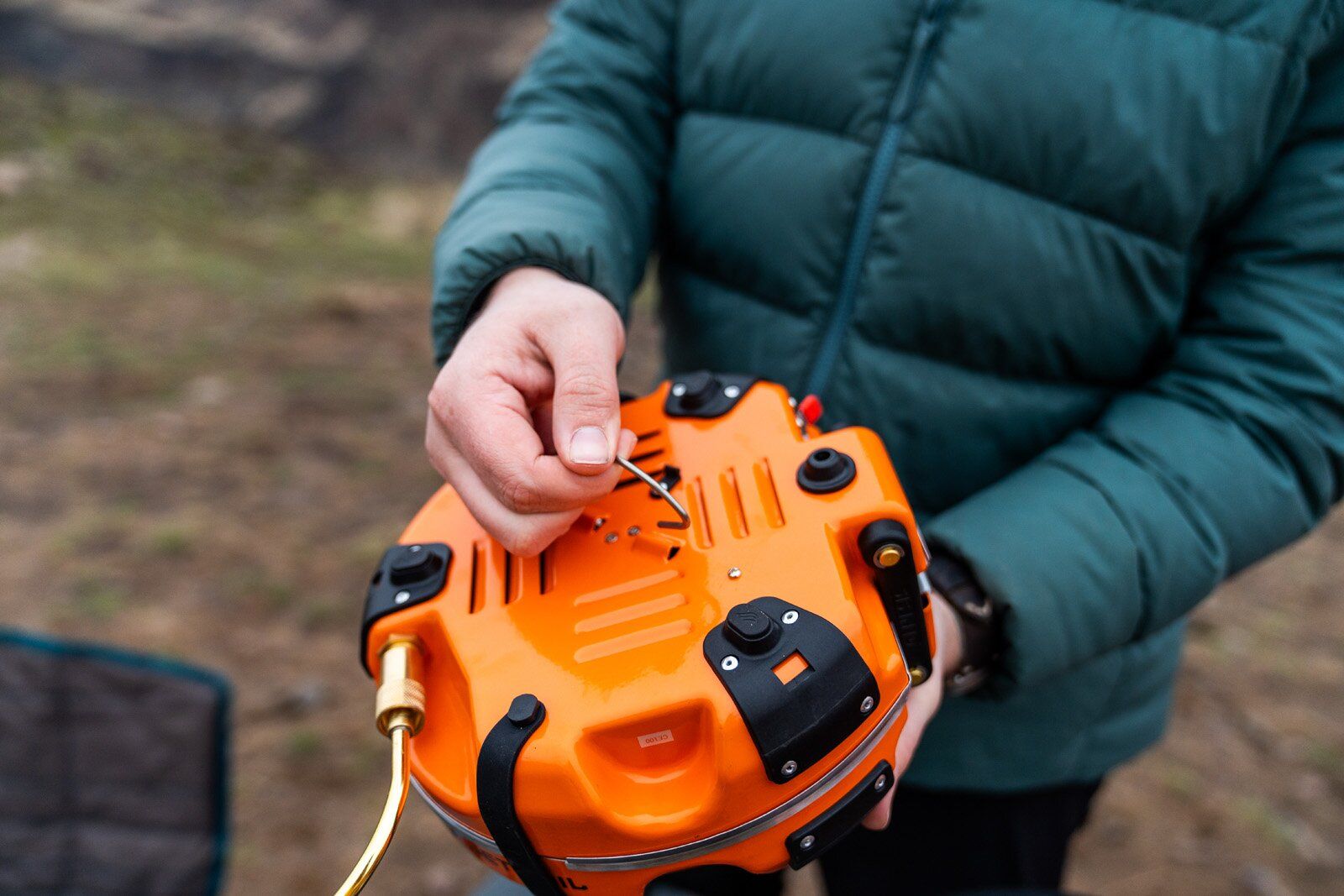
The Jetboil Genesis Basecamp System is a complete cooking setup designed with both performance and packability in mind. It can easily handle quick boils as well as delicate, low-and-slow recipes, and its included pot and pan make it a one-stop shop for a camp chef. However, it’s super pricey and has some awkward design choices.
Power
Temperature Control
Wind Protection
Build Quality & Durability
Ease of Use
Sustainability
Fuel Type
Propane
Burners (Output)
2 (10,000 BTUs each)
Auto Ignition
Yes
Weight
9 lb. 1.6 oz.
Pros
Cons
Jetboil is already an established name in the backpacking stove ecosystem, and the brand is looking to make its mark on the car camping world with the Genesis Basecamp System. This one-of-a-kind build turns heads—it features a clamshell design with two 10,000-BTU burners and lever ignitors for matchless lighting. However, the Genesis’ looks aren’t the only thing that will raise eyebrows. At $450, it's nearly double the cost of popular two-burner stoves like the Primus Tupike ($280) and Coleman Cascade 3-in-1 ($275). To help justify its astronomical price, the Genesis promises convenience. It comes with Jetboil’s 5-liter FluxPot, a 10-inch ceramic-coated nonstick fry pan, and an attachable wind shield, all of which fit in the stove’s carry bag. When packed, the entire cook system measures 10.3 inches in diameter and 7.2 inches tall, making it one of the most compact two-burner choices on the market.
The Jetboil Genesis Basecamp System was one of the highest-performing stoves in this review. We found that it consistently brought one liter of water to a boil in just over three minutes—the fastest of any stove we tested—at various elevations. Its simmer control is excellent as well; its knobs complete four full rotations, allowing you to easily fine-tune the flames and maintain even heat distribution. (Our tester made golden-brown pancakes in the field with ease.) And, if you’re cooking for larger groups, the Genesis’ handy JetLink port allows you to daisy-chain additional compatible stoves via an accessory hose (sold separately) to create a versatile mega-camp kitchen with a single fuel source.
Unsurprisingly, this stove’s cook surface easily fits the included pot and pan. However, the Genesis’s widely spaced prongs may cause issues with smaller cookware, such as our tester’s espresso pot. Plus, although the stove itself is sturdy, we can’t say the same about some of its accessories. We were unimpressed by the durability and non-stick nature of the frying pan. The attachable wind shield—a long, thin piece of plastic—also felt like an afterthought and lacked the same quality standards as the rest of the product. Yes, these are minor flaws, but for its $400 price tag, we expected better from the Genesis. Still, if you decide to make the investment, you’ll get a premium, compact, all-in-one system that will efficiently cook almost any camp meal. For more, read our review of the Genesis Basecamp.
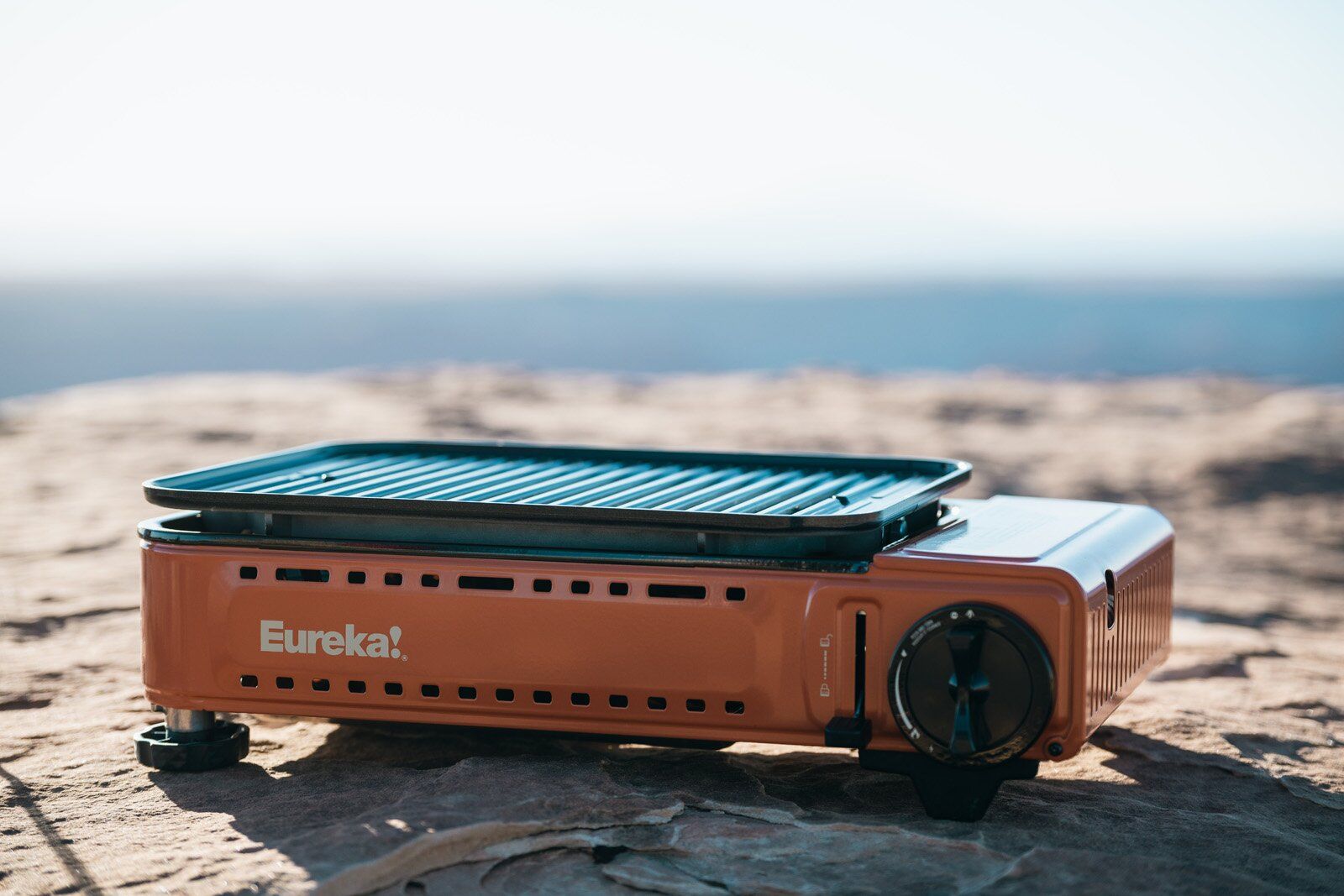
The Eureka SPRK is designed to be an on-the-go version of your backyard grill. We like that it’s light and extremely portable, but, because of its limited functionality, we don’t recommend it as a standalone camping stove.
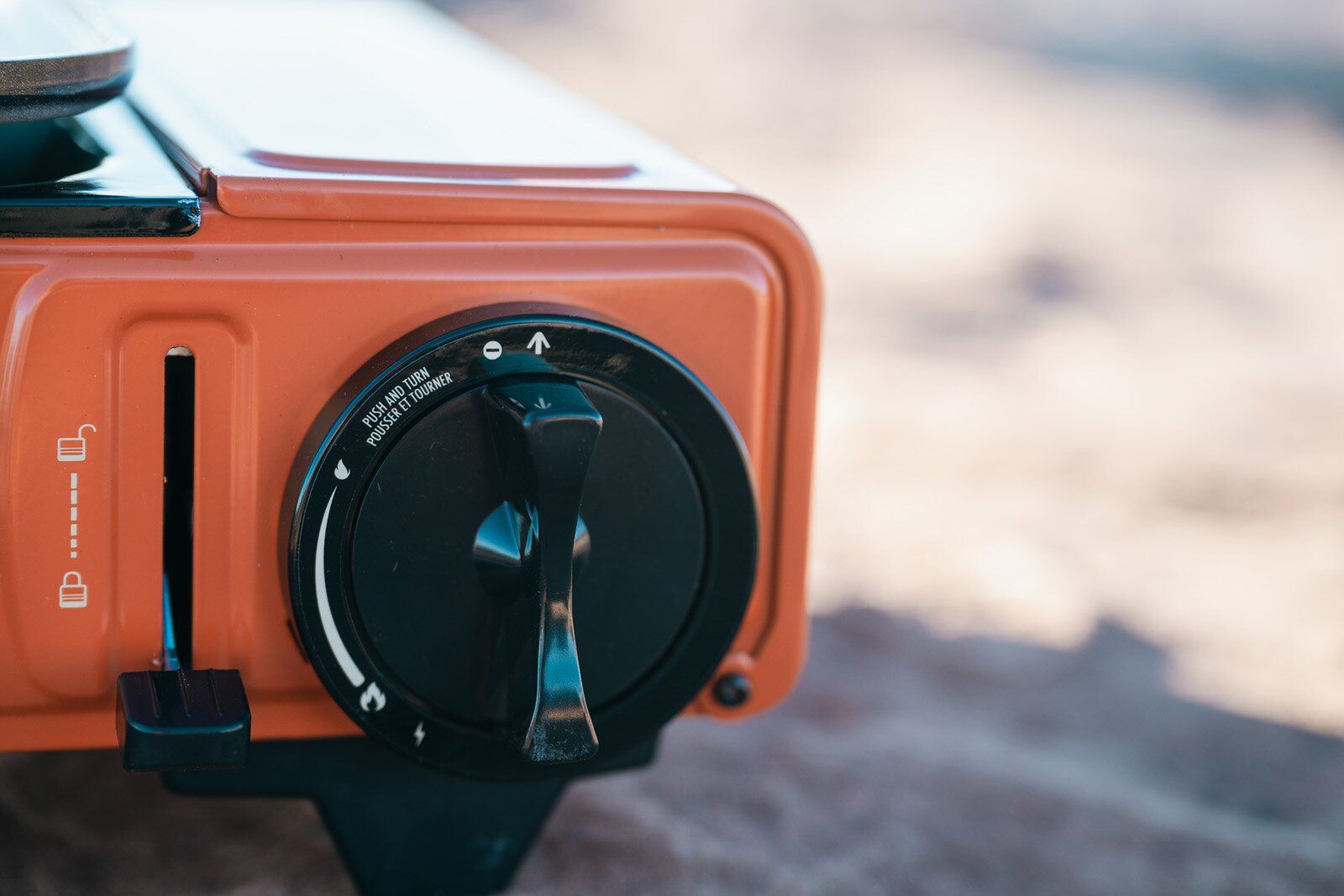

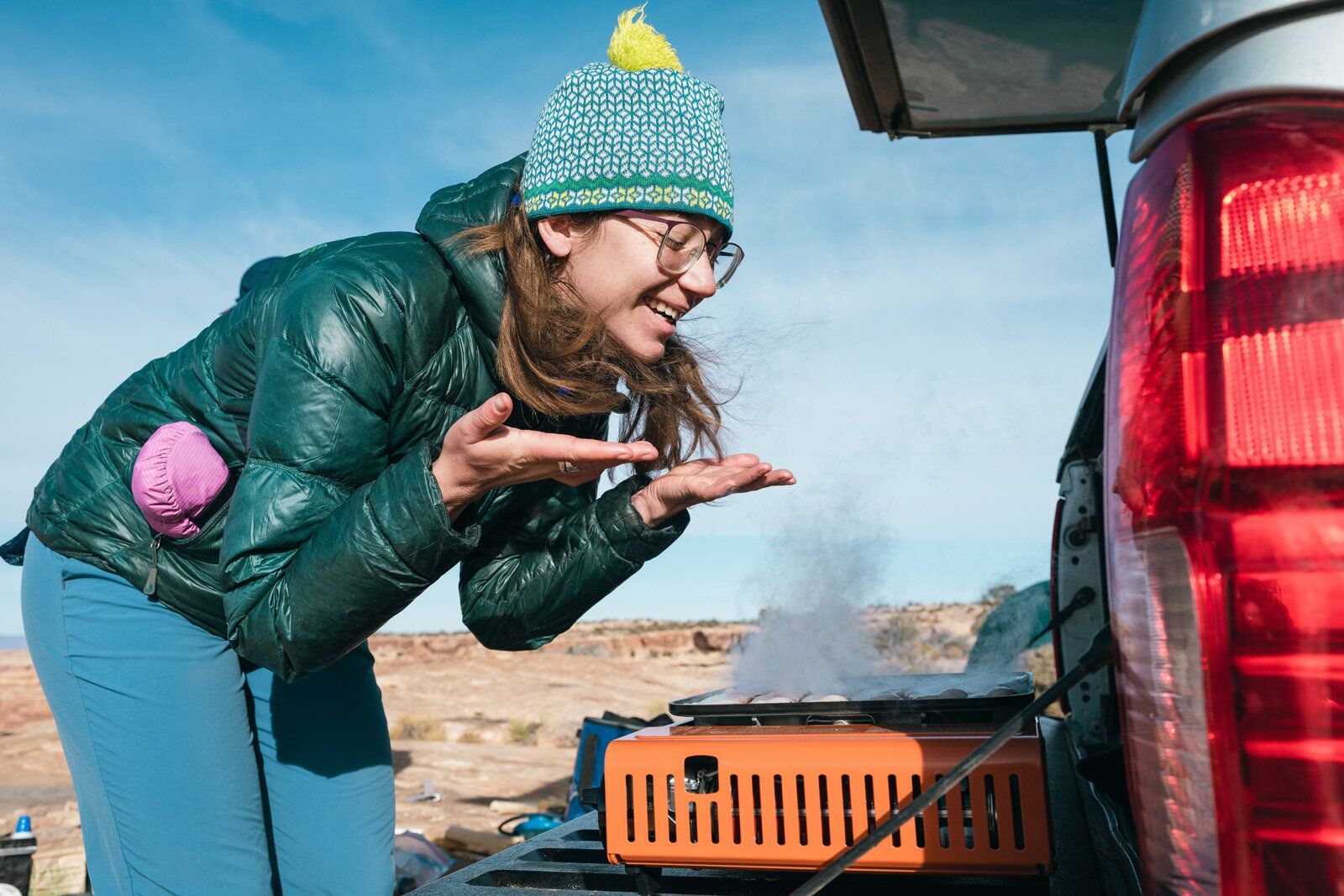
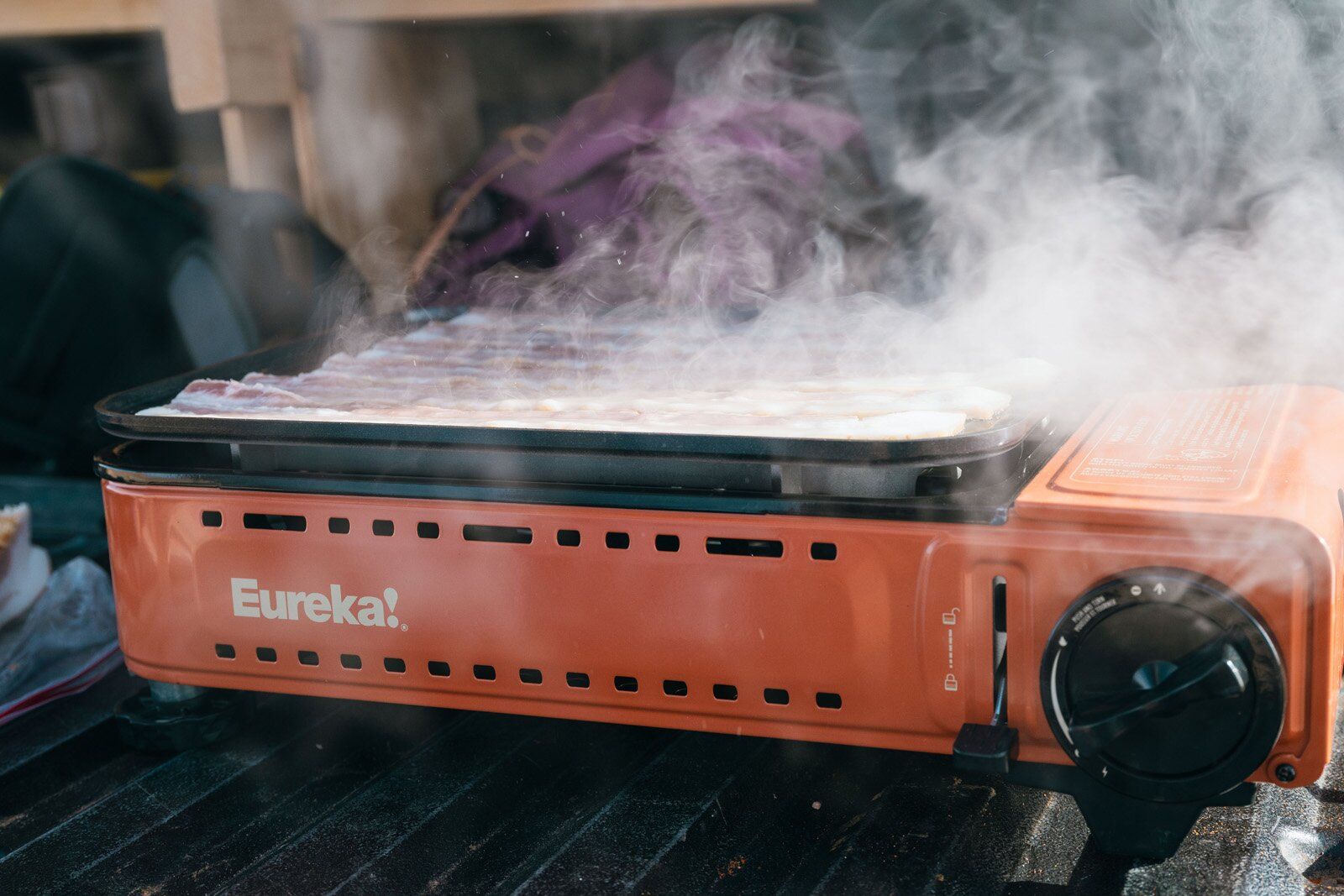
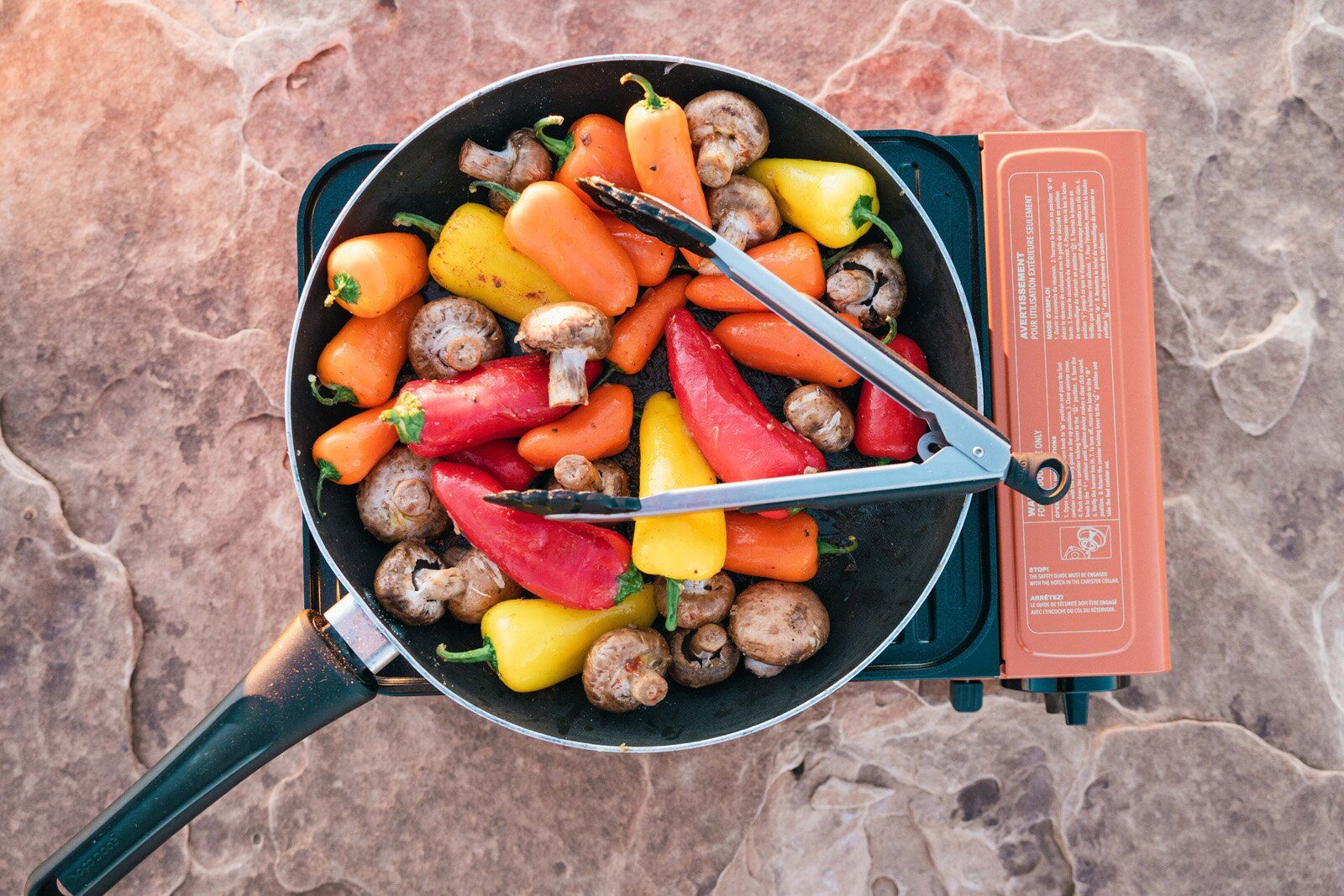
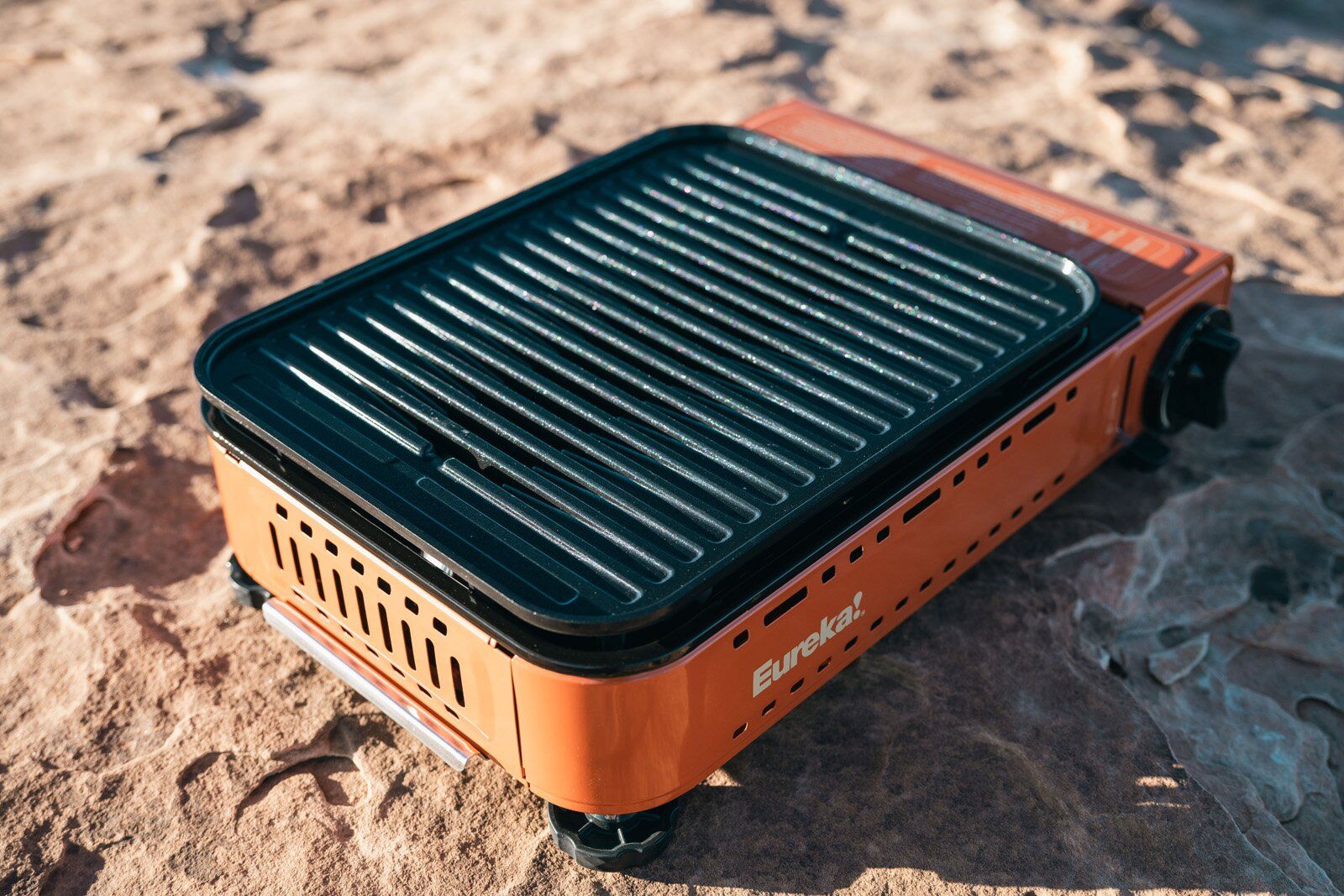
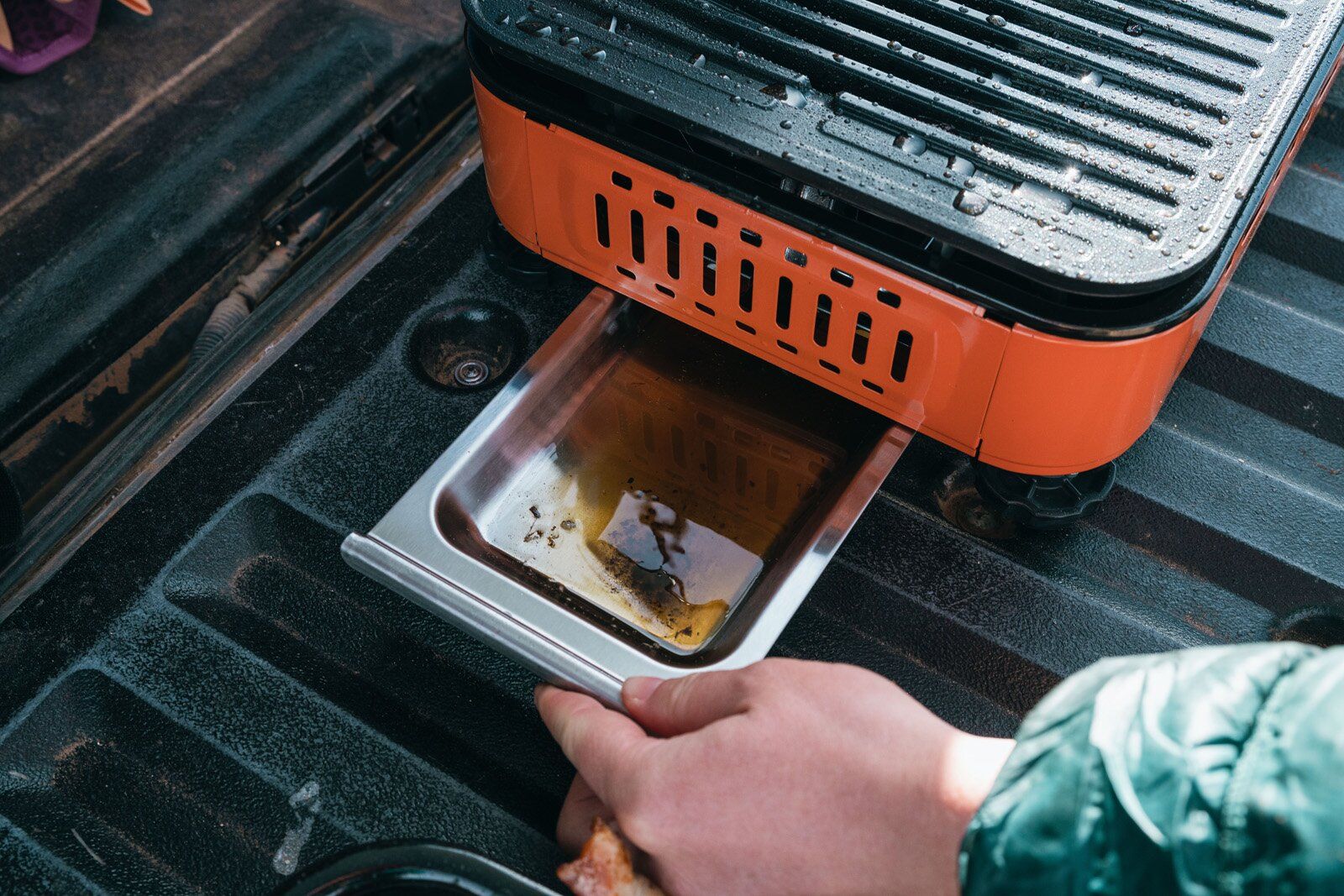
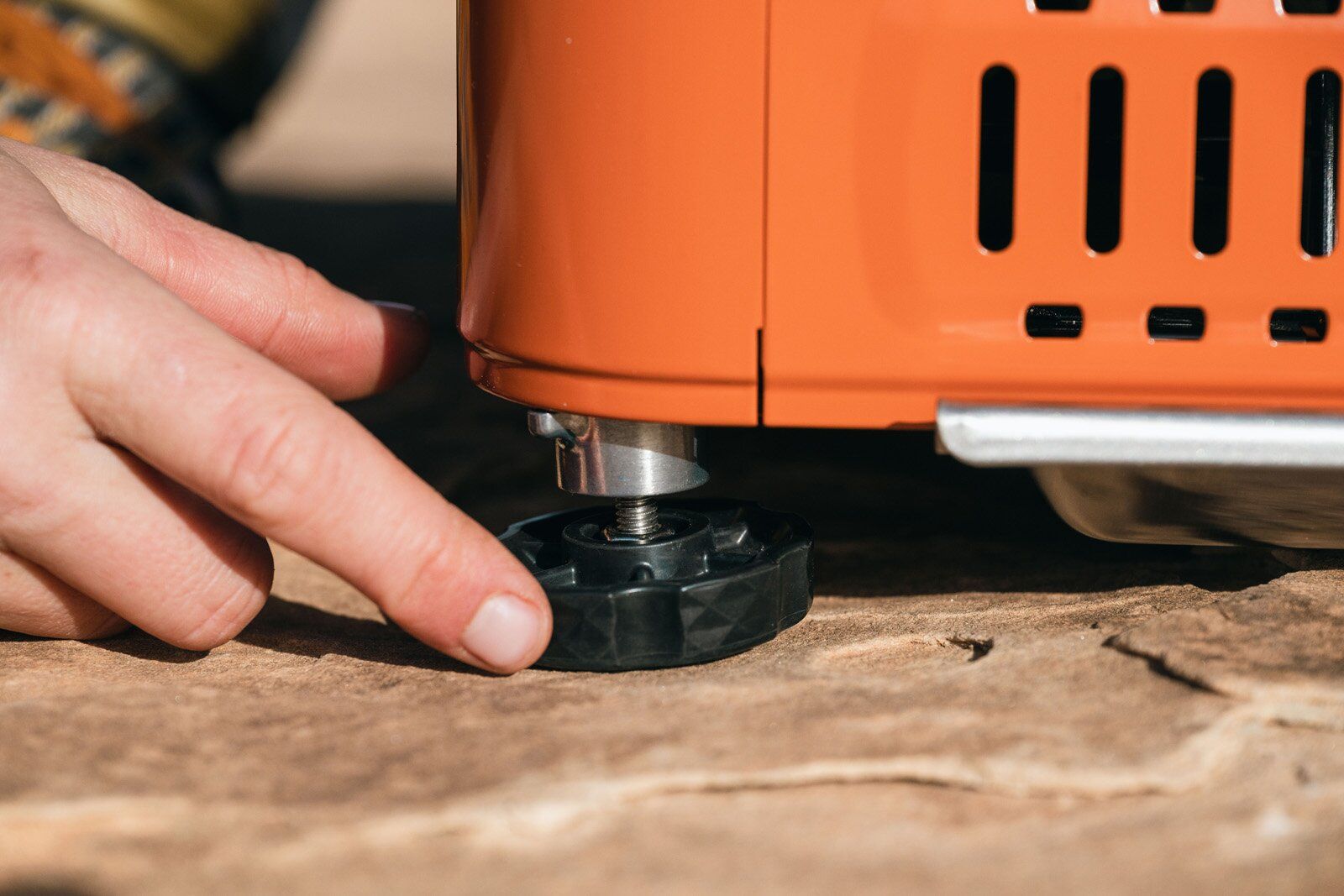
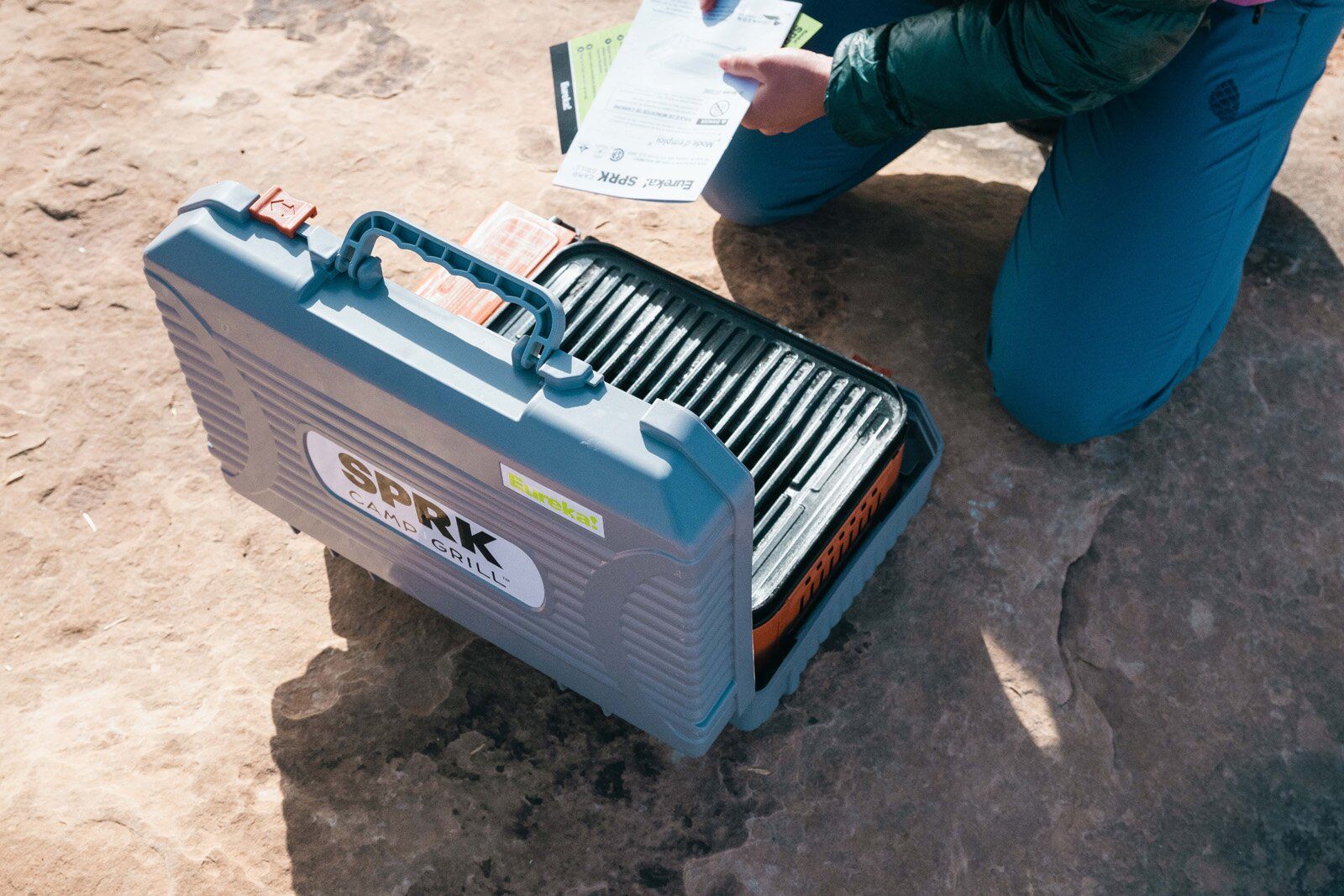
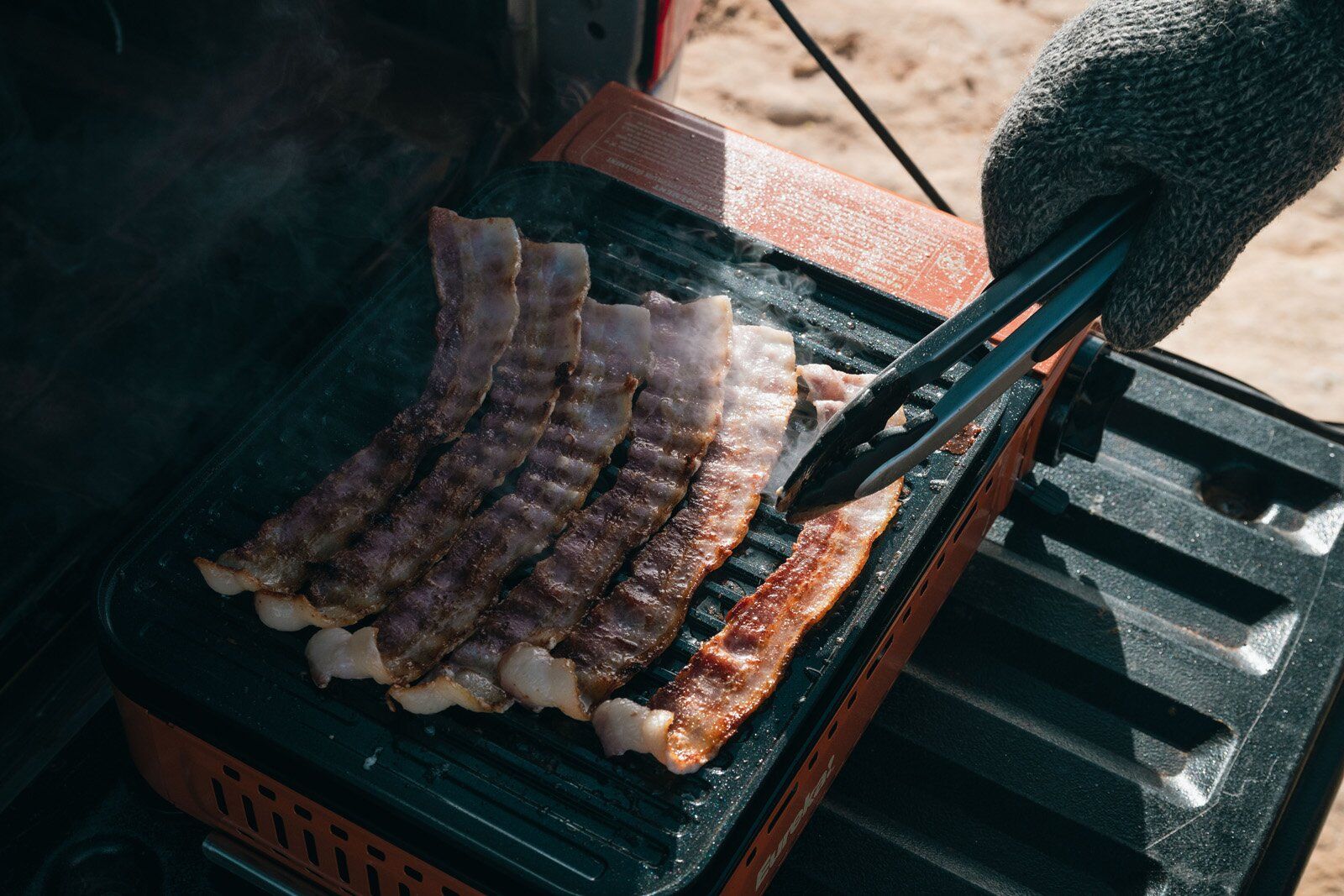
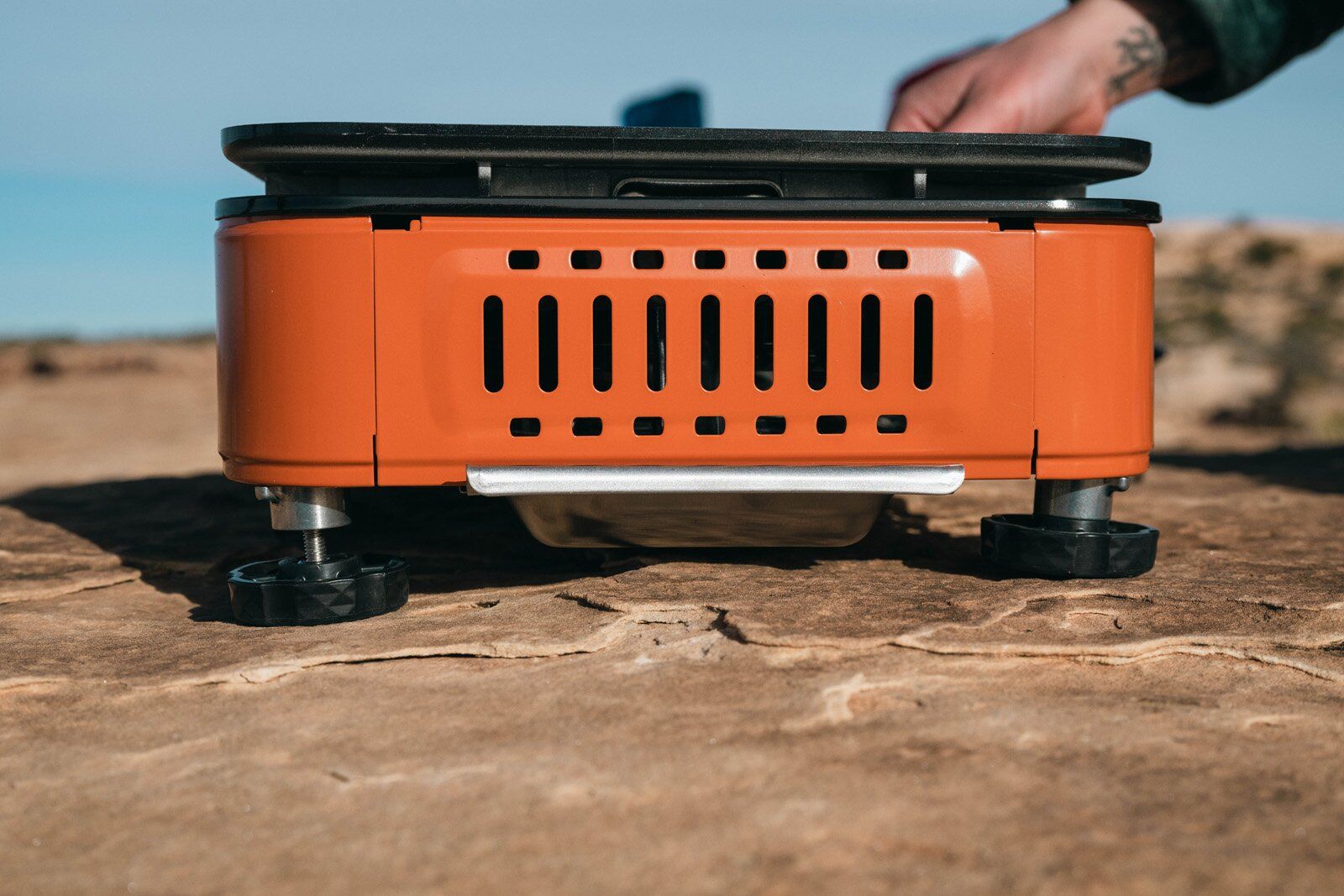
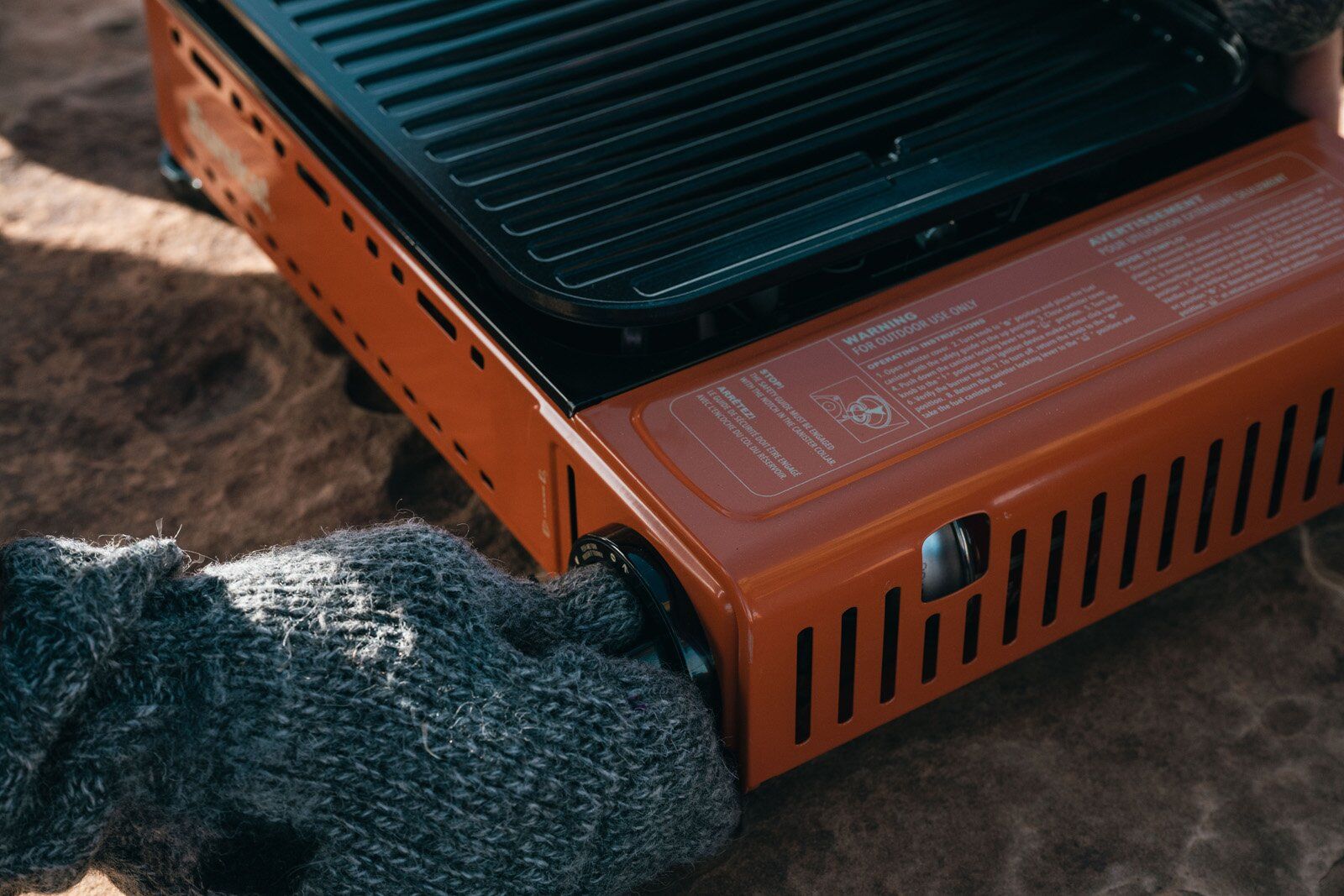
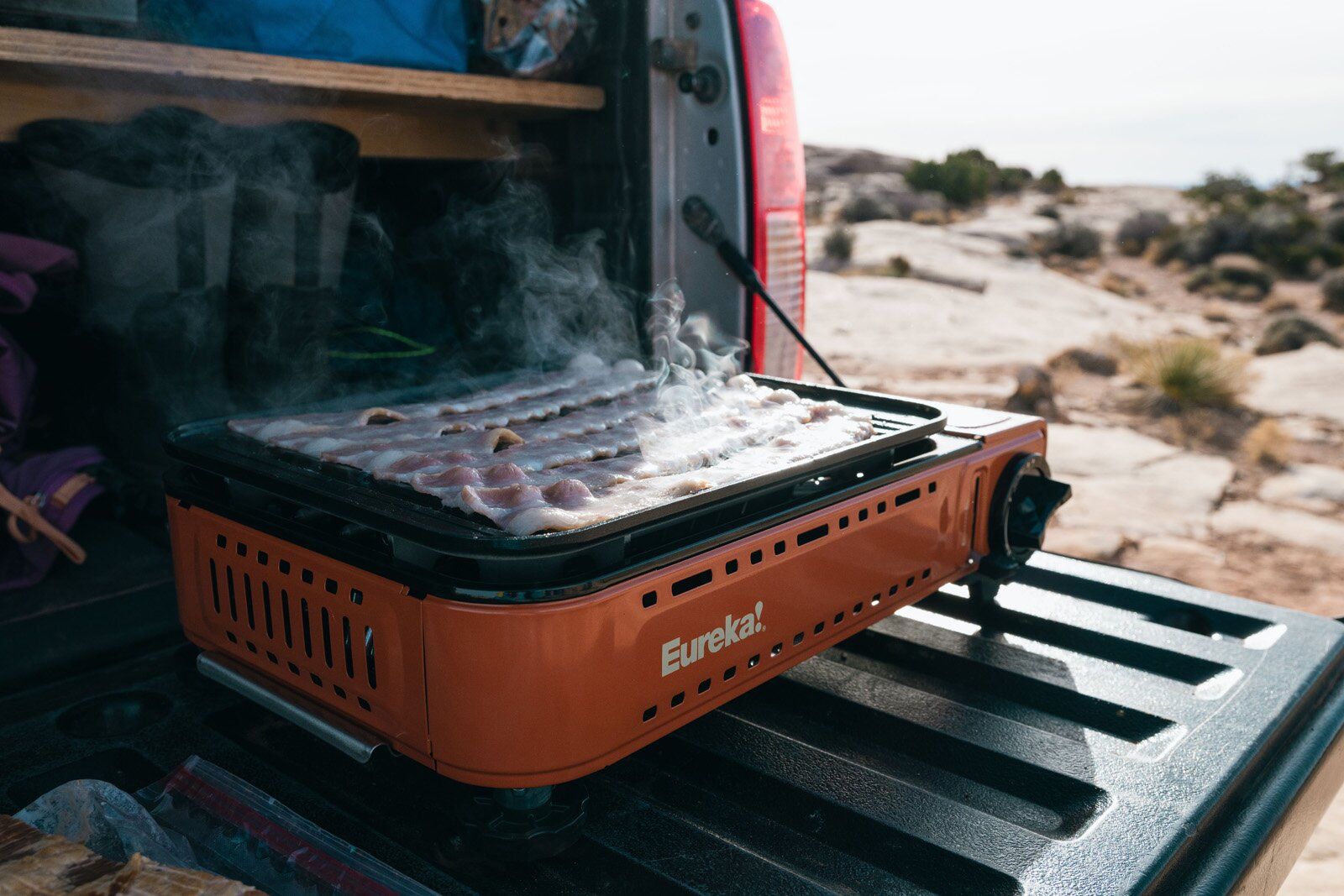
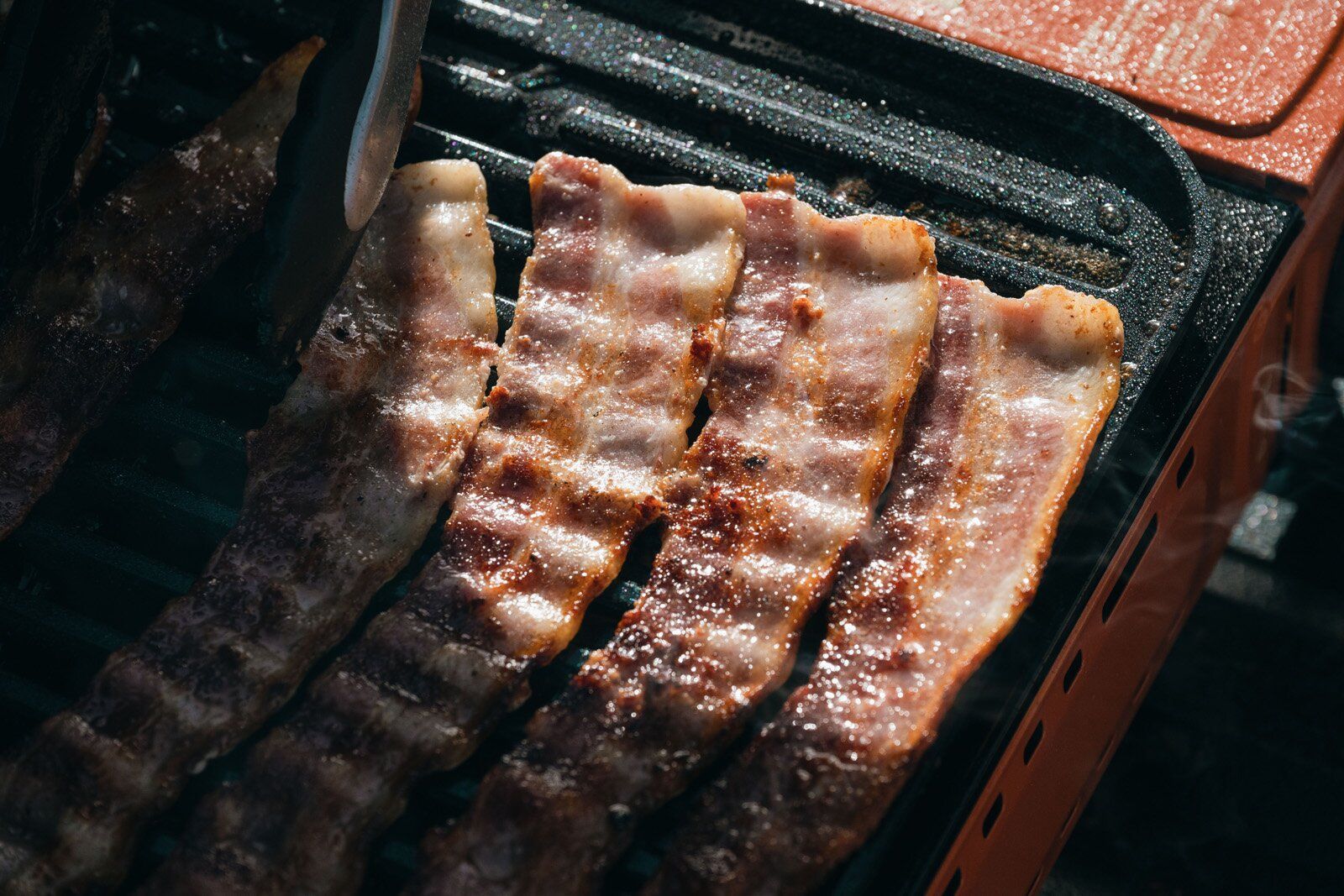
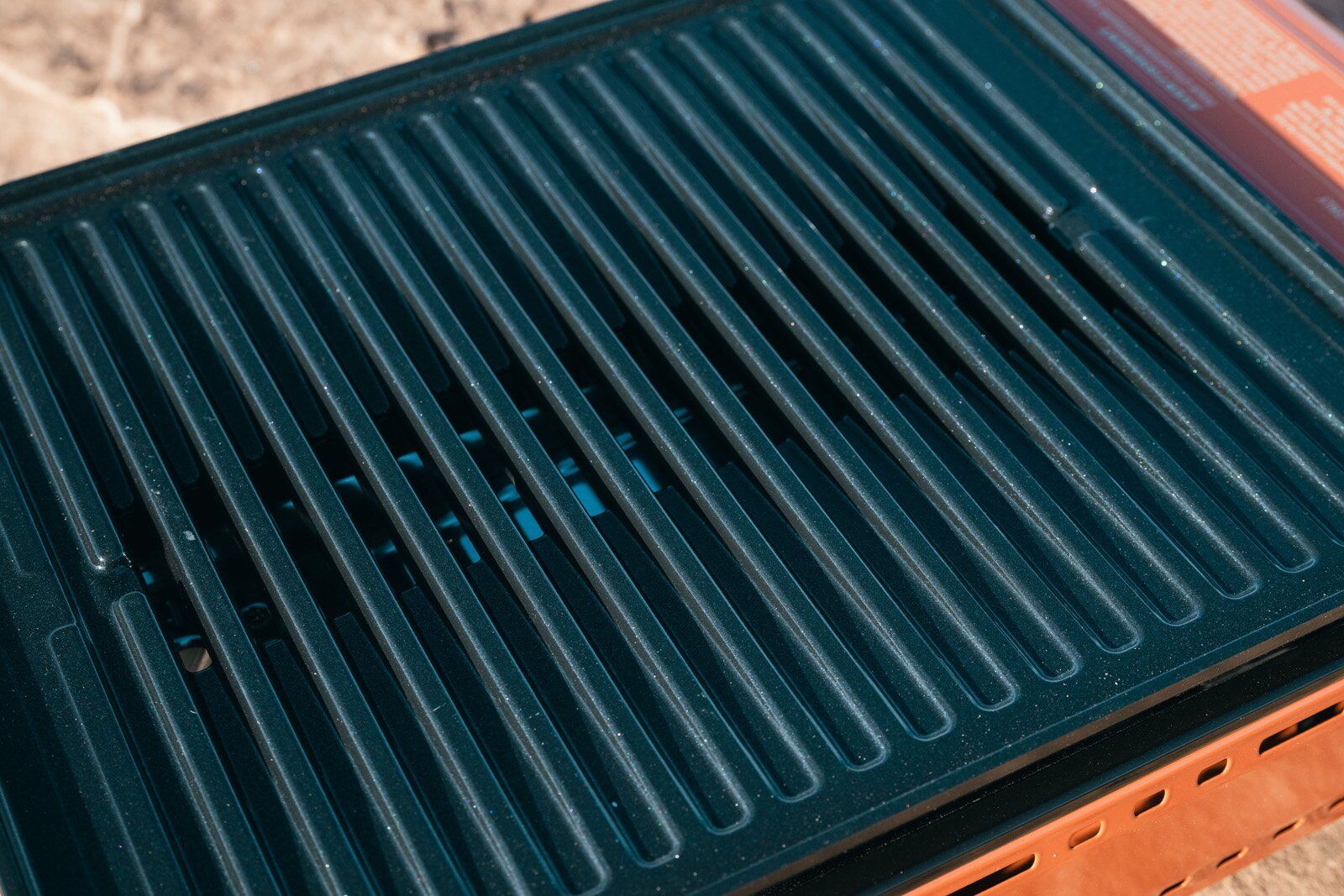
The Eureka SPRK is designed to be an on-the-go version of your backyard grill. We like that it’s light and extremely portable, but, because of its limited functionality, we don’t recommend it as a standalone camping stove.
Power
Temperature Control
Wind Protection
Build Quality & Durability
Ease of Use
Sustainability
Fuel Type
Butane
Burners (Output)
2 (7,250 BTUs each)
Auto Ignition
Yes
Weight
8 lb. 8 oz.
Pros
Cons
The Eureka SPRK Grill is a one-trick pony, and it isn’t trying to convince anyone otherwise. We’re not saying that’s a bad thing. It’s made to bring the fun of backyard grilling to the campground, and it accomplishes that thanks to its portability and ease of use. The SPRK measures a compact 11.5 by 16.6 by 4.6 inches and weighs less than nine pounds, making it one of the lightest and most packable camp cooking options we tested. And though its single, 7,250-BTU burner is the weakest of any model in this roundup, it's plenty strong enough for most grilling needs, such as bacon, burgers, and veggies. Clean-up is simple, too, thanks to the non-stick ceramic grill surface and dishwasher-safe drip tray.
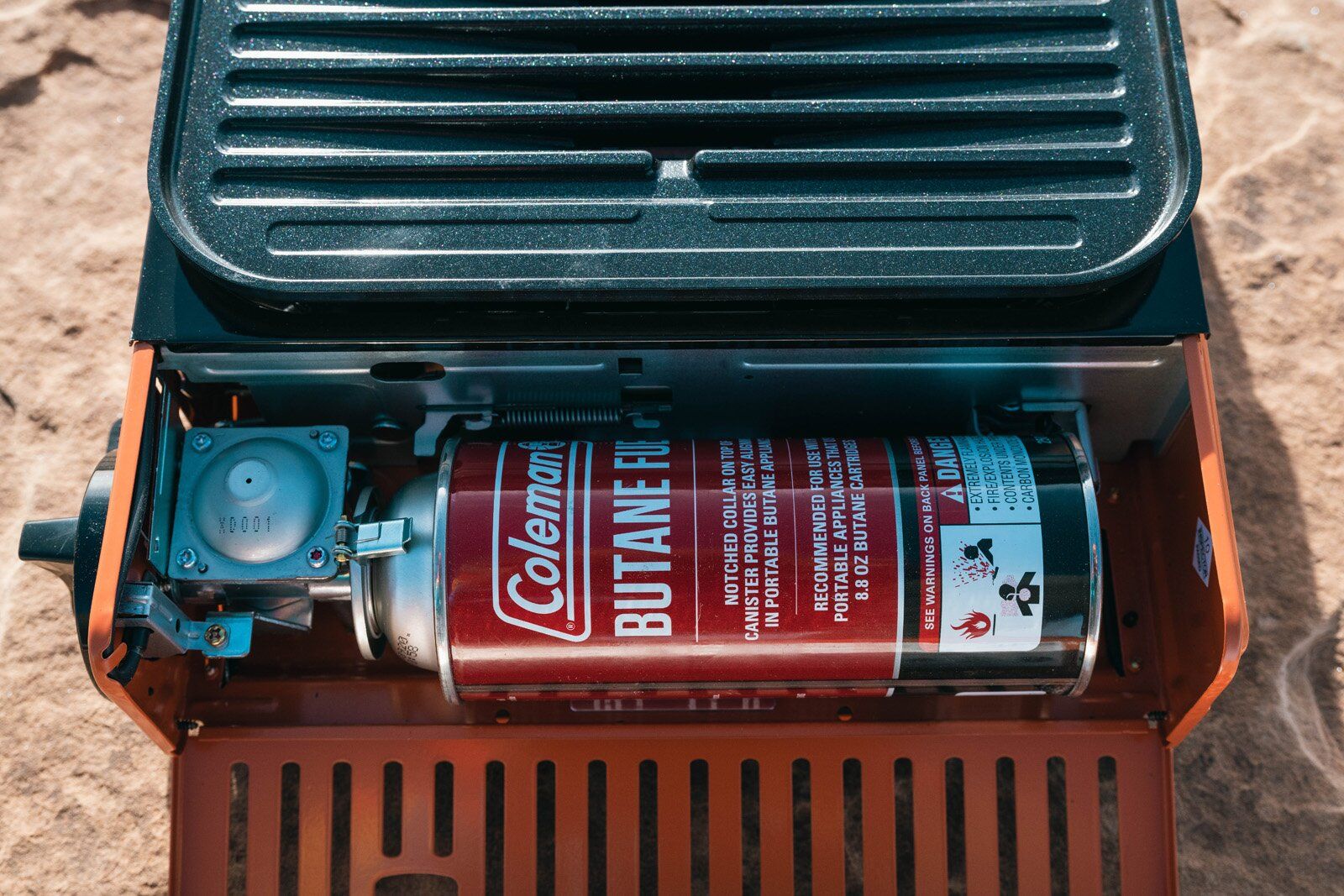
Unlike most camp stoves that require propane, the SPRK runs off of butane, which, though less readily available, comes in a lighter and more compact canister. The grill body also features a dedicated compartment that houses the pressure regulator and fuel canister, eliminating any need for extra attachments and adding to the SPRK’s portability. When it’s time to start cooking, its adjustable legs make it easy to set up on uneven surfaces (an uncommon feature among the stoves we tried), including our tester’s truck bed. And, while other brands settle for a built-in handle or cloth carry case, Eureka kits the SPRK out with a hard-sided shell for easy transportation and added protection.
Of course, the SPRK’s small size comes at a price. Its 120-square-inch cooking surface is relatively limited, making it difficult to prepare food for more than a couple of people at a time. It also lacks a wind shield, which could cause the flame to go out in gusty conditions. The biggest elephant in the room, however, is that the SPRK functions only as a grill and can’t perform basic cooking tasks like, say, boiling water or preparing pancakes. For $150, that’s hard to look past. But while it’s not going to be your be-all, end-all stove, the SPRK could be a good addition for cash-flush camp chefs looking to supplement their current outdoor cooking setup. (Note: Eureka is being shut down as a brand, although there is still product stock on its website. We’ll replace the SPRK with another compact grill alternative once it becomes unavailable for purchase.) For more, read our review of the Eureka SPRK.
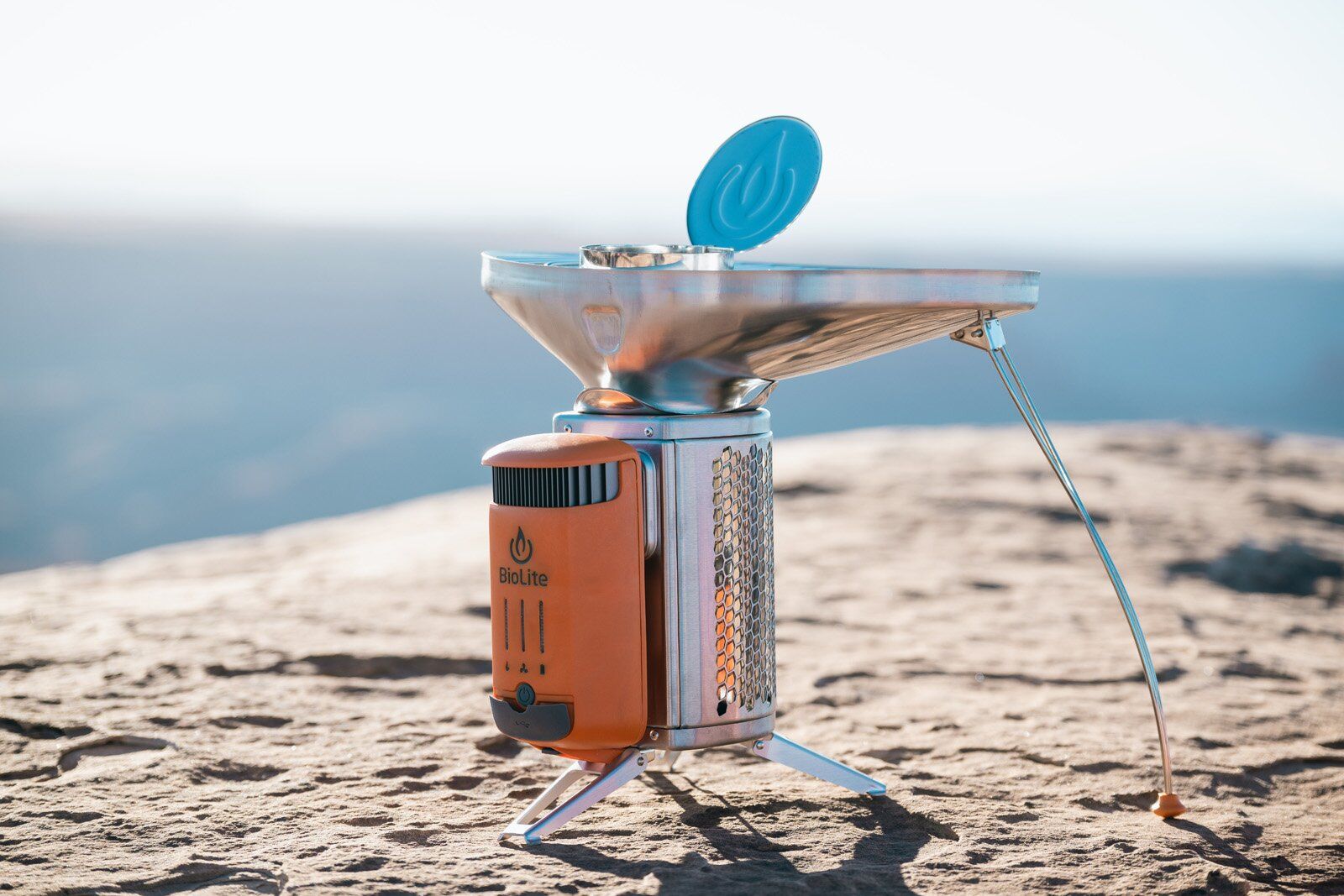
The CampStove 2+ is a unique all-in-one stove that utilizes wood and other organic materials to create powerful flames and generate electricity. However, while its design is promising in theory, its performance falls short in practice.


The CampStove 2+ is a unique all-in-one stove that utilizes wood and other organic materials to create powerful flames and generate electricity. However, while its design is promising in theory, its performance falls short in practice.

Power

Temperature Control

Wind Protection

Build Quality & Durability

Ease of Use

Sustainability
Fuel Type
Biomass
Burners (Output)
2 (10,000 BTUs each)
Auto Ignition
No
Weight
5 lb. 3.6 oz.
Pros
Cons
It’s rare that a piece of gear surprises us, but we’d never seen anything like the CampStove 2+. This stove burns twigs, leaves, pine cones, and other natural resources as fuel, while a 3,200-mAh battery attached to the stove converts the fire’s heat into electricity to power internal fan jets and stoke the flames. Three electronic indicators provide real-time feedback on fire strength, fan speed (which you can adjust to control flame intensity), and battery level, while a USB-A input powers the included 100-lumen LED light or charges electronics. Also included is a portable grill that sits atop the stove and has a built-in fuel intake lid so you can easily add sticks to the fire.
It’s clear that the CampStove 2+ is an innovative and exciting product, but its potential outshines its reality. It took our tester about 20 minutes to get the fire going—there’s a significant learning curve in managing fuel and fan speed to nurture the flames. And, in terms of output, BioLite reports a 10,000-BTU flame and a 4.5-minute boil time at full power, though that varies with fire temperature. In mild, Southern California weather, boiling one liter of water took about 10.5 minutes, mostly because placing the pot on top weakened the fire, which required refueling halfway through. With a stronger flame, the boil time is likely closer to what’s advertised. But herein lies the problem—precise temperature control is near impossible with a natural fire, and you’re instead left to the whims of the flames.
That said, our tester noted that, at max strength, the fire was easy to maintain and the thermoelectric capabilities were as advertised. The CampStove 2+ allowed multiple people to charge their phones, thanks to the heat continually replenishing the battery. Its 55 square inches of cook space is small, but our tester still grilled hot dogs, peppers, and mushrooms without any issues. (Completing the set is a kettle and coffee press so you can get your caffeine fix.) And with the entire kit weighing just over five pounds, it’s the lightest and one of the most portable stoves we tested. If you want to avoid fuel canisters, are tight on space, or simply prefer open-flame cooking, the CampStove 2+ Complete Cook Kit is for you. But for everyone else, it’s hard to justify the $250 price when more traditional stoves are easier to use, perform better, and cost less. For more, read our review of the BioLite CampStove 2+.

The Zempire 2-Burner DLX Grill Stove builds on the classic two-burner design with the addition of a handy bottom grill. Though its bulky frame isn’t for everyone, it enhances cooking versatility without skimping on its core functionality.


The Zempire 2-Burner DLX Grill Stove builds on the classic two-burner design with the addition of a handy bottom grill. Though its bulky frame isn’t for everyone, it enhances cooking versatility without skimping on its core functionality.
Power
Temperature Control
Wind Protection
Build Quality & Durability
Ease of Use
Sustainability
Fuel Type
Propane
Burners (Output)
2 (12,200 BTUs each) + grill (4,500 BTUs)
Auto Ignition
Yes
Weight
13 lb.
Pros
Cons
Hailing from New Zealand, Zempire is a relative newcomer to the camp stove market, and the brand hopes to make a splash with the 2-burner DLX Grill Stove. This model comes equipped with two 12,200-BTU burners, which are plenty powerful for most of your camp cooking needs, as well as auto ignition. What sets the DLX apart, though, is its 4,500-BTU bottom grill (which in practice acts more like a broiler due to its heat source coming from above). While our tester found that the grill took some time to get going, it roasted veggies and sizzled up crispy sausages with ease. It also worked well as a food warmer, toasting naan and tortillas without burning them. In a nice touch, you can also remove the grate and easily wipe off any messes on the stainless steel drip tray.
We were also impressed with the DLX’s wind shields. They’re large, sturdy, and fit securely into the stove body, unlike more premium-priced models such as the Coleman Cascade 3-in-1. Packability, on the other hand, isn’t this strove’s strong suit. Though it features a carry handle, it’s about three inches taller than most two-burner stoves thanks to the addition of the lower grill, and on the heavier side at 13 pounds. Its cooking surface is another area where the DLX falls short. At just under 202 square inches, it’s one of the smallest of the rectangular two-burner stoves we’ve tested. Still, you shouldn’t have issues fitting two medium-sized pots or pans on it, and the addition of the bottom grill makes up for the smaller stovetop.
Finally, we found that the DLX’s temperature control was refined enough to slowly simmer delicate meals. While time will tell if Zempire will have the staying power of more established brands, all signs are pointing in a positive direction if the DLX is any indication. This stove provides power, precision, and versatility, all for a reasonable price. For more, read our review of the Zempire 2-Burner DLX Grill Stove.
Primus flexed its design muscles when building the Tupike. This two-burner stove is as aesthetically pleasing as it is functional, though its middle-of-the-road performance left us wanting more. At its current price point, it might be a hard sell for campers who prefer function over form.


Primus flexed its design muscles when building the Tupike. This two-burner stove is as aesthetically pleasing as it is functional, though its middle-of-the-road performance left us wanting more. At its current price point, it might be a hard sell for campers who prefer function over form.
Power
Temperature Control
Wind Protection
Build Quality & Durability
Ease of Use
Sustainability
Fuel Type
Propane/isobutane mix
Burners (Output)
2 (10,200 BTUs each)
Auto Ignition
Yes
Weight
9 lb. 8 oz.
Pros
Cons
Swedish design is having a moment, and the Tupike helped us understand why. This stove features a stainless-steel body with oak slats and brass accents for a look that is both handsome and sleek, and the wooden laths also double as a hot pad for added functionality. Other thoughtful features include strong wind shields, as well as removable grates and a drip tray to make clean up easy. A flexible hose on its pressure regulator lets you freely position your gas canister, and fold-out legs raise the stove by five inches, creating space beneath for added convenience.
However, the Tupike isn’t just about looks. It features two 10,200-BTU burners with auto ignition that boiled water at a decently fast clip of 4 minutes 5 seconds in breezy weather. Its power, while not out of this world, is still plenty for most cooking needs—as long as you have the correct gas canister. Primus offers various fuel blends based on the weather, and output can suffer if you choose incorrectly. Case in point: Our testers noticed a big jump in performance when switching from a propane/butane “summer” mix to a propane/isobutane “winter” blend, which was better suited for the conditions. (This isn't necessarily a bad thing, but it is one more variable to manage.) Otherwise, the Tupike’s temperature control is solid. Our testers kept the flame low to sauté veggies and slowly warm tortillas.
While the Tupike’s 161.5-square-inch cook space was the smallest of the rectangular two-burner stoves we tested, it fit an 11-inch pan and the included griddle side by side without crowding. That said, its burners run small, which affects max output. Compared to their Cascade Classic (a stove with lower BTUs), our testers felt that the Tupike’s burners were more precise but not as powerful, covering less surface area on the pan. The Tupike is also smaller and lighter than most two-burner stoves, so you shouldn’t have any trouble carrying it, and it has attachment points for its legs and pressure regulator (plus a griddle bag) to keep everything secure during travel. Our biggest gripe? The $280 price tag, which rankles given its average performance. If you value clean, Swedish design, that might be worth the splurge. But for the dirtbagging van-lifer or casual weekend warrior, this stove is a pass. For more, read our review of the Primus Tupike.


With its winning trifecta of serious power, delicate temperature control, and impressive wind resistance, the Camp Chef Everest 2X can handle nearly any meal you can cook. It might be out of budget for cost-conscious campers, but we still think it’s one of the best camp stoves money can buy.

Power

Temperature Control

Wind Protection

Build Quality & Durability

Ease of Use

Sustainability
The Zempire 2-Burner DLX Grill Stove builds on the classic two-burner design with the addition of a handy bottom grill. Though its bulky frame isn’t for everyone, it enhances cooking versatility without skimping on its core functionality.
Power
Temperature Control
Wind Protection
Build Quality & Durability
Ease of Use
Sustainability

The Jetboil Genesis Basecamp System is a complete cooking setup designed with both performance and packability in mind. It can easily handle quick boils as well as delicate, low-and-slow recipes, and its included pot and pan make it a one-stop shop for a camp chef. However, it’s super pricey and has some awkward design choices.
Power
Temperature Control
Wind Protection
Build Quality & Durability
Ease of Use
Sustainability
Zempire 2-Burner DLX Wide ($175): More Room for Camp Chefs
So far, we’ve been impressed with New Zealand-based Zempire, which has recently burst onto the camping scene here in the United States. The 2-Burner DLX Grill Stove (19.1 in. wide) is already in our gear guide, and Zempire also makes a standard DLX version (18.5 in. wide). But we appreciate the extra space on this “DLX Wide” version: The 23.5-inch width accommodates larger pots and pans and gives you a little extra breathing room to cook. At just $25 more than the standard model, there's a lot to like about the Zempire DLX Wide, and we have it out for testing around the state of California this summer. Expected review date: August 2025.
Camp Chef Kodiak ($130): New Budget Entry
The Camp Chef Everest 2X is the most powerful camping stove in our gear guide, and the new Kodiak comes onto the scene as its little sibling. A competitor to the Coleman Cascade Classic (our top budget pick), the compact Kodiak has promising specs: two burners with 10,000 BTUs each, wind guards, auto-ignition, and a built-in carry handle. We always appreciate the value end of the spectrum, particularly in the world of camping, where some folks might only get out a couple of weekends a year. We have the Kodiak out for testing this summer and are very curious to see how it stacks up against the Cascade Classic, given that it comes in at the same price point. Expected review date: August 2025.
Our overall rating takes the product’s full picture into account: price, build quality, performance (based on intended use), durability, sustainability, and more. On the high end of the rating scale are standout camp stoves that rise above the crowd, whether they’re top-tier models or budget designs that impress at their price point. If you ask us, most readers should be looking to purchase a camp stove with an above-average overall rating—there’s simply little reason not to, and your tastebuds will thank you. That said, we still feature lower-rated models for notable reasons. Some excel at a niche or specialized cooking style, while others have specific qualities that may serve some users well.
Without the right amount of heat, you can’t properly cook a meal. A stove’s power thus plays a major role in how quickly you can prepare a camp dish as well as performance in adverse weather conditions. For this category, we take into consideration both a stove’s maximum power as well as how fast it boils 1 liter of water. Stoves that stand out in this category feature high-BTU burners (we explain that metric in the section below) and perform well during our boil test.
Models with exceptional output and boiling capabilities. They usually feature burners with greater than 12,000 BTUs or a boil time of less than four minutes.
Average power, with burners around the 10,000 to 12,000 BTU range and boil times between four and six minutes.
Stoves with poor heat output, featuring burners with less than 10,000 BTUs and a boil time of longer than six minutes.

If you’re looking to expand your camp cooking repertoire beyond basic meals, then your camp stove must produce even flames across a wide range of temperatures. This rating takes into account how well you can control the heat of your burners, and it also includes a stove’s simmering capabilities and how well it handles gently cooking delicate dishes, such as pancakes. Generally, stoves that feature more knob rotations have better temperature control, and those that earn high marks are capable of handling complex recipes with ease.
Excellent temperature control and simmering ability, usually featuring four full knob rotations.
Middle-tier temperature control. These stoves can still adequately cook most meals, but not at the same consistency as top performers.
Little or no ability to control the stove’s temperature.

When evaluating wind protection, we mainly focus on the size and build quality of a stove’s wind shields. This category is pretty straightforward—stoves with larger and sturdier shields are better at protecting against strong gusts than those with smaller and flimsier panels, and in turn earn a higher score. Most models feature the traditional side flaps that attach to the stove’s body. However, some come with attachable shields that you can stow away on calm days. A few lack wind shields altogether, which negatively affects their rating.
Sturdy and robust wind shields that protect the stove’s burners during intense wind.
Average wind protection that does fine in mild to moderate breezes but struggles in more blustery conditions.
Stoves with mostly ineffective wind shields, or those that lack them entirely.
No matter how gentle you are on your gear when you’re camping, it’ll inevitably succumb to some wear and tear—after all, it’s not called ”roughing it” for no reason. In a perfect world, a camp stove should last you for years without failing, even after hundreds of uses. But that’s not always the case, so we’re here to help. In our evaluation, we consider a stove’s materials and construction quality. Highly-rated models usually have strong, metal bodies, secure clips and fasteners, and burner components that will stand the test of time. Stoves with an included carry case get extra points, as they’re better protected during transport and storage.
Hardy metal construction that can withstand lots of abuse with few, if any, easily breakable components.
Middle-of-the-pack models that are prone to some bumps and dents.
Fragile stoves that struggle to handle the rigors of camping.
We focus on the user experience for this category, with an eye on features such as auto ignition for matchless lighting, removable grates to easily clean up any messes, and a handle or carrying case to help with transportation. Models that score well are intuitive and straightforward to use out of the box, come with several helpful features, and are easy to transport and carry around. Stoves that are lighter or more compact earn extra marks.
Stoves that boast lightweight design with helpful features and little to no learning curve.
Mostly straightforward but may suffer from finicky or confusing elements that make them less user-friendly.
Stoves that have minimal features or require practice to use.

Our sustainability rating for camping stoves takes into account seven different criteria. On the product level, we’re looking for replacement parts and responsible manufacturing. On the brand level, our criteria include whether the company offers repair services, uses recycled or reduced packaging, monitors greenhouse gas emissions, and publishes an annual impact report. Camping stoves with a high sustainability rating meet a number of these criteria, while those with a lower sustainability rating might meet none or just a few. We also consider the degree to which our criteria are met; for example, offering just a couple of replacement parts is not the same as offering many parts. Note that not every sustainability effort by a brand or product fits neatly into our categories. In these circumstances, we may increase or decrease a rating based on these factors. You can find details on these factors in the sustainability drop-down under each product above.
These camping stoves are among the most sustainable on the market and earn our Better Trail Certified distinction. They often meet most of our sustainability criteria for this category.
These camping stoves are a good, middle-of-the-pack option for sustainability. They often meet about half or more of our criteria for this category.
These camping stoves are the least sustainable and have significant room for improvement. They usually only meet about a quarter or less of our criteria.


Factors such as elevation and temperature can significantly affect a stove’s performance and impact your ability to cook a meal, so it’s important to pay attention when evaluating what fuel type you should get. While older camp stoves relied on traditional fuel sources such as white gas or kerosene, most models today use propane, butane, or biomass.
Propane
Propane is far and away the most common fuel for modern camp stoves, and for good reason. Its relatively high vapor pressure and low boiling point allow it to perform well in challenging conditions, including at high elevations and in cold temperatures. Propane is stored as a liquefied petroleum gas in pressurized containers—either your stanrdard refillable white propane tank, or the green, 16-ounce canisters you’ll find at most outdoor retailers or big-box stores—that screw into your camp stove. Though its performance is more versatile than butane, propane canisters are bulkier and heavier, making them slightly less transportable. Disposal is also tricky, as you typically have to take empty canisters to a special collection center. If you’re camping often, we recommend picking up refillable tank (which come in a variety of sizes).

Butane
Though less common than propane, butane is still a relatively popular fuel source for camp stoves. Its main advantage is that it comes in smaller, lighter canisters, making it easier to transport. However, its boiling point is higher and its vapor pressure is lower than propane, which will negatively affect your stove’s performance at cold temperatures and at elevation. Functionally, though, butane stoves (like the Eureka SPRK Grill) work similarly to those that run on propane—screw in the canister and ignite. And as with propane, you’ll also want to pay attention to local laws and regulations for canister disposal.

Biomass
For campers who crave cooking over an open flame, some modern stoves, such as the BioLite CampStove 2+, use twigs, leaves, sticks, and other forms of biomass to create heat. This method is much more environmentally- and transportation-friendly, as it utilizes renewable resources and eliminates the need to bring along fuel canisters. Also, most wood-burning camp stoves come with design innovations to help reduce smoke and improve fire efficiency. However, they are less convenient, more time-consuming, and harder to use than stoves that run on fuel canisters.
Propane/Isobutane Mix
Some camping stoves pair with a propane/butane (or isobutane) mix. This fuel type combines the power of propane with the stability of butane, which allows it to be stored in sleeker, easier-to-transport containers. Because of its streamlined storage, it’s common to see backpacking stoves powered by propane/butane mixes. It’s also occasionally seen used in concert with a camping stove, including the Primus Tupike.
The cooking surface is where the action takes place. It houses the stove’s burners and provides a flat and level surface to place your pots and pans while you make your meal. Many models, including most rectangular two-burner stoves, feature a seamless cooktop, offering plenty of flexibility in where you place your cookware. They also usually come with a metal drip tray for easy clean-up. Some brands, however, have opted for more unique approaches. For example, the Jetboil Genesis Basecamp System features a clamshell design with two distinct cooking areas, while the BioLite CampStove 2+ requires you to place cooking equipment directly on top of its flame. When choosing a stove, an important factor to consider is the size of the cooktop—the larger the surface area, the bigger the pots and pans you can use, which can affect how efficiently you can cook for larger groups.

Grate
Most two-burner camp stoves feature a grate on top of their burners to support pots and pans while cooking and ensure even heat distribution. The grate’s slotted design is both strong enough to hold heavy cookware and durable enough to withstand the high temperatures coming from the flames below. Also, due to its flat surface, it allows for lots of freedom in positioning your cooking equipment. On many camp stoves grates are removable, which helps with the clean-up process.
Griddle
Usually made of cast-iron or stainless steel, a griddle’s flat cooking surface evenly distributes heat and is great for preparing both traditional camp meals such as pancakes and bacon, as well as less-conventional dishes, such as paninis and smash burgers. Most griddles feature raised edges to prevent spilling. While camping-specific griddles are typically sold separately, some stoves, such as the Coleman Cascade 3-in-1, come included with one.
Grill
Though not often found in most camp stove setups, a grill can help you greatly expand your cooking possibilities when you’re out in nature. Its striated and rigid surface makes it easy to prepare and sear dishes like hot dogs, steaks, and kebabs. Some camp stoves, including the Eureka SPRK Grill, specialize in this cooking technique, while others, like the Zempire 2-Burner DLX Grill Stove, take a hybrid approach, offering both a traditional two-burner design and a bottom grill feature.


A burner is your camp stove’s heat source and is where the flames are emitted. Its output is measured in British Thermal Units (BTUs), which measure heat energy. A BTU represents the energy needed to heat one pound of water by one degree Fahrenheit and is an indicator of how hot a burner is. In practice, the higher the BTUs, the hotter and more powerful the stove. For more on the topic, read our article BTUs in Camping Stoves, Explained.
Generally speaking, we recommend investing in a camp stove with burners that can produce at least 10,000 BTUs to efficiently boil water and cook most meals. However, if you need something even more powerful or are preparing food for large groups of people, opt for a stove with more BTUs, such as the 40,000-BTU Camp Chef Everest 2X (read our Everest 2X review). It’s also important to keep in mind that more powerful stoves will burn fuel faster than weaker ones.

The knobs on your camp stove dictate the gas flow to the burners, which in turn affects the intensity of the flames. Knobs are crucial for the stove’s temperature control and affect its ability to simmer ingredients and execute recipes with precise heat requirements. Most older camp stoves struggle in this department, making it difficult to evenly cook meals such as pancakes or omelets.
Luckily, stove design has come a long way and many of today’s models feature much more fine-tuned knobs, allowing you to prepare a wide array of dishes. Some higher-end models, like the Jetboil Genesis Basecamp System or the Camp Chef Everest 2X, feature four full knob rotations for wonderfully precise temperature control.

The valve on a camp stove directs the flow of fuel from a canister to the burners and is one of the most important—and often underappreciated—features that determine a stove’s performance. Physics tells us that temperature and elevation greatly influence the pressure inside a fuel canister, which in turn affects its output. For stoves unable to regulate fuel delivery (like many used for backpacking), these factors can impact their power and temperature control.
These days, thankfully, most modern camping stove valves come equipped with a pressure regulator. This device usually screws into the stove’s body and adjusts the amount of gas that the burners receive, ensuring consistent performance under a wide variety of conditions. If you’re in the market for a gas-powered stove, double-check that this piece of equipment is included.
Most mid-to-high-end camp stoves feature auto ignition for matchless lighting. This system uses an electrical spark to ignite your stove’s fuel and is typically activated by pushing a button, flipping a lever, or turning a knob. The main advantages of this feature are safety and convenience—you don’t need an external flame source, and you can keep your fingers far away from the burner. Still, most auto ignitors have a finite shelf life and will eventually fail, so we recommend you carry matches or a lighter with you just in case.
Wind shields help maintain constant burner output and maximize performance in blustery weather. On most stoves they appear as panels that attach to either side of the cooking surface as well as the lid, creating a wraparound barrier that defends against strong gusts. Other models feature detachable wind shields that you can stow away during calm weather. When effective, wind shields can improve fuel efficiency and maintain constant heat, helping you cook your meals in windy conditions without a large dip in performance.
In evaluating wind shields, we tend to pay attention to their size and build quality. Unsurprisingly, we’ve found that those that are larger and sturdier do a better job of protecting against the elements. We’ve also noticed that this is one department where some brands tend to cut corners, either by incorporating flimsy materials and poor design or simply neglecting to include them altogether. If you plan on camping in unpredictable weather, you’ll want to make sure your stove’s wind shields are up to the task.

Feet give your camp stove added stability, especially on uneven surfaces. Positioned on its base, they elevate your stove and evenly distribute its weight, helping to keep it flat and secure. They usually are made of plastic, rubber, or metal and are designed to keep your stove from slipping while you’re making a dish. Some stoves feature adjustable feet to help better accommodate uneven terrain. While they aren’t crucial if you mainly cook on flat surfaces, such as a picnic table, it’s good to keep in mind if you’re looking to prepare meals on more rugged terrain.

Though portability isn’t a huge concern when it comes to car camping, we still appreciate stoves that put some thought and effort into this area. Many rectangular two-burner stoves include a built-in carry handle for easy, one-handed transportation. Protective cases also help ward off bumps and bruises, although we’ve found that many stoves are plenty durable without them. While uncommon, some stoves (usually lighter ones) will instead come with a fabric bag for a thin layer of added protection. Also, many butane stoves, like the Eureka SPRK Grill will include a dedicated hardshell case, which further enhances portability and safety during transport.

This gear guide is about stoves for car camping, which are designed to be portable and relatively easy to pack up and put in your vehicle. That said, campers setting up an extended base camp, cooking for large groups, or simply wanting to maximize their cooking space and power output should consider a freestanding model. Stoves like the long-standing Camp Chef Explorer ($150) or Camplux’s High Pressure Double Propane Burner ($190) are cooking behemoths with strong heat output (30,000 BTUs per burner for the Explorer), out-of-the-box compatibility with large propane tanks, and adjustable legs that allow them to be set up wherever at camp.
For camp chefs who need a powerful cooking system, freestanding designs have lots of appeal. However, note that they weigh roughly twice as much as a standard camp stove (not to mention the large propane tank, which can weigh around 40 pounds), are quite a bit bulkier, take extra time to set up, and are overkill for groups of roughly four or fewer. Most weekenders are better off with one of the stoves we feature above, but for extended hunting trips or large campouts, a freestanding stove can be an excellent solution.
There has been a whole lot of uncertainty surrounding tariffs and the price of, well, everything. In the outdoor space, some companies have made announcements about the impact of tariffs while others have been quiet. Certainly, the category of gear matters too. We are not on the inside of these companies and therefore do not know the precise impact of tariffs on camping stoves in particular, but we can give you some data from a consumer perspective. This gear guide was previously updated on May 30, 2025, and when updated in mid-July of the same year, here is a sampling of price increases we saw with our own eyes:
Coleman Classic 3-in-1: $210 > $275
Coleman Classic: $100 > $130
Zempire 2-Burner DLX: $175 > $225
Jetboil Genesis: $400 > $450
Coleman and Zempire saw their prices jump nearly 30%, while Jetboil saw an increase of over 10%. This is a strange occurrence in the same product cycle—usually, we might see prices go up a bit from one season to the next, but the scope of this mid-season increase is rare at the least.
For folks who plan to camp with less than three people and are content with cooking simple meals—including boil-in-a-bag freeze-dried fare—a one-burner stove will likely suffice. You’re limited to a single heat source, though, making it difficult to cook more involved dishes or multiple recipes at once.
The overwhelming majority of camp stoves found on the market have two burners, which work well for families and small groups—think three to five people. These models provide enough versatility to cook a variety of camp meals, from easy breakfasts to more complicated dinners. All in all, a two-burner stove will serve you well in most cases.
If you’re looking to flex your chef skills or are preparing food for larger groups, it’s worth looking into more powerful or high-output stoves. Some feature three burners or accessories like grills and griddles. Others, such as the Jetboil Genesis Basecamp System, allow you to daisy chain other compatible stoves together to create a larger camp kitchen.
The answer to this question largely depends on what exactly you’re hoping to get out of your camping stove. For less than $100, you’ll find that most stoves are generally bare bones and lack luxuries like precise temperature control and auto ignition. Their burners are also usually not as strong and typically max out at 10,000 BTUs. That said, if you’re happy with a basic, no-frills stove, you can find decent products at this price point.
Between $100 and $200, camp stoves start to offer more advanced features such as auto ignition, which lights your stove without a match. You’ll also see a decent step up in performance. Many stoves feature a higher output, such as the 20,000-BTU burners on the Camp Chef Everest 2X, along with more fine-tuned temperature control, which is ideal for low-and-slow dishes. Build quality generally improves as well. Additionally, you’ll start to notice stoves with more versatility. For example, the Zempire 2-Burner DLX Grill comes with a bottom grill in addition to its two stovetop burners. We recommend that most people stick to this mid-range category.
Above $200 is when you’ll encounter more refined and specialized products. These include stoves like the Coleman Cascade 3-in-1, which comes with a griddle and grill to prepare a wide array of dishes, or the Jetboil Genesis Basecamp System, which features a unique clamshell design and cookware. Unless you are dead-set on a certain product or feature, however, most campers will do just fine choosing a stove in the $100 to $200 category.

When exploring different camp stoves, you may notice that most, if not all, indicate burner performance in BTUs, or British Thermal Units. BTUs are a measurement of heat energy and help indicate a stove’s power and output. Specifically, a BTU is the amount of energy required to heat one pound of liquid water by one degree Fahrenheit. So, a stove with more BTUs can reach hotter temperatures than one with fewer. High-BTU stoves can do more than just speed up cook times, though, as they also do a better job of shrugging off wind gusts and maintaining consistent performance. In general, we recommend choosing a stove with at least 10,000 BTUs per burner. That way, you’ll have plenty of power to efficiently boil water, cook a variety of camp meals, and withstand the elements. For more, read our article BTUs in Camping Stoves, Explained.
As with the states of matter, camp fuel types can be categorized into solid, liquid, and gas. Solid fuel is the most basic of the three and includes wood and biomass, as well as specialized tablets or bricks. Solid fuel sources are generally the most environmentally friendly and leave behind minimal waste. They will also work in extreme conditions, including sub-zero temperatures and at high altitudes. Solid fuel’s biggest drawback is that it requires time and effort to start and maintain the flame. There’s also little to no temperature control, making it a poor choice when you cook meals that require simmering.
Liquid fuel, such as white gas or kerosene, was used to power many camp stoves of yesteryear, though these days gas canister-powered stoves dominate the market. Still, liquid fuel has its time and place. Unlike gas canisters, which come in pre-set amounts, you instead add fuel directly into a reusable container, giving you complete control over how much you want to bring. As with solid fuel, it's also mostly unaffected by changes in temperature and altitude. However, there’s a learning curve when using liquid fuel, which involves priming your stove, and it can create flare-ups if you aren’t careful. Liquid fuel stoves also require more cleaning and upkeep than their gas-powered counterparts. For most car camping outings, we recommend a stove that uses liquid fuel.

These days, most camp stoves utilize gas canisters filled with liquefied petroleum gas (LPG) in the form of propane or butane. These gases are stored under pressure in liquid form, which is why you may hear and feel fluids sloshing inside the canister. Releasing the pressure (i.e. turning the knobs on your camp stove) causes the liquid to vaporize and, when met with a spark, ignite. Different LPGs have different properties—propane tends to work better in a wider array of conditions, but butane canisters are lighter and more transportable. However, gas canisters are much more user-friendly and offer better flame control than other fuel types.
Our sustainability team did a deep dive into this category and came back with seven criteria for camping stoves, which cover both the product and brand level. Surprisingly, none of the stoves we reviewed earned a score of 4/5 or higher, which is the threshold to earn the Better Trail Certified distinction. One theory for the poor performance is that the camping market is fairly stagnant, with many long-standing products that go years between updates. Coleman’s stoves, including the Cascade 3-in-1, earned a mid-range score due to the availability of replacement parts, which help reduce waste (to learn more, read our Cascade 3-in-1 Sustainability Report). But until more significant steps are taken on the product level, no camping stove we’ve tested stands out for sustainability.
get outside

Education
BTUs in Camping Stoves, Explained
Gear Guide
Best Camping Tents of 2025
Product Sustainability Report
Coleman Cascade Classic Sustainability Report
Gear Guide
Best Hiking Shoes of 2025
Education
Down vs. Synthetic Jackets


